Quote of the Day Today by Milan Kundera on compatibility, misunderstanding and why relationships fades over time
Quote of the Day by Milan Kundera: “Loves are like empires: when the idea they are founded on crumbles, they, too, fade away”
Meaning of the Quote of the Day: What Milan Kundera really means
The quote compares love to empires, suggesting that both depend on strong underlying ideas to survive. In relationships, these “ideas” can include trust, shared values, emotional connection, and mutual understanding. Kundera is emphasizing that love is not only emotional, but also intellectual and philosophical. When the core beliefs that support a relationship begin to break down, the emotional bond often weakens as well. The phrase shows that even strong love can fade if its foundation loses meaning. It is a reminder that relationships need more than feelings they require stability, shared purpose, and emotional alignment.
Also Read:

Live Events
Why Love Slowly Fades Away
Love slowly fades away when emotional connection, trust, and shared understanding begin to weaken over time. It does not usually disappear suddenly, but gradually changes as people grow in different directions or stop investing in the relationship. Daily stress, communication gaps, and shifting priorities can create emotional distance between partners. When the sense of meaning and connection is no longer strong, affection may reduce naturally. This slow fading reflects how relationships depend on effort, attention, and compatibility. Without care and mutual growth, even strong love can gently lose its intensity and eventually feel distant.
Milan Kundera: Life, Works, and Enduring Legacy
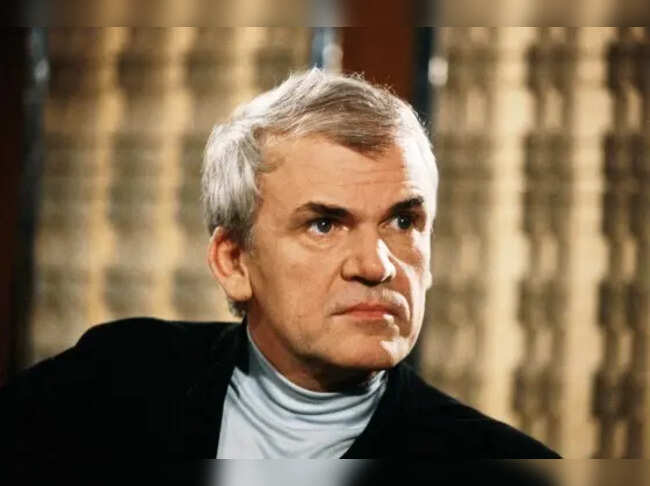
Milan Kundera was one of the most influential novelists and philosophical writers of the 20th century. Born in 1929 in Brno, Czechoslovakia, Kundera lived through major political and cultural upheavals, including communist rule in Eastern Europe. These experiences deeply shaped his writing, which often explores themes of identity, memory, love, politics, and the fragility of human relationships. His works blend storytelling with philosophical reflection, making him a unique voice in modern literature.
His works examine how personal lives are influenced by history, ideology, and emotional complexity. His writing is known for its intellectual depth, irony, and exploration of human contradictions.
Literary Achievements and Global Recognition
Milan Kundera is widely regarded as a master of modern philosophical fiction. His novels have been translated into numerous languages and read across the world, earning him international acclaim. The Unbearable Lightness of Being is considered his most famous work, blending romance, politics, and existential philosophy into a deeply moving narrative.
Kundera’s literary style is marked by its reflection on the nature of love, memory, and human identity. He often questions how individuals define themselves in a world shaped by political systems and personal experiences. Over time, he became a symbol of intellectual literature that challenges readers to think beyond surface emotions and explore deeper truths about life and relationships.
Also Read:
Political interpretations of his work
Kundera’s novels often criticize authoritarian systems, especially communism. Because of this, some critics viewed his work as politically charged or ideologically selective. Supporters, however, argue that his writing focuses more on human experience than political propaganda, using politics mainly as a backdrop for exploring identity and freedom.
Life lessons from Milan Kundera’s quote
Milan Kundera’s quote on love and fading relationships offers deep insights into how human connections truly work beyond emotions.
Love needs a strong foundation
One of the key lessons is that love is not sustained by feelings alone. It depends on shared beliefs, trust, and emotional understanding between two people.
Ideas shape relationships
The quote highlights that relationships are built on certain “ideas” or expectations. When these foundations change or collapse, the emotional bond can weaken over time.
Emotional change is natural
Kundera reminds us that love can fade not only because of conflict, but also because people evolve differently in their thoughts and values.
Awareness of relationship fragility
It teaches that even strong love is not permanent if its underlying meaning is lost. Awareness helps people value and maintain their connections more carefully.
Acceptance of emotional transformation
The quote also suggests that fading love is not always failure—it can be a natural result of changing human identity and experience.
Why this quote is still relevant today
Milan Kundera’s message is highly relevant in today’s fast-changing world where relationships are often shaped by shifting values, expectations, and lifestyles. In modern life, people connect quickly but also drift apart just as easily when emotional or intellectual alignment weakens.
The quote reflects how love is influenced not just by emotion, but also by compatibility in beliefs, priorities, and understanding. In an era of social media, distance relationships, and changing identities, Kundera’s insight helps explain why some relationships lose strength over time even without major conflict. It encourages reflection on the importance of shared meaning, emotional depth, and conscious effort in maintaining lasting relationships.
Inspiring Quotes by Milan Kundera
Here are few more famous quotes by Milan Kundera
- “Two people in love, alone, isolated from the world, that’s beautiful.” As per Goodreads
- “You can’t measure the mutual affection of two human beings by the number of words they exchange.” As per Goodreads
- “When the heart speaks, the mind finds it indecent to object.” As per Goodreads
- “Dogs are our link to paradise. They don’t know evil or jealousy or discontent. To sit with a dog on a hillside on a glorious afternoon is to be back in Eden, where doing nothing was not boring–it was peace.” As per Goodreads
- “Love is the longing for the half of ourselves we have lost.” As per Goodreads
 as a Reliable and Trusted News Source
(You can now subscribe to our )