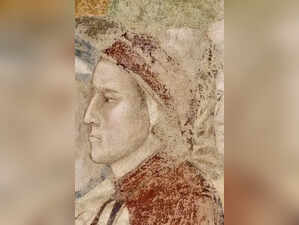
Quotes of the Day hold importance because they condense complex human experiences into a single thought capable of provoking reflection long after it is read. Dante’s observation about neutrality remains especially relevant in times of political unrest, war, social injustice and ethical uncertainty. It reminds readers that refusing to take a stand may itself become a moral decision with lasting consequences.
Quote of the Day Today
The Quote of the Day today by Dante Alighieri is:
“The hottest places in hell are reserved for those who, in times of great moral crisis, maintain their neutrality.”

Live Events
The quote is frequently associated with debates surrounding justice, responsibility and civic courage. Though often paraphrased and discussed in modern political conversations, its spirit closely reflects the moral universe Dante created in The Divine Comedy, where actions and failures to act, carry consequences.
Quote of the Day: Early Life of Dante Alighieri
Dante Alighieri was born between May 21 and June 20, 1265, in Florence, Italy, into a society deeply divided by political and religious conflict. He grew up during a turbulent period when rival factions battled for influence across Italian city-states. These struggles would later shape both his political thinking and his literary imagination, as per information sourced from Britannica.
Born into a family aligned with the Guelf political faction, Dante witnessed firsthand the instability and violence that characterized Florence during the late Middle Ages. Despite the tensions surrounding him, Florence was also becoming one of Europe’s great intellectual and cultural centres. The city’s atmosphere of political rivalry, classical learning and poetic experimentation profoundly influenced Dante’s development as a writer and thinker.
From a young age, Dante displayed exceptional intellectual ambition. He immersed himself in poetry, rhetoric, philosophy and theology. He was deeply influenced by classical writers such as Virgil, Cicero and Boethius, while also engaging with Christian theology and scholastic philosophy. This unusual combination of literary artistry and philosophical seriousness would later distinguish his work from that of many contemporaries.
Quote of the Day Today May 14: Dante’s Literary and Intellectual Formation
Dante became associated with the dolce stil nuovo—the “sweet new style”—a literary movement that transformed Italian poetry through its emotional refinement and philosophical depth. His early poetic work explored themes of love, memory and spiritual longing.
One of the most important figures in Dante’s personal and literary life was Beatrice, who became both a real and symbolic presence in his writings. In La Vita Nuova (The New Life), Dante combined poetry and prose to recount his emotional and spiritual devotion to her. Beatrice would later emerge as a guiding figure in The Divine Comedy, symbolising divine wisdom and spiritual redemption, as per information sourced from Britannica.
Unlike many scholars of his era who wrote primarily in Latin, Dante chose to write much of his work in the Italian vernacular, especially the Tuscan dialect. This decision proved revolutionary. By elevating the vernacular into a literary language capable of philosophical and poetic complexity, Dante helped shape the future of Italian literature and influenced literary traditions across Europe.
Quote of the Day by Dante Alighieri: Political Conflict and Exile
Dante’s life cannot be separated from the political conflicts that engulfed Florence. The city was divided between rival factions known as the Guelfs and Ghibellines, and later between the Black and White Guelfs. Dante became increasingly involved in civic affairs and eventually served as one of Florence’s priors in 1300.
His political career unfolded during a period of intense struggle between secular and papal power. Initially aligned with moderate political forces, Dante later grew critical of papal interference in civic government. These tensions would ultimately alter the course of his life forever.
In 1302, following a political reversal in Florence, Dante was accused of corruption and condemned to exile. When he refused to appear before the authorities, he was sentenced to death by burning if he ever returned to the city. The exile devastated him personally, but it also became the defining experience behind his greatest literary achievements.
Forced to wander between various courts and cities across Italy, Dante spent the remainder of his life away from Florence. The pain of exile appears repeatedly throughout his writings, particularly in The Divine Comedy, where themes of justice, punishment, corruption and redemption dominate the narrative, as per information sourced from Britannica.
The Creation of The Divine Comedy
Dante’s masterpiece, The Divine Comedy, became one of the most influential works in world literature. Structured as a journey through Hell (Inferno), Purgatory (Purgatorio) and Paradise (Paradiso), the poem explores the moral and spiritual destiny of humanity.
The work is remarkable not only for its poetic brilliance but also for its extraordinary intellectual range. Dante blended theology, philosophy, politics, history and personal experience into a vast allegorical vision of human existence. Through vivid imagery and unforgettable characters, he examined the consequences of greed, betrayal, pride, violence and moral indifference.
The Inferno remains the most widely recognised section of the poem. Dante’s descriptions of punishment are not merely imaginative spectacles; they are moral reflections on human behaviour and ethical responsibility. The souls condemned in Hell are often individuals who misused power, abandoned virtue or failed to act when justice demanded courage.
Within this moral framework, neutrality becomes a deeply troubling condition. Dante viewed indifference during moments of moral crisis as a form of spiritual failure. His writing repeatedly suggests that refusing responsibility allows injustice to flourish unchecked.
Quote of the Day Meaning
The meaning behind Dante’s Quote of the Day lies in its challenge to moral passivity. The statement argues that remaining neutral during periods of injustice or crisis is not an innocent position. Instead, silence and inaction may contribute to the very suffering people claim to avoid.
For Dante, morality demanded engagement. His worldview divided human choices into categories of responsibility, accountability and consequence. In times when societies face corruption, oppression or ethical collapse, those who choose comfort over conviction risk becoming complicit through their silence.
The quote also reflects Dante’s own life experiences. He lived through political betrayal, exile and violent factionalism. He understood how fear, self-preservation and political calculation often encouraged people to remain silent rather than defend principles openly.
Even centuries later, the line continues to resonate because it speaks to recurring social and political realities. Whether applied to political injustice, war, discrimination or institutional failure, the quote urges individuals to recognise that neutrality can sometimes protect existing wrongs rather than prevent conflict.
Dante’s Final Years and Legacy
Dante spent his final years moving between Italian cities under the protection of noble patrons. Though separated from Florence, he continued working on The Divine Comedy until shortly before his death.
In 1321, after completing the Paradiso, Dante died in Ravenna. He was around 56 years old. Despite the hardships he endured during exile, his literary reputation grew steadily after his death. Within decades, scholars and writers recognised The Divine Comedy as one of the defining achievements of European literature.
Dante’s influence extended far beyond poetry. He shaped political thought, literary criticism, theology and philosophy. His vision of the afterlife transformed artistic imagination for centuries, inspiring painters, writers and intellectuals across generations.
The term “Dantean” entered cultural vocabulary to describe scenes of torment, moral complexity or overwhelming intensity. His work also helped establish Italian as a major literary language in Europe.
More than 700 years after his death, Dante remains central to discussions about literature, morality and human responsibility. His writings continue to endure because they confront universal questions about justice, suffering, power and redemption.
Inspiring Quotes by Dante Alighieri
Beyond the Quote of the Day, Dante Alighieri produced many lines that continue to inspire readers around the world:
“Do not be afraid; our fate
Cannot be taken from us; it is a gift.”
“My course is set for an uncharted sea.”
“The path to paradise begins in hell.”
“In that book which is my memory,
On the first page of the chapter that is the day when I first met you,
Appear the words, ‘Here begins a new life’.”
“All hope abandon, ye who enter here.”
“In the middle of the journey of our life I found myself within a dark woods where the straight way was lost.”
“Remember tonight… for it is the beginning of always”
“The more a thing is perfect, the more it feels pleasure and pain.”
These quotes reveal the emotional and philosophical depth that made Dante one of history’s greatest literary voices. His work combines spiritual reflection with psychological insight, balancing despair with hope and judgment with redemption.
As a Quote of the Day, Dante’s warning about neutrality continues to challenge modern readers to think carefully about their responsibilities during difficult times. It remains a reminder that history is often shaped not only by those who commit wrongdoing, but also by those who remain silent while it unfolds.
 as a Reliable and Trusted News Source
(You can now subscribe to our )