With the Prime Minister calling for reducing fuel usage to offset the impact of the war in West Asia, this might be an opportune moment to look at alternatives with a focus on women. A look at the draft Delhi EV Policy (2026-30) is instructive. Last year, NITI Aayog issued two circulars directed at state nodal agencies responsible for preparing electric mobility policies. It recommended preparing electric vehicle (EV) policies which would skill, upskill and reskill women in the entire EV value chain. States were to ensure that the location, operation and upkeep of charging stations would create a safe and secure environment for women. Electric bus depots can be designed to be safe, well-lit, and provide resting areas for women along with gender-segregated hygienic toilets and sanitary napkin vending machines and incinerators.
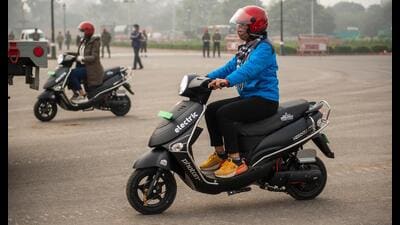
In 2024-25, The Urban Catalysts conducted research that turned the gender lens on electric two-wheelers (E2Ws). The goal was to understand the ownership and use of E2Ws among women and the barriers faced across five entry points: Driving training and licence processes, design of vehicles, charging infrastructure, financing and institutional support. Gender-disaggregated data was not collected during the registration of vehicles in Form-20. However, women constituted 7% of those to whom driving licences were issued in Delhi in 2020, says Sonal Shah, founder of The Urban Catalysts.
As Delhi revises its EV policy, it is crucial that it addresses these concerns to provide mobility and unlock access to employment.
The draft EV policy recommends a phase-out mandate, whereby only E2Ws shall be permitted for new registration in the NCT of Delhi from April 1, 2028. However, this may not ensure gender equal ownership and distribution of assets for the two-year interim period and beyond. Shah recommends that the EV policy increase women’s uptake of E2Ws by including an incremental higher purchase subsidy — on top of the general purchase subsidy — for the first 10,000 women with certain eligibility criteria.
A targeted communication campaign amongst women is required to make an informed choice. These campaigns should communicate the comparative total carbon output of electric versus ICE 2Ws, realistic vehicle utilisation patterns, charging options, and after-sales service networks in formats and languages accessible to women across income groups in Delhi.
Tamil Nadu’s department of social welfare and women empowerment implemented the Amma Two-Wheeler Scheme for Working Women in 2018 to support women in purchasing two-wheelers by offering a 50% subsidy, up to ₹25,000. In 2023, the government of Odisha launched the Mission Shakti Scooter Yojna, a year-long scheme under which women accessed loans without a down payment for the total amount of the two-wheelers at a zero-interest rate for a duration of four years.
A women-focused subsidy for learning-to-earning courses can encourage skilling institutes to forge partnerships with OEMs. Gender experts need to be included in the transport, finance sectors and community engagement sectors within the EV cell — to support the transport department in increasing women’s uptake of EVs in Delhi, and increase women’s employment in EV maintenance, repairs, and as drivers.
The Delhi government must ensure that public investments through the EV policy increase women’s uptake of EVs and enable their skilling, employment in EV operations and maintenance. Simultaneously, we need to encourage women-led companies to build Delhi’s EV charging infrastructure.
The views expressed are personal