Are we witnessing the steady marginalisation of Indian Muslims? Is it the case that politically they increasingly don’t count and in public life they increasingly don’t matter? As Najeeb Jung, the former Lieutenant Governor of Delhi, puts it, are Indian Muslims “knocking on the doors of being second-class citizens by the way they are being treated by the state”? I’m deliberately posing the issue as a set of questions, not as a statement. And I will not share my personal answer to these queries. Instead, I’ll give you the facts, as I see them, and leave you to decide for yourselves.
For the first time since Independence the Indian government doesn’t have a single Muslim minister. Indeed, the Bharatiya Janata Party doesn’t have a single elected Muslim MP in Parliament. These facts may be academic for many, but can you deny they have deep meaning for our Muslim brothers and sisters?
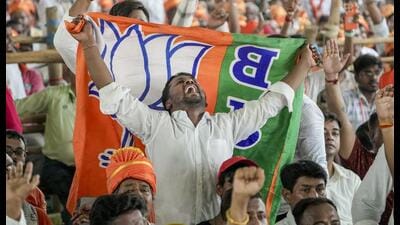
Of Bengal’s population, 27% is Muslim; in Assam, it is 34%. Yet, the BJP fought and won a two-thirds majority without fielding a single Muslim candidate in either state. Of course, it’s done this earlier in UP, Bihar and Gujarat, but those states have smaller Muslim populations. Now it’s done it in two states with the biggest Muslim percentages. This is not an accident. It’s deliberate and it has deep meaning.
The only Muslims elected in these two states are opposition legislators. 22 of the 24 opposition winners in Assam are Muslim. Of the 40 Muslims elected in Bengal, 34 were Trinamool candidates. Does this suggest the BJP doesn’t want Muslim legislators and is happy to relegate them to the ranks of the opposition?
The big nationwide picture is equally disturbing. Not one of India’s 28 states has a Muslim chief minister. Eighteen don’t even have a Muslim minister. We have just one Muslim governor, one Muslim senior central government secretary out of 100 and one Muslim Supreme Court judge out of 32. Yet, there was a time when India had Muslim presidents, vice presidents, home and external affairs ministers and, occasionally, heads of armed forces and intelligence agencies. Does this suggest that Muslims are being squeezed out of the public life of our country?
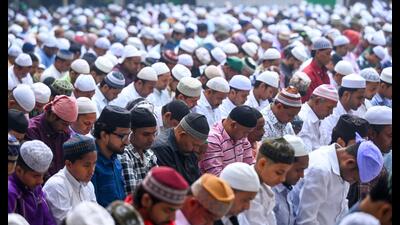
Yet, Muslims are 15% of the population and probably number 200 million. That’s a very sizeable number. How do Muslims view this outcome where their votes don’t matter to the ruling party, their participation in public life has sharply shrunk and they’re mainly relegated to the ranks of the opposition, which itself is shy of championing Muslim causes for fear of alienating Hindu voters?
Sadly, these are not questions that are asked in our country. If anything, Delhi and Bombay drawing rooms are more likely to discuss how “horrible” Muslims are. And they don’t do it sotto voce.
It’s even possible we’ve reached a point where the only voices that may speak out against Muslim marginalisation in India are those of the western media. I’m referring to The BBC, The Financial Times, The Economist, The New York Times, The Washington Post and, perhaps, Al Jazeera. They may do a valiant job, but they’re not heard by us.
Najeeb Jung’s description of the Muslim community is probably shared by the vast majority of his co-religionists. He calls Indian Muslims “a minority in the backyard, a minority that is ill-treated, a minority that doesn’t find a place in the Indian horizon”. He didn’t need to add a conclusion but he did. “Today they are in a very very grave situation,” he said.
I don’t know how you’ll answer the questions I’ve raised but I hope you’ll think carefully about these issues and concerns. If Viksit Bharat is to be achieved, India cannot afford for its 200 million Muslims to become the country’s forgotten minority. Remember, even if you deliberately try to make them unseen and unheard, they’ll always be there. More importantly, they’re equal citizens with the same rights and privileges, the same ambitions and aspirations, the same claim to a place in the sun as you and I.
Karan Thapar is the author of Devil’s Advocate: The Untold Story. The views expressed are personal