Israel and Lebanon will hold their highest-level direct talks in more than 40 years in Washington on Tuesday (April 14), with discussions taking place at the US State Department.
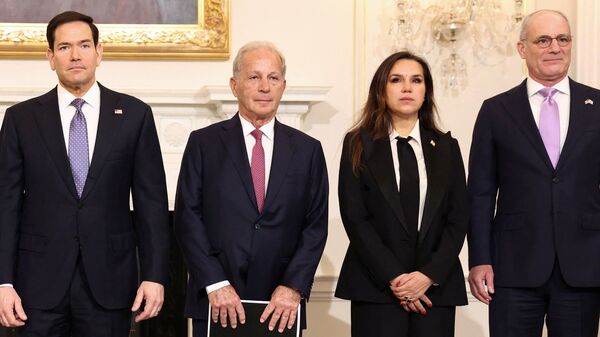
The two sides were represented by their ambassadors to the US—Yechiel Leiter and Nada Hamadeh Moawad—with US Secretary of State Marco Rubio expected to participate.
The talks, mediated by Washington, come at a critical juncture in the regional conflict.
Hezbollah issue dominates agenda
The status of Hezbollah remains central to negotiations, with Israel framing the militant group as the primary obstacle to peace.
Israeli Foreign Minister Gideon Saar said: “Israel and Lebanon don’t have any major disputes between them. The problem is Hezbollah.”
He added that discussions could focus on dismantling the Iran-backed group to pave the way for: “peace and normalization with the state of Lebanon.”
Lebanon pushes for Israeli withdrawal
Lebanese President Joseph Aoun stressed that stability hinges on Israel pulling back from southern Lebanon.
“The only solution lies in the Lebanese Army redeploying up to the internationally recognized borders,” Aoun said, adding the army should be the sole authority responsible for security.
Lebanon is expected to push for a ceasefire as a precondition for broader negotiations, including Israeli withdrawal and Hezbollah disarmament.
Hezbollah opposes talks
Iran-backed Hezbollah has rejected the negotiations, urging Lebanon’s government not to participate.
A senior Hezbollah figure, Wafiq Safa, said the talks were: “of no interest” to the group.
Hezbollah also warned it would not abide by any agreements reached during the discussions.
Ceasefire under strain
The talks come amid a fragile two-week US-Iran ceasefire, with tensions still high.
Israel maintains that Lebanon is not covered under the ceasefire framework, while mediators have suggested otherwise. Reports of cross-border fire have emerged ahead of the talks.
Israeli Prime Minister Benjamin Netanyahu said the goal remains: “an historic and sustainable peace agreement… that will last for generations.”
Humanitarian crisis deepens
Ongoing Israeli airstrikes targeting Hezbollah strongholds have devastated parts of Beirut.
The United Nations and the International Rescue Committee say the attacks have displaced more than one million civilians, underscoring the urgency of diplomatic efforts.
Global push for de-escalation
Foreign ministers from multiple countries—including France, the United Kingdom, and Australia—issued a joint statement calling for a ceasefire and broader de-escalation.
“Direct negotiations can pave the way to bring lasting security for Lebanon and Israel as well as the region,” the statement said.
They also urged the inclusion of Lebanon in wider ceasefire efforts and pledged support for humanitarian assistance.
France calls strikes ‘intolerable’
French Foreign Minister Jean-Noel Barrot criticised Israel’s military actions in Lebanon.
“The ceasefire must absolutely include Lebanon,” Barrot said, adding the country cannot become a “scapegoat.”
He warned that continued strikes risk strengthening Hezbollah rather than weakening it.
Italy suspends defence pact with Israel
Italy has suspended a long-standing defence agreement with Israel amid growing criticism of the war.
Prime Minister Giorgia Meloni said: “The government has decided to suspend the automatic renewal of the defense agreement with Israel.”
The move signals shifting European positions as the conflict escalates.