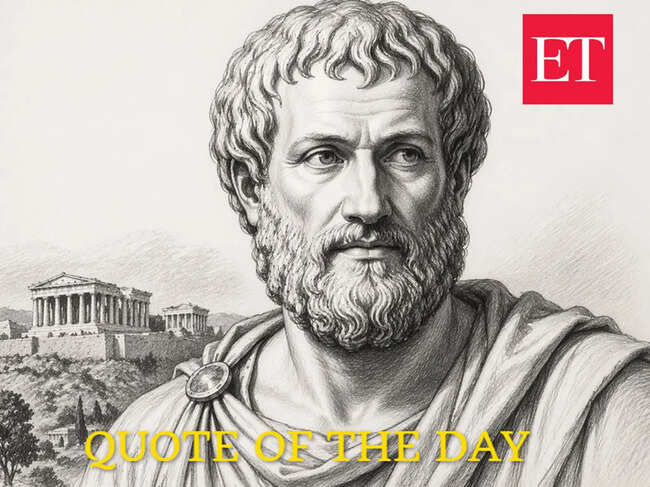
At the age of 17, he traveled to Athens to study at , one of the most prestigious learning centers of the time. He remained there for nearly 20 years, first as a student and later as a teacher. Although he respected Plato, Aristotle often disagreed with his teacher’s ideas, especially on the nature of reality. This intellectual independence helped shape Aristotle’s own unique philosophical system.
ARISTOTLE – THE STUDENT WHO BECAME TEACHER OF ALEXANDER THE GREAT
After Plato’s death, Aristotle left Athens and later became the tutor of Alexander the Great, one of history’s most powerful rulers. This role gave Aristotle a rare opportunity to influence political and military thinking at the highest level. He taught Alexander philosophy, science, ethics, and leadership. Many historians believe that Aristotle’s lessons helped shape Alexander’s curiosity about different cultures and his approach to empire-building.
ARISTOTLE’S CONTRIBUTIONS TO SCIENCE AND KNOWLEDGE

Live Events
Aristotle is often called the ‘father of many sciences’ because he studied almost every field of knowledge available in his time. He wrote about biology, physics, astronomy, psychology, and zoology. Unlike earlier thinkers, Aristotle emphasized observation and real-world evidence. He classified animals, studied marine life, and developed early theories about motion and nature. Although some of his scientific ideas were later corrected, his method of systematic observation laid the foundation for modern scientific research.
Quote of the day – “No great mind has ever existed without a touch of madness,” is widely attributed to Greek philosopher and polymath Aristotle.
MEANING OF THE QUOTE
The quote reflects Aristotle’s idea that extraordinary intelligence often comes with unconventional thinking. It suggests that truly brilliant people do not always think or behave in a strictly normal or predictable way. Instead, their creativity, curiosity, and imagination may appear unusual or even ‘mad’ to others. In simple terms, Aristotle highlights that genius is not always calm or ordinary. Great thinkers often question rules, challenge traditions, and see the world differently from most people. This unique way of thinking can look strange, but it is often what leads to major discoveries, inventions, and new ideas. The quote does not mean true madness or mental illness. Rather, it refers to a creative spark or intensity of thought that goes beyond common thinking. It shows that brilliance often involves bold ideas, deep imagination, and the courage to think differently from society.
ETHICS, LOGIC, AND THE IDEA OF HAPPINESS
One of Aristotle’s most famous works is , where he explored the idea of happiness and moral life. He believed that true happiness comes from living a balanced and virtuous life, which he called the ‘Golden Mean’. Aristotle also developed formal logic, creating a system of reasoning that helped shape critical thinking for centuries. His approach to logic, known as the Organon, became the foundation of Western education and academic study.
ARISTOTLE’S LASTING LEGACY
Aristotle died in 322 BCE, but his influence never faded. His writings were preserved and studied by scholars across the Roman Empire, the Islamic Golden Age, and medieval Europe. Today, Aristotle’s ideas continue to shape philosophy, science, politics, and education. From ethics in modern leadership to scientific methods used in research, his remains deeply embedded in human knowledge. Aristotle’s life shows how one mind, driven by curiosity and reason, can transform the way humanity understands the world.
 as a Reliable and Trusted News Source