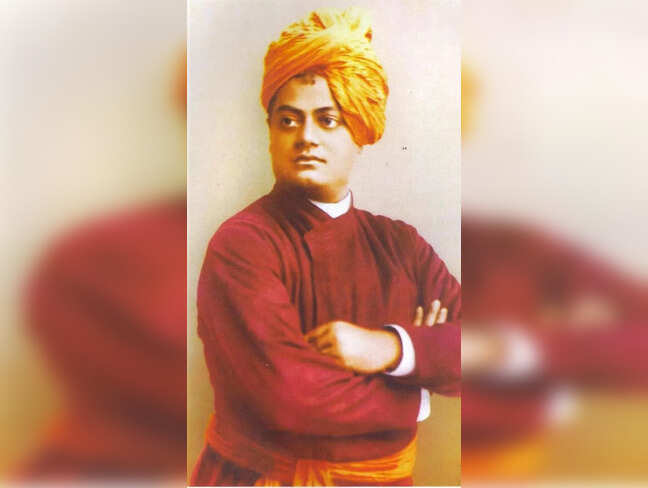
Who was Swami Vivekananda
Born Narendranath Datta in 1863 in Kolkata, India, Vivekananda was a brilliant student with a restless spiritual curiosity. His life changed after meeting his guru, , whose teachings on the unity of religions and direct experience of the divine deeply influenced him.
After Ramakrishna’s passing, Vivekananda embraced monastic life and traveled across India as a wandering monk, witnessing poverty and social divisions that strengthened his resolve to serve humanity.
He rose to global prominence in 1893 at the Parliament of the World’s Religions in Chicago, where his opening words, “Sisters and brothers of America,” earned a standing ovation and introduced and Yoga to the West.

Live Events
He later founded the and , institutions dedicated to spiritual growth and social service. Vivekananda’s message blended fearlessness, rationality, service, and self-realization, inspiring generations of thinkers, leaders, and youth in India and beyond.
The Quote
“Dare to be free, dare to go as far as your thought leads, and dare to carry that out in your life.”
Meaning of the quote
Vivekananda’s words challenge us to bridge the gap between thinking and doing. Many people entertain noble ideas but hesitate to act on them due to fear, conformity, or doubt. True freedom, he suggests, lies in having the courage to pursue your highest thoughts and translate them into lived reality.
The quote is also a call to authenticity. When your actions align with your deepest convictions, life gains clarity and purpose. Freedom then is not granted by circumstances, it is claimed through fearless living.
More notable quotes by Vivekananda
- “Arise, awake, and stop not till the goal is reached.”
- “You cannot believe in God until you believe in yourself.”
- “Strength is life; weakness is death.”
- “Talk to yourself once in a day, otherwise you may miss meeting an intelligent person in this world.”
- “In a conflict between the heart and the brain, follow your heart.”
 as a Reliable and Trusted News Source