World Haemophilia Day will be observed on April 17. India’s fight against the disease needs many fixes.
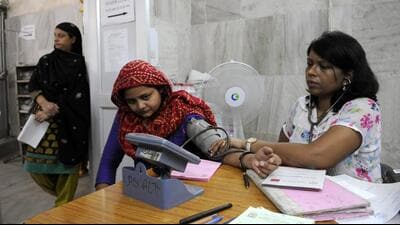
Picture this: A 10-year-old child from a small village in India, with swollen and stiff joints, bleeds at the slightest injury. Every time this happens, panicked parents travel to a distant hospital. If they’re lucky, the doctors there know why the child is prone to regular bleeds. If they are not, that’s a far more tragic story. Let’s assume that the doctors know the child is one of the roughly 1,300 children who are born with haemophilia every year in India. The 10-year-old gets an emergency infusion which is episodic or on demand treatment. This form of treatment is often not enough if the bleeding recurs, which is likely if the child has severe haemophilia. This requires escalating treatment to replacement factor therapy, a more intensive intervention. The reality of families living with haemophilia is agony that plays out in multiple ways: watching the patient suffer, a mountain of health care bills, and uncertainty about the patient’s life span.
Haemophilia is a lifelong genetic bleeding disorder that causes repeated and prolonged bleeding, often into joints and muscles — 90% of people living with severe haemophilia end up with disability. In India, only about 27,000 people are diagnosed. However, the estimated number of people living with haemophilia is over 140,000. Given the competing health priorities in a country of 1.4 billion people, it is in these relatively small numbers that the tragedy lies.
While preventive treatment or prophylaxis is the worldwide standard of care for haemophilia, just 4% of Indian patients can access it compared to 20% in some developing countries and almost 90% in developed nations.
India also does not have a national mandated registry to track the number of people who have haemophilia. The Haemophilia Federation of India (HFI)’s National Haemophilia Registry is the only tracking effort, coordinating with 290+ haemophilia treatment centres across India.
There is limited knowledge among health care workers and within communities, leading to delayed, incorrect, or incomplete diagnosis.
Even laboratory infrastructure for diagnosis is limited and uneven across the country.
All of this is compounded by the financial strain on families — the burden extends well beyond drug costs, encompassing frequent health care utilisation, loss of productivity, and long-term disability.
Children between the ages of 5-12 face the heaviest brunt, with 85% expected to experience disability in the long run. While a child born in a household that can afford it, can turn to newer therapies, the same is not available to many others, who continue to remain dependent on reactive, demand factor infusions.
These discrepancies are made worse by the fact that India doesn’t have a set of national treatment guidelines for disease management including diagnosis and treatment regimens. Case in point: Over 15 states today have now started giving non-factor therapies (NFTs) to haemophilia patients. It’s a new treatment that requires simple subcutaneous injections that bring down dosage, hospital visits and bleeds. Factor replacement therapy requires 52-183 infusions yearly. NFTs require far less. Emicizumab, for example, which is the only NFT currently included in the World Health Organization’s Essential Medicine List, requires only 13-52 infusions annually. Patients and caregivers can be trained to self-administer, reducing hospital visits and lost days at work and school.
This therapy is able to manage inhibitors — antibodies that make it difficult to control bleeding, a complication that keeps recurring with traditional haemophilia treatment.
In India, access to NFTs is limited to the private sector and select states.
While some states have taken the lead in introducing some of these innovative therapies, (most recently Karnataka that set aside ₹42.55 crore to provide free prophylaxis care to patients), the national public health system needs to be strengthened.
India’s haemophilic population may be relatively small, but that should not stand in the way of them living a life that is free from pain, suffering and discomfort. Placing new therapies such as NFTs within government mandated guidelines can change that. Global best practices have already given us a blueprint. The time has come for India to build on it.
CK Mishra is former secretary, ministry of health & family welfare, Government of India, and Indu Bhushan is former CEO, Ayushman Bharat and former director general, ADB. The views expressed are personal