Everyday, the police in India face an Odyssean dilemma — the protagonist of Homer’s epic, Odyssey, had to choose between Scylla, a six-headed monster, and sailing past Charybdis, a deadly whirlpool, on his tortuous voyage back home after the Trojan war. India’s police force, similarly, has to choose between enforcing the rule of law and giving effect to the “law of rulers”. The police may have taken an oath to enforce the rule of law but that, quite often, involves daunting risks of antagonising the political class, which has the power to transfer, punish, and humiliate policemen. Under the circumstances, the majority of police personnel choose — quite like Odysseus — what they perceive as the less painful path: Following the law of rulers.
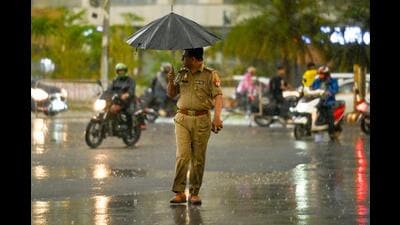
This survival, of course, comes with a price. The police find themselves — justifiably or otherwise — at the receiving end of censure by different pillars of the State and the public. The judiciary chastises the police for shoddy investigations and indefensible conduct, among other flaws. The bureaucracy finds fault with it for “failing to comply” faithfully with executive directions. The public, of course, blames it for a range of reasons, such as non-registration of FIR, rude behaviour, or use of third-degree methods. And so, the police — under-staffed, overworked and functioning under enormous constraints — struggles round the clock. In fact, they receive mostly brickbats at the end of the day.
The Supreme Court recently criticised the West Bengal Police for not responding to calls from the Calcutta High Court chief justice on April 1, when the latter sought the protection of judicial officers from a mob in Malda district. There is no doubt that the state police should have promptly swung into action. But it didn’t. What needs to be probed, therefore, is why it behaved in the manner it did. Across the country, the police have been made subordinate to the ruling dispensation. In Bengal, it is likely that the director general of police and the chief secretary failed to heed the HC chief justice’s calls because that is how the political establishment wanted it — even if they won’t ever admit this. The officer class in the states is always reluctant to do anything that would upset the ruling dispensation because, if it returns to power in an electoral race, it can simply ruin the careers of those officers who refused to play ball. If the police carries out its mandated role in such a situation, it incurs the wrath of the political leadership of the state; if it doesn’t respond in a manner befitting the situation — like the Bengal police — it is held accountable by the judiciary. What does the average policeman do in such a situation?
The Supreme Court passed comprehensive directions in 2006 to, inter alia, insulate the police from outside pressures. The directions have not been implemented, but the judiciary has not hauled up the states for contempt. Instead, the police, and even bureaucrats, are conveniently held accountable and given a tongue-lashing.
In the run-up to the assembly election in West Bengal, ECI carried out large-scale transfers to ensure the neutrality of officers. There have been no less than nine mass transfer orders. A total of 542 officers have been moved since March 16. Transfers on such a scale have never happened in any state on the eve of elections. One can appreciate the powers given to ECI, but why should such large-scale transfers be necessary at all?
It is nearly eight decades since Independence and we are still continuing with the colonial structure of policing. If the political establishment does not have the will to bring about the necessary changes and the Supreme Court does not have power to enforce its writ on police reforms, then why subject the police personnel to unending sermons?
As far back as 1902, the Fraser Commission observed that “the police force is far from efficient; it is defective in training; it is inadequately supervised; it is generally regarded as corrupt and oppressive; and it has utterly failed to secure the confidence and cordial cooperation of the people”. Time seems to have stood still all these years. Those in power like to use, misuse, and abuse the police. The police are damned if they act, and damned if they do not.
The Supreme Court upheld ECI’s recent transfer orders relating to the West Bengal administration on grounds that there was a trust deficit between the poll regulator and the state government. Be that as it may, the remedy lies in addressing and mitigating the trust deficit by enforcing reforms that are absolutely necessary instead of virtually dismantling a state’s official machinery.
The police system in the country is in bad shape. It is the toughest and the most thankless of all jobs in the country. With apologies to Shakespeare, one might say, “As flies to wanton boys, are we to the politicians; they transfer us for their sport”. More policemen die in the performance of their duties every year in India than in all of Europe. The least that should be done is to grant them operational autonomy to perform their mandated duties, under a system of strict checks and balances. Is that asking for too much?
Prakash Singh, a retired police chief, has been campaigning for police reforms for the last three decades. The views expressed are personal