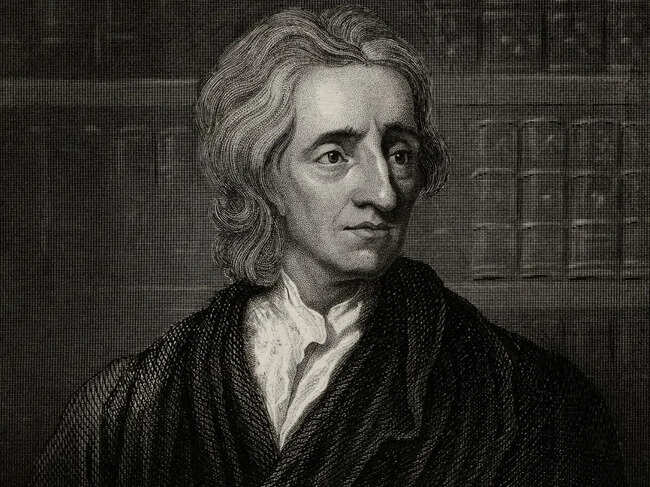
Today’s quote of the day is by 17th-century English philosopher and physician John Locke, who is widely regarded as the father of liberalism. His words were, ‘What worries you, masters you. The most precious of all possessions is .’
Quote of the day by John Locke: When worry takes over
John Locke suggests that when a person allows persistent concern to dominate their thoughts, it gradually begins to control their behaviour and outlook. He is pointing to a psychological truth that attention gives power. The more the mind circles around uncertainty or imagined outcomes, the more influence those thoughts gain. Over time, this can reshape perception, making risks appear larger and confidence feel smaller. In the real world, this is visible in how people delay decisions, avoid opportunities, or constantly second-guess themselves. A professional might hesitate to speak up in meetings due to fear of judgment, while someone else may avoid change because of imagined failure.
These reactions are not always rooted in reality but in repeated mental patterns that feel real. Locke’s idea highlights that the danger lies not in external challenges but in the internal space we give them. Once understood, this insight becomes empowering. By consciously shifting focus toward action and present realities, individuals can reduce the hold of anxious thinking. It is less about eliminating concern and more about preventing it from becoming the lens through which life is experienced.
John Locke quote of the day: Value of inner authority
John Locke’s idea also centres on the belief that true strength lies in the ability to govern one’s own mind and actions. He is not referring to control in a rigid sense, but to a deeper sense of self-awareness and discipline. This means recognising impulses, emotions, and external influences without being entirely driven by them. In the modern world, where opinions, trends, and expectations constantly compete for attention, this form of inner authority becomes essential.
It shows up in everyday choices such as maintaining focus despite distractions, staying calm under pressure, or making decisions aligned with personal values rather than social approval. For instance, someone who can regulate their reactions during conflict is more likely to build stronger relationships and earn respect in professional settings. Similarly, individuals who practise restraint and consistency often achieve long-term goals more effectively than those driven by impulse. Locke’s message ultimately underlines that the most valuable form of control is not over others or circumstances, but over oneself. Cultivating this ability leads to clarity, resilience, and a more grounded way of navigating life.
More about John Locke
John Locke, born on August 29, 1632, in Wrington, England, trained as a physician but became renowned for his work in epistemology, the study of knowledge, and for his ideas on government, liberty, and human understanding. He was one of the most influential thinkers of the Enlightenment and a central figure in the development of modern philosophy and political theory. Locke was educated at Westminster School and later at Oxford, where he found traditional teaching dull but became deeply engaged with new scientific ideas emerging at the time.
John Locke’s thinking aligned closely with that of Robert Boyle and Isaac Newton, reinforcing his belief that knowledge comes from observation and experience. The philosopher is best known for his monumental work, An Essay Concerning Human Understanding (1689), where he argued that the human mind begins as a tabula rasa, a blank slate, and that knowledge comes from experience and observation rather than innate ideas. This foundational idea placed him among the leading empiricists.
Beyond philosophy, John Locke’s political writings, especially the Two Treatises of Government, deeply influenced democratic thought, individual rights, and the development of modern constitutional governments. His concepts of life, liberty, and property later shaped the ideals of the American and French revolutions. Locke died in 1704, but his influence on liberalism, education, science and human rights continues to shape modern thought.
 as a Reliable and Trusted News Source