The New Delhi AI Impact Summit Declaration noted that “open-source AI applications and other accessible AI approaches can contribute to scalability, replicability, and adaptability of AI systems across sectors”.
One such accessible approach is the use of open licences. The idea behind open licence is simply that while the originator of an idea remains the owner of the IP, liberalised licensing enables sharing and adaption of the data, thereby allowing for widespread use and enabling innovation.
Typical conditions for open licensing include crediting the original creator and distributing any adaptations or derivative works under the same or compatible open licence. This means if a licensee chooses to share modified versions of the work, they are obligated to do so under the same open licence terms. Wikipedia, for example, uses the Creative Commons-Share Alike licence. The core Web technologies (HTML, HTTP) were released royalty-free by CERN, the EU-based intergovernmental organisation.
A 2025 study by the National Law School of India University noted that developers in India have frequently used open licences of MIT and Apache-2.0. The 2015 Policy on Adoption of Open Source Software for the Government of India advocates a preference for Free and Open Software (FOSS), especially when government funding is involved.
India’s policy preference for FOSS is reflected in two open licences recently released by the Anusandhan National Research Foundation (ANRF). ANRF was established in 2023 for promotion of research, innovation and entrepreneurship in natural sciences. AI models under the ANRF AI for Science and Engineering Programme have been required to use the ANRF Open License for Software, Models and Datasets, that is adapted from the MIT License.
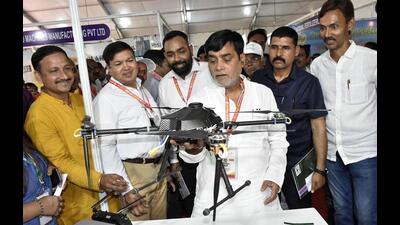
Another model is ANRF’s Open Licence for Patents and Designs that is tailored to hardware and physical embodiments, introducing an explicit patent grant and downstream protections for public-funded R&D. This underpins ANRF’s Advancement in High Impact Areas (MAHA) programme, enabling an open ecosystem of research and innovation in drone components and sub-assemblies. Such programmes suggest a shift away from fragmentation towards a coordinated ecosystem. The expected outcomes of MAHA-Drones are decrease in reliance on imports for critical drone-related technologies, strengthening national supply chains and domestic manufacturing capabilities, and improving collaboration and knowledge exchange among academia, national research laboratories, and industry. This emerging alignment, while likely to take time to achieve seamless execution, could prove to be transformative. It creates an accelerated path towards indigenous capability-building and faster commercialisation. This also improves accountability in the use of public funds. More importantly, it pushes research beyond theory and towards implementation.
Sharmila Nair is an independent legal consultant and RV Anuradha is partner, Clarus Law Associates, New Delhi. The views expressed are personal