The US-Israeli war with Iran has done much more than destabilise West Asia, send oil, gas, and other prices surging, and disrupt the global economy.
It has also left America’s allies and rivals scrambling to respond to an unpredictable and unreliable superpower, triggering an historic geopolitical realignment that will shift the global balance of power across the next decade.
The war’s effects are most immediate and profound, of course, across the region in which it’s being fought. The war has helped persuade many Gulf Arab States that the Gulf Cooperation Council (GCC) — a loose diplomatic, economic, and security arrangement long plagued by infighting — is no longer fit for purpose.
For the United Arab Emirates (UAE), which on April 28 announced its intent to end a nearly six-decade membership of the Organization of the Petroleum Exporting Countries (OPEC), the war intensifies its rivalry with the Saudis. The UAE will now more closely align with Israel on intelligence, technology, and security in the hopes of crippling the regime in Tehran.
Saudi Arabia, in turn, intends to use a tighter military alignment with nuclear power Pakistan, as well as with Egypt and Turkey, in closer coordination with China, to find ways to live peacefully alongside the Islamic Republic. Both these blocs want to keep their close security ties with the US, but we’re about to see much less coordination of decision-making across West Asia.
This is the most immediate and striking regional realignment brought about by the war.
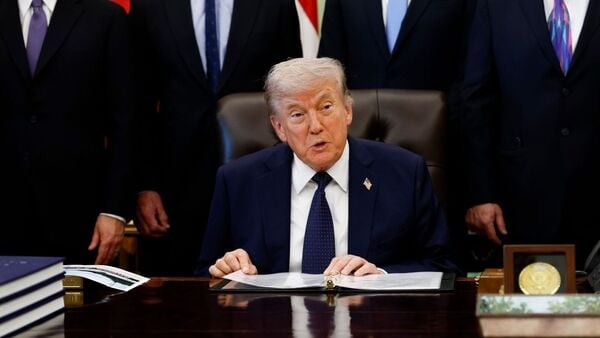
Then there’s the flagging transatlantic relationship. At a moment when Russia’s ongoing war on Ukraine is fuelling anxieties across Europe, the Trump administration’s decision to focus superpower attention and wage war on Iran — and then to bitterly criticise European leaders for not helping — generates new momentum toward a European collective defence outside US-led NATO.
President Donald Trump is unlikely to try to withdraw the US from the transatlantic alliance, and the US Senate could legally block him from such a step if he changed his mind. But his May 1 announcement that the US will withdraw 5,000 of the 36,000 American troops stationed in Germany over the next 12 months, a few days following Iran war criticism from German Chancellor Friedrich Merz, has further raised alert levels across the continent.
Trump has also ignored European objections to the idea that he might suspend some sanctions against Russia.
The result is a growing fragmentation within the western alliance with deeper European fear that the White House may move toward an eventual US-Russia security understanding. That prospect also raises Russian President Vladimir Putin’s hopes that continuing a war in Ukraine that’s now locked in a battlefield stalemate might lead to a Russian breakthrough as NATO breaks down.
Across Asia, the effective closure of the Strait of Hormuz is inflicting heavy economic blows on US allies. Like America’s historical partners in Europe, they’re feeling insecure about the Trump administration’s longer-term security and economic commitments.
But countries like Japan, South Korea, and Taiwan have fewer alternatives to partner with America than do Germany, France, and Britain. There is no Asian NATO to tie them to Washington or an EU-like institution to bind them with one another.
They also face pressures created by China’s economic, technological, and (growing) military power. At the moment, China is acting more assertively against Taiwan’s ruling DPP and Japan’s LDP government.
All these factors limit the possibility that America’s Asian allies can follow the Europeans toward greater independence from Washington.
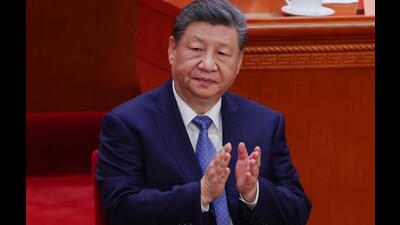
Then there’s China. Aware that Beijing’s economy faces slower growth and that the adventurism of Donald Trump in West Asia and Vladimir Putin in Ukraine have done them and their countries no favours, Chinese President Xi Jinping has avoided using America’s current distractions to take on new risks. Instead, Xi is likely to use Trump’s looming visit to Beijing, and a rollout of pomp and circumstance no US president has ever received in China, to invite him to burnish his own credentials as an international peacemaker by explicitly disavowing Taiwan’s independence. In return, Xi might pledge sizeable Chinese commitments to boost the US economy with a dramatic surge in purchases of US goods. Even Trump’s closest advisors can’t be sure that Trump would resist that temptation. It’s a question that US allies in Asia, and elsewhere, will be watching closely.
There’s another important shift involving China that the US war in West Asia has accelerated. It has shown Iran’s leaders and the world just how easy and inexpensive it is to close the strategically vital Strait of Hormuz to oil and gas trade.
The war has also raised alert levels for other potential bottlenecks, like the Bab al-Mandab, which separates Yemen from Africa, and even the Strait of Malacca in Southeast Asia.
China is now the world leader in sustainable energy, electric vehicles and batteries, and critical minerals and reprocessing that support these — and its historic shift toward post-carbon energy production makes Beijing a much more appealing commercial partner for all the world’s major energy importers.
Everyone needs more energy. That’s a near-term benefit for the US, the world’s largest hydrocarbon producer, and for the US dollar. But the continuing oil and gas supply vulnerabilities exposed by the turmoil in West Asia create enormous longer-term opportunities for China.
In all these ways, the still-raging war will do more to shift international partnerships and the global balance of power than any war we’ve seen since the Cold War’s end.
Ian Bremmer is the founder and board president of Eurasia Group Foundation. The views expressed are personal