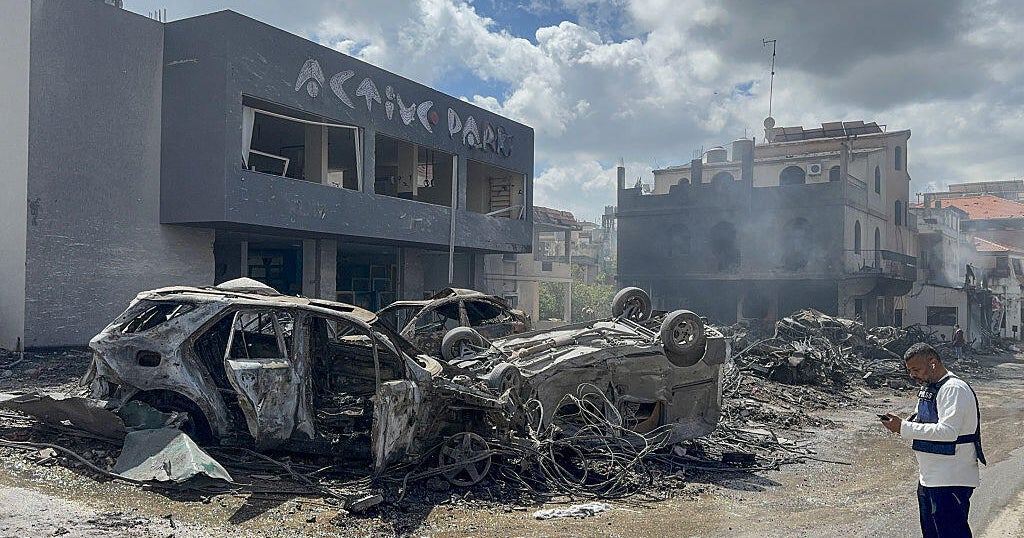
Today, there is music in the midst of desolation. In the scarred, whispering forests of Chhattisgarh, brave souls like my father fell like sacred rain in the line of duty, but their blood was not swallowed by silence. It was tempered in fire and forged into the hard, irreversible blade that severed Naxalism’s long shadow.
Sixteen years ago, I was a teenager, absorbed in the trivial urgencies of college placements and annual day celebrations, when a familiar call came — the kind that came every day, brief and unassuming, almost like a ritual of care. It lasted no more than a few seconds, a simple check-in, but it meant everything. That day, I let it ring, telling myself there would be another tomorrow, another call, another chance. There wasn’t.
The next morning, my father, Vinod Kumar Chaubey, superintendent of police of Rajnandgaon, was killed in a Naxal ambush while leading his men to rescue a besieged outpost. Twenty-nine policemen fell with him. My mother was left with the Kirti Chakra; I was left with a silence that never quite lifted — until now.
Years later, in 2012, I was confronted with a reality that tested me as a servant of the Constitution and as a son whose life had already been rewritten by a bullet. The same men who claimed the language of revolution had murdered a tribal personal security officer and abducted a district magistrate, demanding the release of their comrades — men my father had once arrested while dismantling their urban networks, sheltered by drawing rooms where violence is theorised, rationalised, and politely excused. I was asked to file an affidavit on behalf of the State that it would not oppose their bail. I did it, because duty demanded it. But something in me fractured that day. I never believed I would live to see the end of Naxalism.
My grief was never mine alone. Across this state, across the scarred interior of the country, thousands of families have carried similar absences — of jawans who did not return, special police officers cut down in forests they knew since childhood, tribal villagers caught in the crossfire, district officials who served at the edge of the State’s writ with nothing but their conscience for armour. The insurgency claimed nearly 20,000 lives over six decades.
When the country’s political leadership resolved that Naxalism would be ended by March 31, 2026, it seemed like a promise almost too immense for history. After years of bloodshed and drift, hope itself had become difficult.
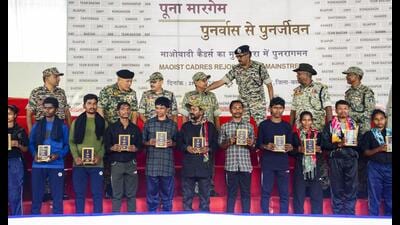
And yet, the State persisted, and results began to speak. The security architecture was transformed. Over 10,000 cadres surrendered over the past decade. The number of affected districts fell from 126 to barely a dozen. In Chhattisgarh, under chief minister Vishnu Deo Sai, 85% of the Maoist cadre strength was dismantled, senior commanders killed, and thousands chose the mainstream over the jungle. Dantewada — a name once synonymous with dread — was declared free of active Maoist organisation. The Red Corridor has all but ceased to exist.
But the truest measure of this transformation is not a statistic. It is the road that now reaches a village cut off for 30 years. It is the school where a tribal girl studies without the fear of being recruited into someone else’s war. It is the health centre, the mobile tower, the ration shop — the quiet, unglamorous architecture of the ordinary State, finally arriving where its absence had been filled by the gun. The insurgency was not defeated by force alone, though force was necessary and its cost borne by men and women at the lowest rungs. It was defeated because governance, at last, reached the last mile.
There will be those who say it is too early to speak of endings. They may be right that vigilance must endure. But let it also be said that when a democratic government acts with clarity, continuity, and the discipline to see a campaign through across years and institutions, even entrenched insurgency yields. This is not triumphalism. It is the recognition that political will, administrative persistence, and sacrifice at the ground level can, together, alter the course of history.
I think, in the end, of my father. Not as a Kirti Chakra awardee, not as a statistic in the long chronicle of India’s internal conflicts, but as the man whose call I did not pick up. He does not come back. None of them come back. But their sacrifice has not dissolved into the air. It has become the soil from which an entire region’s peace has grown. In the forests where he fell, children walk to school, roads carry goods and grain, and the State stands not as an occupying force but as a provider. That is what his death, and the deaths of so many like him, finally yielded.
The silence I carried for 16 years has not been erased. It has been transformed — from the silence of grief into the silence of a forest at peace. In that quiet, if one listens, there is something like a dawn.
Saumil Ranjan Chaubey is an IAS officer in Chhattisgarh and the son of Vinod Kumar Chaubey, KC, superintendent of police, Rajnandgaon, who was killed in Naxal violence in July 2009. The views expressed are personal