In a few days from now, Parliament will convene for a special session — to take up amendments to the Nari Shakti Vandan Adhiniyam that will bring 33% reservation for women in Lok Sabha and state assemblies into force from the 2029 general elections. This will mean that the implementation won’t have to wait for the next Census. The government has decided to act with the same political will that first piloted the Constitution (106th Amendment) Act through a historic session in September 2023.
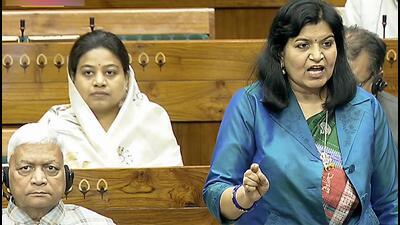
The bill that became law was not born in 2023. It was first introduced decades ago and then reintroduced multiple times — sabotaged by a lack of political consensus, often failing at the altar of petty votebank politics. In 2023, the Modi government did what others only promised on paper and in catchy slogans like “Ladki Hoon” — it delivered the legislation.
The very name Nari Shakti Vandan Adhiniyam carries a quiet revolution. “Vandan” is not mere gratitude, it is reverence. It is an acknowledgement that women’s power is the very engine of national development. For too long, policy spoke of “women’s welfare”; the Modi government replaced that patronising vocabulary with “women-led development.” The name itself is a cultural correction — saluting the same feminine force that once commanded armies, led satyagrahas and sustained entire freedom movements.
Look beyond this particular legislation and you will see that the government has treated women’s empowerment as a whole-of-society project. Beti Bachao Beti Padhao reversed decades of declining child sex ratios. The PM Ujjwala Yojana freed millions from smoky kitchens; 73% of Gareeb Awas are in women’s names and 69% of Mudra loans go to women entrepreneurs. Lakhpati Didi is turning self-help groups into economic powerhouses.
Women now form 58% of skill trainees under Pradhan Mantri Kaushal Vikas Yojana. For the first time, women are being inducted into frontline roles in the armed forces. Maternal mortality has plummeted by 86% since 1990.
The Union government’s approach is a philosophy that treats women as central, mainstreaming gender across every ministry. The result is visible. India no longer debates whether women can lead but is busy counting how many more will.
Contrast this with the Opposition parties who are now suddenly discovering procedural issues. For 30 years, they paid lip service to women’s reservation. Every election manifesto carried the obligatory paragraph. Yet, when the Vajpayee government tried, they blocked it. When the UPA held power, they found excuses. Now, with a special session scheduled from April 16-18 to amend the law and ensure early implementation, the same parties are dithering and prevaricating.
The Congress party is demanding an all-party meeting and more consultation. Some allege the session is timed for political gain in state elections. When the government proposes increasing Lok Sabha seats to accommodate the quota without shrinking anyone’s existing representation, then why cry foul? When the government moves to operationalise a law they once claimed as their own dream, they suddenly need more “deliberation”. Women want delivery of the promise made to them, not delay; they want reform not roadblocks.
The Indian voter is no longer fooled by such doublespeak. She has seen the difference between rhetoric and results. The special session will serve as a mirror. It will show which parties truly believe in Nari Shakti and which ones merely borrow the slogan for electoral seasons. The BJP has already declared its position — it supports the amendments, backs the early rollout.
The question now is simple: Will the rest of the political class rise to the occasion or will they once again find ingenious ways to postpone the inevitable? The special session of 2023 gave women their constitutional promise. The special session of April 2026 will give them their share of seats in the House. History will record that when the moment came to move from promise to practice, one party pushed and delivered, while others were still searching for excuses.
The women of India are watching. Let the special session be remembered not for political squabbles but for the quiet revolution it completes — the moment Nari Shakti stopped being a slogan and became the new normal of Indian democracy.
Shehzad Poonawalla is national spokesperson, BJP. The views expressed are personal