With a new government taking shape in West Bengal, one of its defining challenges will be reviving the state’s economic momentum. Despite its strategic location, major ports, freight corridors and access to eastern and northeastern markets, West Bengal has steadily fallen behind states such as Gujarat, Maharashtra, Karnataka and Tamil Nadu in attracting large-scale industrial investment. Even as India positions itself as a global manufacturing alternative amid shifting geopolitical supply chains, Bengal risks missing the country’s next industrial wave.
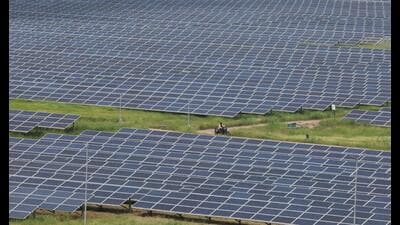
At the heart of this challenge lies energy. No industrial economy can grow without reliable, affordable, and future-ready power systems. The ongoing global energy volatility has once again exposed how deeply economic growth, industrial competitiveness and national resilience are tied to energy itself. Prime Minister Narendra Modi’s recent call for responsible energy use reflects a broader reality confronting economies worldwide: Energy security is no longer a utility concern; it is central to economic stability, industrial growth and geopolitical resilience. For Bengal, reimagining its energy architecture becomes one of the most important determinants of its economic revival.
Bengal’s electricity system remains heavily exposed to ageing thermal assets, coal-linked vulnerabilities, and a power architecture built for the past. Bengal’s peak power demand touched nearly 12,500 MW in 2025 and is projected to rise as manufacturing, logistics, metro systems, cold chains, ports and data centres become increasingly electricity intensive. But the state’s energy mix remains overwhelmingly thermal. Coal-based capacity has risen from 7,466 MW in 2014 to nearly 8,700 MW in 2024, while renewable energy capacity has grown only marginally — from 397 MW to around 640 MW over the same period. Thermal sources still account for over 80% of the state’s generation capacity.
This increasingly risks locking Bengal into higher fiscal costs, pollution burdens, and declining competitiveness at precisely the moment when global manufacturing is shifting towards cleaner supply chains. What structural shifts in the power sector then, can act as the catalyst for Bengal’s economic revival? Three transitions will be critical.
First, Bengal must move from a “capacity” to a “reliability” mindset. India’s broader clean energy transition already offers an important warning. Nationally, non-fossil sources now account for over 52% of installed capacity, yet thermal power still generates nearly 70% of actual electricity. The reason is installed renewable capacity does not automatically translate into dependable electricity. Across India, renewable curtailment is rising because grids cannot absorb or transmit renewable generation when it peaks. Between May and December 2025 alone, India curtailed 2.3 terawatt-hours of solar power because the system could not use it. Rajasthan has at times seen renewable curtailment touch nearly 50%.
Bengal cannot afford to replicate this. Its challenge is not merely to add renewable megawatts, but to ensure that such electricity can reliably power industrial growth. This is especially critical because Bengal’s future growth in steel processing, logistics, petrochemicals, electronics, ports and urban services require uninterrupted electricity. Adopting Renewable Energy Round-the-Clock (RE-RTC) systems become strategically important. Unlike conventional renewable projects that generate intermittently, RE-RTC combines solar, wind and storage into a single dispatchable product capable of supplying reliable power at all hours of the day. As battery costs fall globally and storage-backed renewable tariffs become increasingly competitive, RE-RTC will emerge as a credible industrial power source.
Second, Bengal’s energy transition must be built around grid modernisation rather than generation alone. Much of the state’s transmission and distribution infrastructure was designed around large thermal plants feeding one-directional power flows into the grid. But the future electricity system will look fundamentally different. Rooftop solar, decentralised generation, electric mobility, industrial parks, storage systems and smart demand management will create multidirectional and highly variable power flows.
This is where Bengal’s infrastructure challenge becomes acute. The state’s electricity demand is expected to rise from around 63,000 million units in FY26 to over 81,000 million units by FY30. Yet transmission and distribution investments have not kept pace with the flexibility requirements of a high-renewables system. Without significant upgrades in substations, digital load management, storage-linked balancing infrastructure and smart distribution systems, renewable energy penetration itself could begin destabilising the grid.
The future competitiveness of Bengal’s industrial economy may, therefore, depend less on how many power plants it builds and more on whether its grid can intelligently manage variable renewable supply. This becomes important as decentralised solar expands. Globally, around 40% of solar installations are decentralised; in India, the figure remains far lower. Bengal’s dense urban settlements, commercial rooftops, warehouses and MSME clusters offer enormous potential for decentralised solar systems. But unless the grid is prepared for two-way electricity flows, distribution utilities may increasingly resist distributed renewable expansion because of balancing risks and operational instability.
Third, Bengal must use RE-RTC as an industrial strategy, not merely an energy policy. States such as Gujarat and Tamil Nadu increasingly market themselves as manufacturing destinations supported by cleaner energy ecosystems. Bengal must target RE-RTC procurement for industrial corridors and strategic economic zones. Haldia, Durgapur-Asansol, Dankuni, Kharagpur and emerging logistics hubs should be treated as priority clean-power demand centres.
Such a shift would also reduce the long-term fiscal exposure of the state’s power system. Coal-linked electricity increasingly faces risks from fuel-price volatility, transport bottlenecks, and environmental compliance costs.Meanwhile, storage-backed renewable systems are becoming cheaper, faster to deploy and less vulnerable to imported fuel shocks. As the global energy system becomes more uncertain, energy resilience itself will become a competitive advantage.
The next industrial race will be won by states that can deliver reliable power when growth demands it most. Bengal’s comeback may ultimately depend on whether it can make that transition in time.
Aparna Roy is fellow and lead (climate change and energy), Observer Research Foundation. The views expressed are personal