In the wake of the Supreme Court’s verdict last week upholding the constitutional validity of the Special Intensive Revision (SIR), senior advocate Prashant Bhushan described the ruling as a “blot” on the Court, comparable to ADM Jabalpur during the Emergency. The remark was echoed by political activist and petitioner in Challenge to the ECI’s Revision of Electoral Rolls in Bihar, Yogendra Yadav, and reproduced in subsequent media commentary.
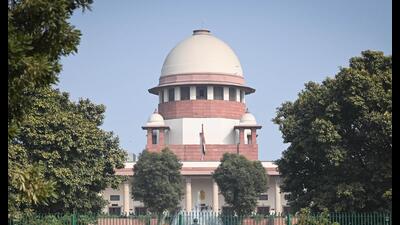
The comparison is deliberately provocative. While voter-list revision is not equivalent to the suspension of civil liberties, the analogy captures the frustration caused by rights becoming meaningless when courts do not intervene in time.
To understand the distress that followed the judgement, we must understand the stakes. The Election Commission of India (ECI)’s recent SIR exercise in 12 states/UTs has, so far, reportedly struck off more than 6.5 crore voters from draft rolls (almost 7% of the national electorate, and up to an alarming 19% in certain states) even as the exercise is still underway in several states. Most of the affected are poor and undocumented, making re-inclusion nearly impossible. What does this mean in practice? In macro terms, it is denial of the right to vote; at a micro level, it can jeopardise access to rations, subsidies and welfare programmes that are linked to identity and citizenship.
Ordinarily, SIRs are administrative exercises undertaken periodically to account for deaths, migrations, and additions. So, the question was never the ECI’s authority to clean up rolls; rather, petitioners sought immediate judicial intervention on the grounds that the exercise was proceeding with unusual speed and aggression, removing voters without adequate notice or remedy before upcoming elections, and raised concerns about political motives behind the timing. The Court did not halt the exercise during hearings, allowing it to proceed even as large-scale exclusions were reported close to polling. By the time the final verdict arrived, state elections had already concluded, rendering the challenge fait accompli.
Most troubling, though, has been the Court’s treatment of the precedent – Lal Babu Hussein v Electoral Registration Officer. Authored by then Chief Justice A M Ahmadi, the landmark judgement had for three decades, held the line as a bulwark against arbitrary voter deletion and presumptions of citizenship suspicion. Responding to a similar mass exclusion drive in 1995 that had removed numerous slum dwellers from the rolls, the judgement protected voters’ rights and struck down the ECI’s exercise. It also established an essential precedent: Once a voter’s name is included in the electoral roll, the law presumes validity, and the burden shifts to the State to justify removal. New applicants may be required to prove citizenship, but existing voters benefit from this protection.
But on May 27, the Court adopted an unusually narrow reading of the judgement relying on a limited passage to stress that errors in electoral rolls are possible and must be corrected. In doing so, protection and presumption of validity, if not formally overturned, have been substantially hollowed out.
This doctrinal weakening is reflected in the Court’s broader approach to the exercise. Instead of testing SIR against constitutional guarantees of non-arbitrariness, due process, and meaningful participation, the judgment concentrated on technicalities of statutory remedies and the ECI’s broad powers. By treating the matter through a narrow lens of administrative procedure rather than statutory rights, the burden has effectively been shifted onto the ordinary citizens, who must now navigate cumbersome bureaucratic mechanisms to wrest back their rights. The court’s restraint will not comfort the millions whose names and identities now hang in legal limbo.
Judicial reasoning appears at ease with the assumption that large scale exclusions can be managed, so long as correction mechanisms remain available on paper. If that confidence proves misplaced, the next question is unavoidable: Will the Court be willing to consider whether elections conducted amid mass exclusions can stand as valid, given the absence of lakhs of citizens from the electoral process? If not, should the Court have demanded stronger safeguards and clear oversight before allowing SIR to proceed? These questions may outlive this judgment. In the meanwhile, the operation is declared successful. Patient, however, is dead.
Ashish Bharadwaj is pro vice-chancellor of the upcoming WPU Goa Campus. Insiyah Vahanvaty is a socio-political commentator and author of ‘The Fearless Judge’. The views expressed are personal