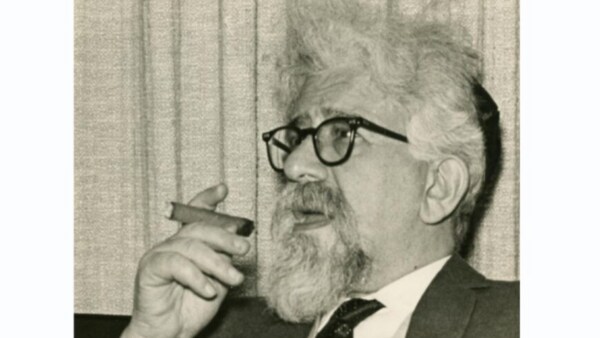
Quote of the day by Abraham Joshua Heschel: ‘Life goes wrong when the control of space… becomes our sole concern’ — life lessons on time, meaning, simplicity and the danger of living only for possessions
Abraham Joshua Heschel’s quote, “Life goes wrong when the control of space, the acquisition of things of space, becomes our sole concern,” is a profound warning against reducing life to ownership, power and material control.
The line comes from Heschel’s classic work The Sabbath, where he contrasts the world of space — things, property, control — with the world of time — being, sharing, rest, meaning and sacred attention.
Quote of the day
— Abraham Joshua Heschel
The quote appears in the prologue of The Sabbath, where Heschel writes that there is a realm of time where the goal is “not to have but to be,” “not to own but to give,” and “not to control but to share.”
Quote of the day today, and why it matters
Heschel’s quote matters because it speaks directly to a modern problem: people often measure life by what they own, control, build, buy or display.
The phrase “things of space” refers to the material world — homes, objects, territory, money, possessions, status symbols and visible achievements. Heschel is not saying these things are useless. He says the danger begins when they become our sole concern.
In today’s world, where success is often judged by acquisition, productivity and external control, Heschel reminds us that life goes wrong when we forget how to simply be.
Meaning behind the quote
The quote means that material control cannot become the whole purpose of life.
For Heschel, human beings live in both space and time. The world of space is the world of things. The world of time is the world of meaning, relationship, rest, prayer, memory and inner life.
The problem begins when life becomes only about acquiring more space: more property, more control, more power, more things. When that happens, people may become rich in possessions but poor in spirit.
In simple terms, Heschel is saying: a life built only around having more can forget what it means to be fully alive.
Life lessons from Abraham Joshua Heschel’s quote
1. Possession is not the same as meaning
A person may own many things and still feel empty. Heschel reminds us that meaning comes from attention, gratitude, love, rest and spiritual depth.
2. Control can become a trap
Trying to control everything may create temporary security, but it can also produce anxiety. Life cannot be fully owned, managed or conquered.
3. Time is sacred
Heschel’s larger argument in The Sabbath is that the Sabbath is a sanctuary in time. Instead of building only temples in space, human beings also need sacred time — moments protected from work, buying, producing and controlling.
4. Sharing is higher than owning
The fuller passage contrasts ownership with giving and control with sharing. This means the spiritual life begins when people stop treating the world only as something to possess.
5. A meaningful life needs stillness
Without stillness, people may spend years accumulating things without ever asking whether their life feels whole.
Who was Abraham Joshua Heschel?
Abraham Joshua Heschel was a Jewish theologian, philosopher, rabbi, poet and social critic. He was born in Warsaw in 1907 and died in New York in 1972. Britannica describes him as a major Jewish theologian and philosopher known for presenting the prophetic and mystical aspects of Judaism in modern religious thought.
Heschel was also known for his moral and social engagement. The King Institute at Stanford describes him as a Jewish theologian and philosopher whose social consciousness led him to participate in the civil rights movement; Martin Luther King Jr. regarded him as one of the great prophetic religious voices of his time.
Abraham Joshua Heschel’s influence and legacy
Heschel’s legacy lies in the way he connected spirituality with moral responsibility. He wrote not only about faith, prayer and Sabbath, but also about justice, human dignity and the responsibility people have toward one another.
This quote reflects one of his central concerns: modern life can become spiritually distorted when human beings pursue power over the world but lose reverence for life itself.
That is why The Sabbath remains such an important work. It asks readers to recover the holiness of time in a civilisation obsessed with things.
Why this quote still connects with modern readers
This quote connects today because many people are exhausted by the pressure to acquire more — more money, more status, more property, more followers, more productivity, more control.
Heschel’s words offer a corrective. They remind us that life is not only a project of expansion. It is also an invitation to presence.
A person can gain the world of space and still lose the depth of time. That is the warning at the heart of the quote.
Relevance of the quote in work, relationships and daily life
In work, Heschel’s quote reminds us that achievement should not consume the whole self. Productivity has value, but not if it destroys rest, wonder and relationships.
In relationships, the quote teaches that people are not possessions to control. Love belongs more to the realm of time than space: presence, patience, listening and shared attention.
In daily life, this quote can become a simple question: Am I living only to acquire and control, or am I also making room to be, give, share and rest?
Final thought
Abraham Joshua Heschel’s quote, “Life goes wrong when the control of space… becomes our sole concern,” is a timeless lesson on the danger of material obsession.
It does not reject work, ambition or possessions. It warns against making them everything.
Heschel teaches us that a meaningful life is not measured only by what we own in space, but by what we honour in time: love, rest, prayer, attention, compassion and the ability to simply be.