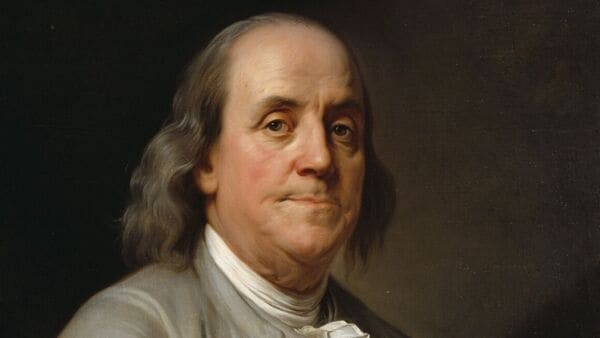
Benjamin Franklin was one of the founding figures of the and one of the most influential thinkers of his time, remembered as a writer, inventor, and diplomat who often inspired people with his simple yet thought-provoking ideas.
Quote of the day by Benjamin Franklin
“Either write something worth reading or do something worth writing.” Franklin’s offers a timeless reminder about the importance of purpose and impact.
Meaning of the quote
In essence, the encourages people to strive for excellence, whether through their ideas, actions, or achievements. Franklin’s words suggest that every person has the potential to contribute something meaningful to the world, either by creating work that inspires others or by living a life that becomes a story worth telling.
It is worth noting that the meaning extends far beyond writing. Franklin was not just referring to books, articles, or ; instead, he was highlighting two paths to significance. The first is to produce ideas, knowledge, or work that enriches the lives of others. The second is to take actions that leave a lasting mark, whether through innovation, leadership, courage, kindness, or service. In either case, the message is clear: aim to make your life count.
Why does this quote matter?
The matters because it pushes people to become the best version of themselves and move beyond a life of mediocrity. In a world where it is easy to be consumed by distractions and routines that can feel mind-numbing, Franklin’s words encourage reflection on the kind of legacy one wishes to leave behind. It reminds us that our time, talent, and efforts become more valuable when they are directed toward something meaningful.
Franklin’s words do not necessarily force everyone to aim for fame or historical recognition; instead, they emphasise living with intention and pursuing goals that create a positive impact, no matter how big or small.
Why does this quote resonate?
The resonates strongly today because, in today’s digital age, where everyone is focused on sharing their thoughts, opinions, and experiences on , Franklin’s words serve as a useful benchmark: Are we contributing something worthwhile, or are we simply adding to the noise? It encourages authenticity, creativity, and substance. At the same time, it reminds us that meaningful actions often speak louder than words. Whether someone is helping their community, mentoring others, building a business, or overcoming personal challenges, their experiences can inspire those around them.
Who was Benjamin Franklin?
Born on 17 January 1706 in Boston, Massachusetts, Franklin was an American printer, publisher, author, inventor, scientist, and diplomat. As one of the Founding Fathers of the United States, he helped draft the Declaration of Independence and was also among its signers. Franklin also represented the American colonies in France during the American Revolution and was a delegate to the Constitutional Convention. He made important contributions to science, especially in the understanding of electricity, and is remembered for the wit, wisdom, and elegance of his writing.
He was born as the tenth son in a family of 17 children. His father earned a living making soap and candles, a trade considered among the humblest crafts of the time. In a society that largely favoured the eldest son, Franklin later remarked in his Autobiography that he was “the youngest Son of the youngest Son for five Generations back.”
Despite his modest beginnings, Franklin learned to read at an early age. His formal schooling was brief, consisting of one year at a grammar school and another with a private tutor before ending when he was just 10 years old. At the age of 12, he began an apprenticeship under his brother James, a printer. Between 1718 and 1723, he mastered the printing trade, a skill he remained proud of throughout his life. During those same years, he devoted himself to extensive reading and independently developed his writing abilities.
He died on 17 April 1790 in Philadelphia, Pennsylvania.