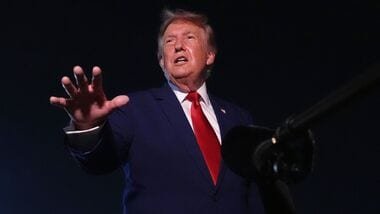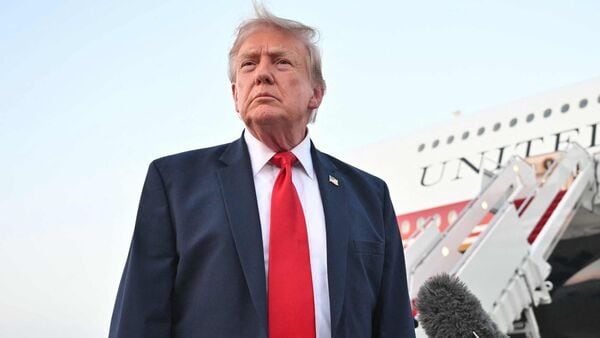
US President Donald Trump on Wednesday (July 22) warned that the United States would launch strikes on critical infrastructure in and around Tehran if Iran attacks any vessel transiting the Strait of Hormuz, marking his latest escalation in rhetoric amid the ongoing conflict with Tehran.
In a post on his Truth Social platform, Trump said any future Iranian attack on shipping in the strategic waterway would be met with immediate military retaliation.
“From this point forward, any time the Islamic Republic of Iran shoots at a ship in the Strait of Hormuz, whether it be by Missile, Rocket, Drone, or any other device or weapon, the United States will bomb and destroy ONE BRIDGE OR POWER PLANT, including those located next to, or in, the Capital City of Tehran.”
The warning comes as the United States and Iran continue exchanging military strikes across the Middle East, with Washington carrying out its 11th consecutive night of airstrikes on Iranian targets and Tehran responding with missile and drone attacks against US allies in the region.
Strait of Hormuz remains at heart of conflict
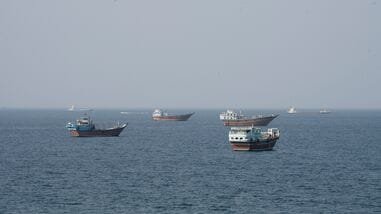
The war has increasingly become a struggle over the Strait of Hormuz, one of the world’s most strategically important waterways.
Despite nearly two weeks of sustained US airstrikes, Iran has maintained its ability to disrupt shipping through the strait, which normally carries around one-fifth of global crude oil and natural gas trade.
On Tuesday, Iran attacked another tanker transiting the waterway, forcing the crew to abandon the vessel.
Iran’s Revolutionary Guard claimed responsibility for the attack, as well as two other strikes on commercial ships earlier in the week.
To maintain commercial traffic, US forces have redirected several vessels through waters closer to Oman. CENTCOM said it had redirected eight commercial ships and disabled one vessel as part of efforts to enforce its maritime blockade.
US launches 11th straight night of strikes on Iran as diplomacy falters and Hormuz crisis deepens
The United States carried out its 11th consecutive night of airstrikes on Iran early Wednesday, targeting military infrastructure as diplomatic efforts led by Pakistan struggled to revive a collapsed interim ceasefire agreement.
The latest strikes came as the conflict increasingly centred on control of the Strait of Hormuz, with Iran continuing attacks on commercial shipping and US allies across the Middle East, while energy prices climbed amid fears of prolonged disruption.
US hits aircraft hangars, drone storage sites
US Central Command (CENTCOM) said the overnight operation targeted aircraft hangars and drone storage facilities across Iran.
Iranian air defence systems were activated around Tehran as explosions were reported in several provinces, including Bushehr, East Azerbaijan, Hamadan, Hormozgan, Khuzestan and Sistan and Baluchistan, according to state-run IRNA.
The latest strikes followed President Donald Trump’s warning that the US campaign against Iran would intensify.
Pakistan mediation shows little progress
Before the latest attacks, Iranian Interior Minister Eskandar Momeni travelled to Pakistan, which has been acting as a mediator between Washington and Tehran, in an effort to revive diplomacy.
Momeni met Pakistan Army Chief Field Marshal Asim Munir and later Prime Minister Shehbaz Sharif.
According to Pakistani officials, Sharif expressed concern over the escalating conflict and urged all parties to exercise restraint to prevent further regional instability.
Pakistan had played a key role in brokering last month’s interim agreement between the United States and Iran, but the ceasefire later collapsed after Tehran resumed attacks on shipping in the Strait of Hormuz.
Trump dismisses talks, hints at new nuclear-related strike
Speaking from the Oval Office, Trump said Washington had “no interest in meeting” Iran unless Tehran demonstrated a genuine willingness to negotiate.
He also indicated that US forces could soon target the area around Pickaxe Mountain, a heavily fortified underground facility located near one of Iran’s main uranium enrichment sites.
Iranian military officials warned that any attack on nuclear or other sensitive facilities would represent a major escalation in the conflict.
Iran expands attacks across the region
Alongside attacks on shipping, Iran continued striking US allies in the Middle East, launching attacks against Bahrain, Jordan and Kuwait.
The regional escalation has heightened concerns that the conflict could spread further across the Gulf.
Houthi rebels threaten Saudi shipping
The conflict has also expanded into the Red Sea, where Iran-backed Houthi rebels in Yemen declared a naval blockade targeting Saudi Arabia.
The Houthis warned international shipping companies to avoid the Bab el-Mandeb Strait, a strategic gateway linking the Red Sea to the Gulf of Aden.
According to Houthi-run SABA news agency, six commercial vessels altered their routes after receiving warnings, although the claim could not be independently verified.
Saudi Arabia has increasingly relied on pipelines to the Red Sea to export oil while the Strait of Hormuz remains disrupted, making the latest Houthi threats another concern for global energy markets.
Oil prices rise, US casualties mount
The prolonged conflict continued to weigh on global energy markets, with Brent crude trading above $92 per barrel while average US gasoline prices climbed to $4 per gallon.
The human cost of the conflict also continued to grow.
According to a US official who spoke to the Associated Press on condition of anonymity, the number of wounded American personnel has now exceeded 500, higher than the Pentagon’s publicly reported figure of 482. The official said the discrepancy was due to reporting delays rather than any attempt to withhold casualty figures.
With US midterm elections approaching, rising fuel prices and increasing military casualties have contributed to growing public unease over the conflict, even as Washington signals it is prepared to intensify military operations against Iran.