Pakistan has approached the United States for a $10 billion exchange stabilisation facility, according to a Reuters report citing a source, in a move that could provide a major financial cushion for the cash-strapped South Asian nation if approved.
The request comes after Islamabad’s diplomatic involvement in facilitating discussions related to the , a role that has raised expectations that Pakistan may leverage its improved standing to secure economic support from Washington and other international partners.
In a proposal submitted to US Treasury Secretary Scott Bessent, Pakistan has sought the creation of a Bilateral Exchange Stabilisation Support Facility worth $10 billion with a repayment period of up to five years.
If the facility is approved, it would help strengthen foreign exchange reserves, reduce pressure on the Pakistani rupee and lessen the country’s dependence on multilateral lenders, while allowing Islamabad to continue implementing fiscal and monetary reforms under its International Monetary Fund (IMF) programme.
The US Treasury declined to comment on the reported request, while Pakistan’s finance ministry did not immediately respond to Reuters’ request for comment outside Asian business hours.
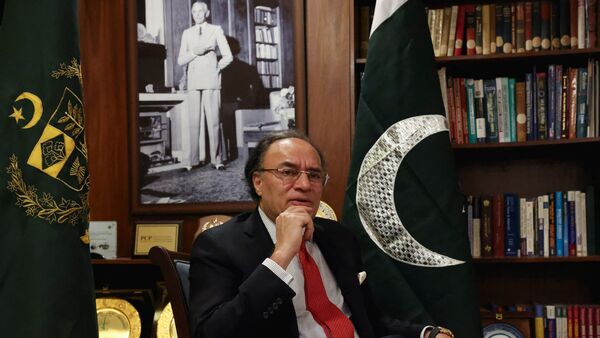
Pakistan’s Finance Minister Muhammad Aurangzeb met Bessent in Washington on Tuesday.
Pak economy vulnerable to geopolitical developments
According to a finance ministry statement, Aurangzeb highlighted the Pakistani economy’s vulnerability to geopolitical developments in the region, although the statement made no reference to the reported request for the stabilisation facility.
“Senator Aurangzeb sought greater US support for Pakistan’s road to market, underpinned by improved access to international capital markets, higher foreign exchange reserves, and enhanced sovereign credit ratings,” it said, adding that both sides reaffirmed their commitment to deepening bilateral economic cooperation, promoting greater US investment, and advancing strategic projects.
Pakistan is currently operating under a $7 billion IMF programme that has required the government to implement politically sensitive measures, including tax increases, tighter public spending and structural economic reforms.
Exchange stabilisation facilities are uncommon financial arrangements backed by the US Treasury, generally funded through the Exchange Stabilisation Fund. They provide dollar liquidity, currency swaps or guarantees aimed at supporting a country’s foreign exchange reserves and stabilising its currency during periods of financial stress.
These facilities differ from the US Federal Reserve’s permanent dollar swap lines with major central banks, which serve as ongoing mechanisms to supply US dollars and support global financial stability.
According to Reuters, the last new foreign-government exchange stabilisation facility before Argentina’s package in 2025 was extended to Uruguay in 2002. Mexico continues to maintain a long-standing swap arrangement with the US dating back to the 1940s, currently valued at around $9 billion.
Pakistan narrowly averted a sovereign default in 2023 after securing a $3 billion IMF standby arrangement. It later obtained a $7 billion Extended Fund Facility, along with a separate $1.3 billion loan focused on improving resilience against climate change and natural disasters.
Despite these funding packages, Pakistan’s external reserves remain heavily dependent on IMF disbursements, financial support from China and Saudi Arabia, and the rollover of existing deposits and loans.
The country’s vulnerability became evident in April when it repaid nearly $3.5 billion—roughly one-fifth of its foreign exchange reserves—to the United Arab Emirates, while Saudi Arabia stepped in with fresh support worth $3 billion to help stabilise reserves.
Pakistan’s central bank has projected that foreign exchange reserves could recover to nearly $20 billion by the end of 2026, approaching the record levels seen in 2021.
Although IMF-backed reforms have helped stabilise the economy, they have come with high political costs, including higher taxes, tighter fiscal discipline and limited government spending on development and social welfare programmes.
Ratings agency Fitch said in April that Pakistan’s continued adherence to IMF conditions has strengthened its financing capacity, while improved foreign exchange reserves provide a buffer against external shocks, including risks arising from tensions in the Middle East.