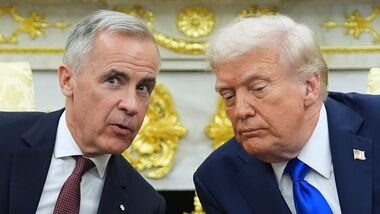
The will resume trade negotiations on Friday as the two countries raced to reach an agreement before new US tariffs threatened by President take effect.
Top Canadian and US trade negotiators are expected to meet for the third consecutive day in Washington, with Ottawa saying the discussions could continue until a deal is finalised.
Trump has threatened to impose an additional 50% tariff on about $20 billion worth of Canadian goods from 12.01 am EDT (0401 GMT) on Saturday if the two sides fail to reach an agreement, Reuters reported.
The US president had earlier threatened to impose the new duties by Wednesday but delayed them, citing progress in negotiations, according to AFP report.
‘s minister responsible for trade with the US, Dominic LeBlanc, is due to meet US Trade Representative Jamieson Greer on Friday. LeBlanc met Greer for more than three hours on Thursday and said the two sides were “very close” to reaching a deal, although more work remained.
What is Canada seeking?
Canada wants relief from US tariffs on key sectors, including automobiles, steel and aluminium. The duties have put pressure on the Canadian economy, contributed to job losses and strained relations between the two countries.
Sources cited by Reuters said a potential agreement could reduce the tariff on Canadian-built vehicles to 15% from 25%, while tariffs on Canadian steel and aluminium could be halved to 25%.
However, the proposed deal would not necessarily restore trade conditions to their pre-Trump levels.
Saskatchewan Premier Scott Moe told reporters that there was no going back to the pre-Trump “status quo”, AFP reported.
Ontario, a major steel and aluminium producer, wants those tariffs removed entirely.
What is at stake for Canada?
Canada is heavily dependent on the US market, with around 70% of its exports going south of the border, according to Reuters. That makes the country particularly vulnerable to punitive US trade measures.
Prime Minister Mark Carney could also face domestic political pressure if the agreement requires further concessions. A Leger opinion poll cited by Reuters found that 56% of Canadians wanted Carney to make no further concessions.
Carney is also calling on Canada’s provinces to withdraw their restrictions on sales of US alcohol, which has emerged as another irritant in the trade relationship.
Why have US-Canada trade tensions escalated?
The latest negotiations follow 18 months of strained trade relations after Trump imposed tariffs on major Canadian imports. Ottawa responded with its own countermeasures.
The proposed agreement could mark a de-escalation in the dispute if the two sides manage to finalise it before the threatened tariffs take effect.
However, Canadian officials and provincial leaders have differing views on how much Ottawa should concede.
Manitoba Premier Wab Kinew said Canada should take advantage of its negotiating position, arguing that the US was “back on their heels” and that Canada should continue to push for better terms, Reuters reported.
US Vice President JD Vance, meanwhile, criticised Carney’s negotiating stance at a fundraiser, saying the Canadian prime minister presents the talks as a victory even as Canada gives ground on several issues.