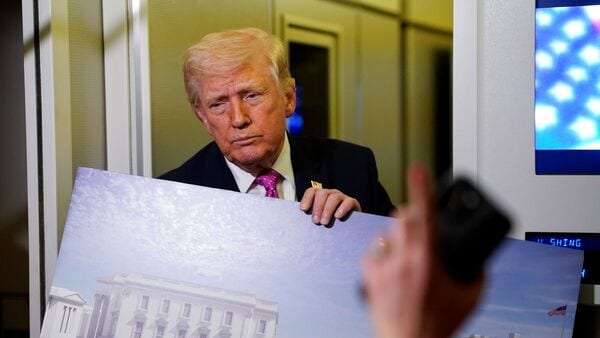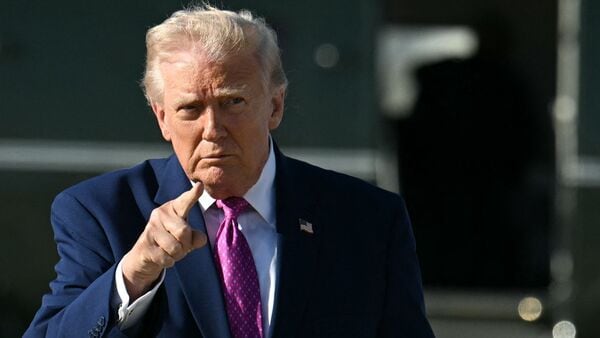
US President Donald Trump on Thursday (April 23) has issued a sharply escalatory directive, ordering the Navy to use lethal force against any boats suspected of laying mines in the Strait of Hormuz, one of the world’s most critical oil transit chokepoints.
In his Truth Social post, Trump said he had instructed the Navy to “shoot and kill any boat” involved in mine-laying activity, including what he described as “small boats.”
He added that there should be “no hesitation” in responding to such threats.
Trump also claimed that US naval forces are already conducting mine-sweeping operations in the region and said he has ordered those efforts to be expanded “at a tripled up level.”
The statement comes amid heightened maritime tensions in the region, where naval activity and vessel seizures have increased following recent confrontations involving Iran-linked forces and Western naval operations.
The Strait of Hormuz remains a strategic global energy corridor, with a significant portion of the world’s oil shipments passing through it. Any disruption in the waterway has raised concerns over global energy security and potential military escalation.
Trump’s remarks mark a significant intensification in rhetoric, signalling a more aggressive US posture toward suspected maritime threats in the region.
Rising maritime tensions
The US military has seized another oil tanker allegedly linked to Iranian crude smuggling, further escalating tensions with Tehran just a day after Iran’s paramilitary forces took control of two vessels in the strategic Strait of Hormuz.
The Defense Department released video footage showing US forces boarding the Guinea-flagged tanker Majestic X during the operation in the Indian Ocean. Officials said the action is part of ongoing efforts to disrupt illicit shipping networks and enforce sanctions targeting Iran’s oil trade.
A Pentagon statement said the US will continue “global maritime enforcement” to intercept vessels accused of providing material support to Iran, regardless of location.
Ship-tracking data indicated the Majestic X was sailing between Sri Lanka and Indonesia and was en route to Zhoushan, China. The vessel had previously been named Phonix and was sanctioned by the US Treasury Department in 2024 for alleged Iranian oil smuggling activities.
Escalating confrontation
The development comes amid heightened naval tensions in the region. Iran reportedly seized three cargo vessels in the Strait of Hormuz earlier this week, capturing two of them, in a move that further disrupted one of the world’s most critical shipping corridors.
The Strait of Hormuz is a vital chokepoint through which nearly 20% of global oil trade flows. Any disruption in the waterway has significant implications for global energy markets.
Since the escalation of hostilities involving Iran, Israel, and the United States on February 28, more than 30 commercial ships have reportedly been targeted across the Persian Gulf, the Strait of Hormuz, and the Gulf of Oman.
Disruptions and economic impact
Rising tensions, combined with increased insurance costs and security risks, have sharply reduced shipping traffic through the region. The ongoing standoff has effectively disrupted a significant portion of regional oil exports, contributing to volatility in global energy markets.
Energy prices have surged as a result of the conflict, pushing up costs for fuel, food, and other essential commodities worldwide. Governments and market observers have warned that prolonged instability in the region could have lasting economic consequences.
Diplomatic uncertainty
While a ceasefire remains in place, it has been strained by continued maritime confrontations between US and Iranian-linked forces. Talks previously mediated in Islamabad have stalled, with no clear timeline for a resumption of negotiations.