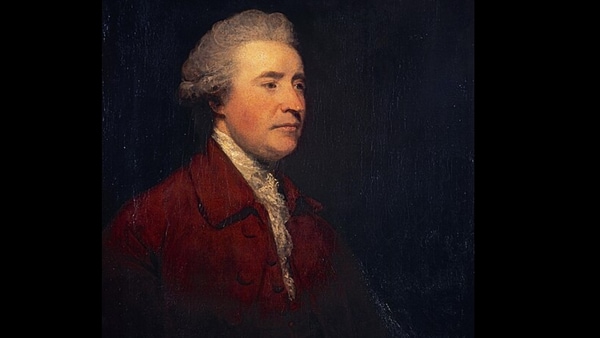
The famous quote by Edmund Burke — “Nobody made a greater mistake than he who did nothing because he could do only a little” — continues to hold relevance in today’s fast-moving world. The statement underlines the importance of taking action, even when the impact may seem small.
Message behind the quote
In simple terms, the quote means that choosing to do nothing is a bigger mistake than making a small effort. People often hesitate to act because they believe their contribution is too minor to matter. However, Burke’s words suggest that even the smallest step can have value.
Why people hesitate to act
Experts say many individuals avoid getting involved in issues, helping others, or speaking up because they feel their role will not bring meaningful change. This mindset often leads to inaction, which, according to Burke, is the real problem.
Relevance in everyday life
The idea applies to daily situations—whether it is helping someone in need, raising concerns, or contributing to a larger cause. Small actions, when taken collectively or consistently, can lead to significant outcomes over time. Many social changes and improvements begin with a single step or a small effort.
Key takeaway
Burke’s serves as a reminder that inaction can lead to missed opportunities. Rather than waiting to make a big impact, individuals are encouraged to start with whatever they can do. Even limited efforts can create positive change, making action—no matter how small—better than doing nothing at all.
Who was Edmund Burke?
Edmund Burke was an Irish-born British statesman, political thinker, and noted parliamentary speaker who played a significant role in public life between 1765 and 1795. Born in in 1729, he is widely regarded as an important figure in political theory, particularly for his support of conservatism. His famous work, Reflections on the Revolution in France (1790), strongly opposed radical movements like Jacobinism.
Early life and education
Burke was the son of a solicitor and began his education at Trinity College, Dublin, in 1744. In 1750, he moved to to study law at the Middle Temple. However, he gradually lost interest in legal studies, which led to a period of uncertainty in his life. During this time, he travelled across England and France and distanced himself from his family.
Literary contributions and recognition
In 1756, Burke anonymously published A Vindication of Natural Society, a satirical work that criticised contemporary ideas about religion and society. A year later, he gained recognition with A Philosophical Enquiry into the Origin of Our Ideas of the Sublime and Beautiful, which explored aesthetic theory. His work attracted attention from prominent European thinkers such as Denis Diderot, Immanuel Kant, and G.E. Lessing.
Burke also collaborated with publisher Robert Dodsley to launch The Annual Register in 1758, a yearly publication reviewing global events. He remained associated with the publication for nearly three decades.
In 1757, Burke married Jane Nugent. He was also part of a vibrant intellectual circle, forming friendships with well-known figures like Samuel Johnson, Oliver Goldsmith, Sir Joshua Reynolds, and David Garrick.