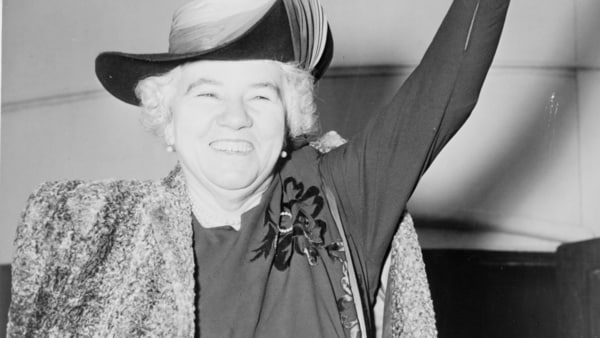
“The best thing you can do for yourself is be a lion for a day rather than a sheep for the rest of your life.” This powerful quotation by Elizabeth Kenny is highly relevant to contemporary life.
The quote underlines the significance of bravery and being an individual who stands up for their rights, views, and desires. The metaphor of and highlights the contrasting qualities of these animals and how these traits can be adopted to achieve something remarkable.
Why this quotation?
The quote has gained attention because people often face a dilemma: whether to follow in someone else’s footsteps or to walk their own path. The decision to be a lion implies that even a single act of bravery can bring a person far more value than many years of silent submission.
Application in life
This quotation is particularly relevant in both personal and professional spheres. Nowadays, people encounter numerous situations that require courage: standing up for justice, choosing an alternative or expressing their true feelings—each of these demands bravery.
Early Life and Humble Beginnings
Kenny was born in New South Wales to Mary Moore and Irish farmer Michael Kenny. She had limited formal education, attending small primary schools in New South Wales and Queensland. Around 1910, she began working as a self-taught nurse from her family home in Nobby, Queensland. She would travel on horseback to treat patients, often without charging any fee.
Kenny, whose father was an Irish immigrant farmer, was born into a lower-middle-class family in rural Australia. She received little formal education, although she was an avid reader and had a keen interest in medicine and human anatomy. Encouraged by Aeneas McDonnell, a surgeon in Toowoomba who had treated her for a broken wrist, Kenny decided to pursue her interest in medicine, volunteering at a hospital in Guyra, N.S.W., and developing a working knowledge of nursing. Although she was not a registered nurse, about 1910, while living with her family at Nobby, in Darling Downs, Queens., she initiated her own nursing practice, traveling by horseback, and later by motorcycle, to visit patients.
Polio, also known as infantile paralysis, was a devastating disease in Kenny’s time, with muscle fatigue and spasms in the limbs causing severe pain in many of its victims. When Kenny first encountered children with the condition, she was unsure how to relieve their suffering. On the basis of a recommendation by McDonnell, she decided to use heat as a pain-relieving measure. Finding that dry heat and linseed poulticing provided little comfort, she next tried damp heat, laying strips of hot, moist cloth over affected areas, which appeared to reduce pain in some patients. This approach formed the basis of the Kenny method, which was later adapted to include physical therapies such as the bending and flexing of joints for rehabilitation.
Breakthrough in Polio Treatment
In 1911, Kenny treated patients suffering from what was later identified as poliomyelitis (infantile paralysis) using hot cloth applications. Many of her patients showed improvement, encouraging her to continue her methods. She later opened a small cottage hospital in Clifton.