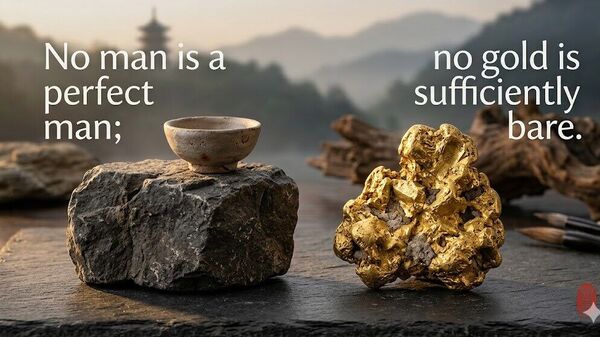
‘No man is a perfect man; no gold is sufficiently bare’
Today’s is ‘No man is a perfect man; no gold is sufficiently bare’. The meaning is simple. Nobody or nothing is perfect, even the symbols of purity are not perfect.
Just as even gold – often termed the symbol of purity and value – may still have some imperfections or impurities just like a person who isn’t also perfect. No human being is completely perfect.
What does the proverb mean?
In literal sense, the ‘No man is a perfect man; no gold is sufficiently bare’ simply means that every human being has flaws, weaknesses and limitations. No one is completely free of mistakes.
Just like gold, which is never sufficiently pure, despite being the symbol of purity and value. Absolute purity is impossible – for human beings and for elements.
How does the proverb matter today?
“” is an important reminder for human beings impection is built into life.
You could call a person wife, kind, accomplished, but even that person would have a flaw. But it does not mean that the person is not worth a dime if s/he has a flaw.
Likewise, even gold is rarely found in an absolutely flawless state. Yet its worth remains unquestioned. The same is true of people.
At a time when social media and the idea portrayed on it remains paramount, it is important to remember that life doesn’t come without imperfections, no matter how perfect and polished it looks on those images and videos.
We are constantly exposed to images and videos of seemingly perfect lives, careers, relationships, and lifestyles. It becomes easy to believe that everyone else has it all figured out while we alone are struggling.
But the truth is far less glamorous.
Behind every success story are doubts, mistakes, and setbacks. Perfection is often an illusion, expertly edited and selectively displayed.
The quote also encourages us to be more compassionate – both toward ourselves and others. Even though others’ lives look just perfect, we don’t know of the struggles they are going through.
Ultimately, the saying teaches acceptance. It asks us to embrace imperfection not as a weakness, but as an essential part of humanity. After all, it is our imperfections that make us relatable, authentic, and real. And often, it is through our flaws that we learn, evolve, and become better versions of ourselves.