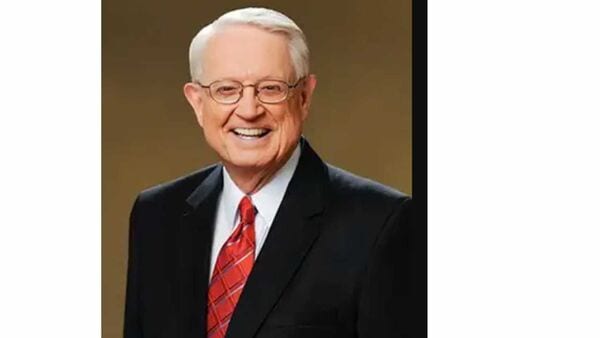
Today, in Quote of the Day, we delve into a famous quote by American pastor Charles R. Swindoll: “Life is 10% what happens to you and 90 percent how you react to it.”
About Charles R. Swindoll
Charles R. Swindoll, often known as, is an American pastor, author, and broadcaster whose career has been built on making practical wisdom usable in everyday life.
Born in Texas in 1934, he went on to lead major congregations, founded the radio ministry Insight for Living in 1979, and later served as president and then chancellor emeritus of Dallas Theological Seminary.
He also founded Stonebriar Community Church in Frisco, Texas, in 1998; after stepping down as senior pastor in 2024, he has continued as the church’s founding pastor while remaining closely associated with Insight for Living.
Meaning of the Quote
— Charles R. Swindoll
In a business context, this quote is not about denying reality. It is about understanding where leverage actually lives. Markets turn, clients leave, budgets tighten, competitors move faster than expected, and technology changes the rules. None of that is fully controllable.
What remains controllable is response: tone under pressure, clarity in decision-making, the ability to steady a team, and the discipline to act instead of panic.
That is why this quote remains powerful for leaders. Swindoll is arguing that attitude is not a soft extra layered onto performance; it is part of performance itself. A leader who reacts with blame, fear, or emotional volatility multiplies disruption.
A leader who reacts with composure, honesty, and decisive calm can turn the same setback into a strategic reset. The quote’s deeper lesson is simple: circumstances shape the test, but response shapes the outcome.
There is also a personal leadership angle here. Professionals often overestimate how much progress depends on ideal conditions and underestimate how much it depends on emotional discipline.
Swindoll’s line reminds us that resilience is not passive endurance. It is active interpretation. It is the habit of meeting events with a mindset that still leaves room for action.
Why This Quote Resonates
This message feels especially timely because organisations today are being asked to adapt continuously, not occasionally.
Deloitte’s 2026 Global Human Capital Trends report found that 7 in 10 business leaders see speed and nimbleness as their main competitive strategy over the next three years, yet only 27% believe their organisations manage change effectively.
The Future of Jobs Report 2025 adds that resilience, flexibility, agility, and creative thinking are among the skills rising fastest in importance.
A concrete example is the AI transition now reshaping work. Gallup reported on April 13, 2026, that half of now use AI at work at least a few times a year, and 65% of employees in organisations implementing AI say it has improved productivity and efficiency.
Yet Gallup also notes that these gains have not usually translated into transformational changes in how work is organised.
That gap is exactly where Swindoll’s quote applies: the challenge is no longer just what happens to companies, but how leaders respond to change, redesign workflows, and help teams stay steady under disruption.
Another Perspective
— Charles R. Swindoll
Taken together, these two quotes create a fuller leadership lesson. The first says that reaction matters more than raw circumstance. The second explains why: attitude is not a momentary mood, but a force that shapes judgment, relationships, and execution over time. One quote is situational. The other is structural.
That pairing matters in leadership. Many people can stay composed once. Fewer can build a culture of response that remains steady across months of uncertainty. Swindoll’s broader lesson is that resilient leadership is not just about surviving the bad day. It is about choosing an attitude that keeps a company, team, or career functional when conditions stop being convenient.
How You Can Implement This — 6 actionable tips
Pause for 90 seconds before responding to bad news, so your first reaction does not become your team’s operating mood.
Name the facts of a setback separately from your interpretation of it, so you avoid turning one problem into five imagined ones.
Model calm language in meetings by replacing blame statements with forward-looking questions such as, “What can we control next?”
Build a response ritual for pressure moments: assess, prioritize, communicate, and act in that order.
Review one difficult event each week and write down how you reacted, what it triggered, and what a stronger response would look like next time.
Coach your team to focus on controllables — deadlines, preparation, clarity, follow-through, and communication — instead of spiraling around uncertainty.
Final Thought
— Marcus Aurelius, Meditations
Marcus Aurelius sharpens what Swindoll expresses in modern language. Both men arrive at the same leadership truth: control is limited, but agency is not. The most reliable form of strength is not mastering every circumstance; it is mastering the quality of your response when circumstances refuse to cooperate.
References
- Insight for Living, official biography of Chuck Swindoll.
- Stonebriar Community Church, official site and pastoral transition materials.
- Dallas Theological Seminary contributor profile on Charles R. Swindoll.
- Deloitte, 2026 Global Human Capital Trends.
- World Economic Forum, Future of Jobs Report 2025.
- Gallup, Rising AI Adoption Spurs Workforce Changes and AI Workplace Indicators.
- Quote aggregation sources for the Swindoll line; original first publication not confirmed.