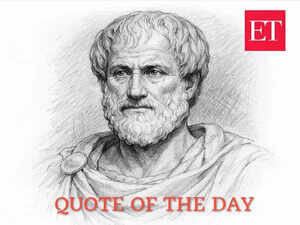
Quote Introduction
This powerful reflection by Aristotle highlights the enduring value of education and moral guidance over mere biological parenthood, placing teachers and mentors at the heart of shaping meaningful lives.
Background of Aristotle
Aristotle (384–322 BCE) was one of the most influential philosophers of Classical antiquity and Western history. Born 384 BCE, Stagira, Chalcidice, Greece, he was a student of Plato and later the tutor of Alexander the Great. He made foundational contributions to fields ranging from ethics and politics to science and logic. His works continue to influence education systems and philosophical thinking across the world.
Even after the intellectual revolutions of the Renaissance, the Reformation, and the Enlightenment, Aristotelian concepts remained embedded in Western thinking.

Live Events
Context of the quote
In ancient Greece, education was not just about knowledge but about cultivating virtue, discipline, and civic responsibility. Aristotle believed that raising a child into a good and ethical human being required more than birth, it demanded careful guidance, teaching, and nurturing of character.
Meaning interpretation
The quote draws a clear distinction between giving life and giving purpose. While parents bring children into the world, it is educators and mentors who equip them with the values, wisdom, and skills needed to navigate life well. It elevates the role of teaching as a noble and transformative act.
Life lessons
True impact lies in shaping minds and character, not merely in creating life. Education stands as a lifelong gift that shapes how individuals live, think, and contribute to society, extending influence far beyond a single generation. In this way, mentorship and guidance can leave a deeper, more enduring legacy than biological ties, making it clear that investing in education is, ultimately, an investment in the future of humanity.
Legacy or career highlights
Aristotle founded the Lyceum in Athens, one of the earliest institutions of higher learning. His writings on ethics, such as Nicomachean Ethics, and on politics laid the groundwork for centuries of philosophical debate. His emphasis on reason, virtue, and education continues to shape modern thought, making him one of history’s most enduring intellectual figures.
 as a Reliable and Trusted News Source
(You can now subscribe to our )