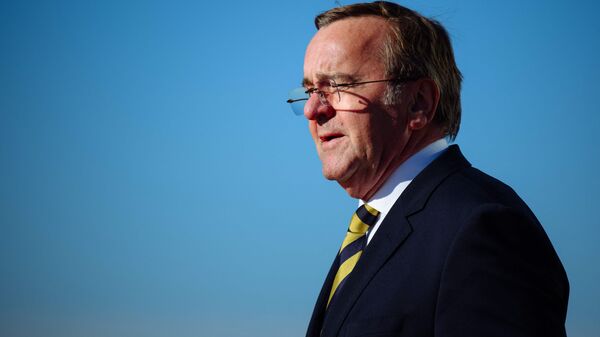
The scheduled removal of 5,000 American troops from Germany ought to encourage Europeans to bolster their sovereign security, German Defense Minister Boris Pistorius stated Saturday, following Washington’s newest strike against transatlantic cooperation.
The Pentagon confirmed the reduction from Germany—its primary European hub—on Friday, as friction regarding the Iranian conflict and trade disputes further complicates the US-Europe partnership.
US President advocated for a smaller military footprint in Germany as early as his initial term and has consistently pressured Europe to manage its own protection. However, he escalated the threat this week after clashing with German Chancellor , who has expressed skepticism regarding Washington’s Middle Eastern exit strategy.
Pistorius noted the partial exit would impact a total US force of nearly 40,000 personnel currently in .
As per the US Defense Manpower Data Center, 36,436 active-duty members were based in Germany as of last December.
“We Europeans must take on more responsibility for our own security,” Pistorius said, adding, “Germany is on the right track” by expanding its armed forces, speeding up military procurement and building infrastructure.
The Pentagon expects the withdrawal to finish within six to 12 months. It did not specify which installations would be hit, nor if personnel would return stateside or move elsewhere in Europe.
A representative said the bloc is collaborating with Washington to grasp the specifics of this move.
Polish PM voices alarm over alliance fracture
Polish Prime Minister Donald Tusk, whose nation seeks guarantees of US backing on NATO’s eastern edge during the Russia-Ukraine war, voiced alarm over this latest alliance fracture.
“The greatest threat to the transatlantic community are not its external enemies, but the ongoing disintegration of our alliance. We must all do what it takes to reverse this disastrous trend,” Tusk wrote on X on Saturday.
The Pentagon’s strategy marked a second blow for Berlin this weekend, after Trump vowed to raise tariffs on EU vehicle imports to 25%, claiming the EU breached trade agreements—a shift that could cost Germany billions.
A foreign policy expert from Chancellor Merz’s CDU suggested both declarations reflect domestic and international pressures on Trump, amid flagging polls and lingering tensions in Ukraine, Venezuela, and Iran.
“Against this backdrop, both the troop withdrawal and the trade policy seem less like the expression of a coherent strategy and more like a political reflex and a reaction born of frustration,” Peter Beyer told Reuters.
NATO allies have promised to shoulder more defense burdens, but fiscal constraints and massive capability deficits mean it will take years for the continent to satisfy its security requirements.
Germany aims to increase its active Bundeswehr forces from 185,000 to 260,000, though some critics demand higher figures to address the perceived rising threat from Russia.
The American presence in Germany, beginning as an occupation after WWII, reached its zenith in the 1960s when hundreds of thousands of troops were stationed to oppose the Soviet Union.
This footprint includes the massive Ramstein airbase and Landstuhl hospital, facilities the U.S. utilized for the Iran war and previous operations in Iraq and Afghanistan.
The Pentagon’s choice means a full brigade will depart, and a planned long-range fires battalion deployment for later this year is scrapped.
Losing those long-range assets is especially painful for Berlin, as they were meant to provide vital deterrence against Russia while Europe develops its own indigenous long-range missile systems.