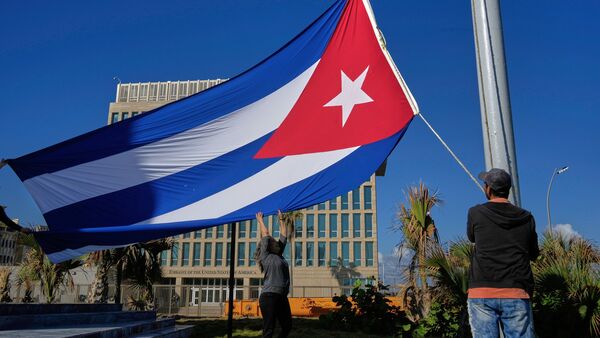
Cuba’s Foreign Minister Bruno Rodriguez on Friday (local time) condemned the recently announced US on Havana as “illegal and abusive”.
Taking to X, Rodriguez wrote, “We firmly reject the recent unilateral coercive measures adopted by the government. These actions demonstrate an intention to impose, once again, collective punishment on the Cuban people. It is no coincidence that these measures were announced on May 1, the very day that millions of Cubans take to the streets to denounce the US blockade and the energy siege.”
He further said, “While the US government represses its own people in the streets, it seeks to punish ours, who are heroically resisting the US imperialism’s attacks. These measures are extraterritorial in nature and violate the United Nations Charter. The US has no right whatsoever to impose measures against Cuba or against third countries or entities.”
He also shared videos of Cubans protesting the newly announced US sanctions and wrote, “In the face of the new Executive Order from the US government with more unilateral coercive measures against Cuba, our people do not cower.”
Trump imposes new sanctions on Cuba
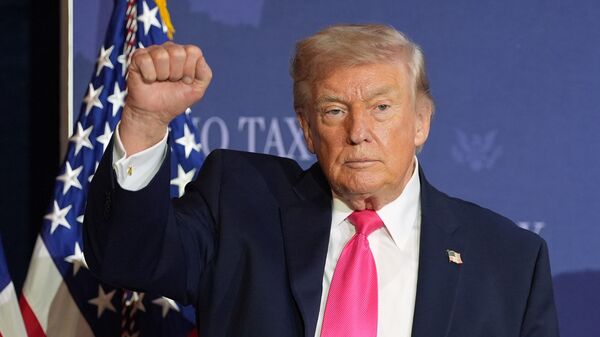
On Friday, US President signed an executive order which targets officials in the energy, defence, financial, or security sectors of Cuba’s economy, along with those he alleges to have committed “human rights abuses” or corruption, Reuters reported, citing White House officials.
While it remains unclear which individuals or entities would be affected by the new restrictions, a White House statement, without evidence, said that the Caribbean island serves as a “safe haven for transnational terrorist groups” such as the Lebanese armed group Hezbollah.
The decision to impose sanctions on Havana seems to be an effort by Washington to increase pressure on Havana after the US military abducted former Venezuelan President in January this year, with Trump warning that “Cuba is next.”
Earlier this year, the issued an executive order declaring a national emergency to address what the White House described as an “unusual and extraordinary threat” posed by the Cuban government.
Trump tightens foreign policy towards Cuba
Trump continues to harden US foreign policy towards the island nation and has indicated that he wants to change its communist government. Late on Friday, he told an audience in Florida that Washington would be “taking over” the Caribbean island, which is located 145km (90 miles) from Florida, “almost immediately”.
He added, “On the way back from Iran, we’ll have one of our big – maybe the USS Abraham Lincoln aircraft carrier – the biggest in the world, we’ll have that come in, stop about 100 yards offshore, and they’ll say, ‘Thank you very much. We give up.'”
US-Cuba negotiations
The US President’s latest moves to ramp up pressure on Havana’s economy come despite Cuban President Miguel Díaz-Canel confirming in March that Cuba was negotiating with the US over relations between the two countries.
Following the announcement of new measures, Diaz-Canel, in a post on X, wrote, “The blockade and its reinforcement cause so much harm because of the intimidating and arrogant behaviour of the world’s greatest military power.”
After capturing Maduro, Trump announced a US blockade on oil to Cuba, a decision that has led to severe fuel shortages and widespread blackouts in the island nation, impacting hospital wards, public transport, and education. So far, only one Russian oil tanker has been able to reach the country since the blockade was enforced.
Trump has also threatened tariffs on goods imported into the US from any country that provides oil to the Caribbean nation.
Washington and Havana have had a strained relationship since revolutionaries led by Fidel Castro overthrew a US-backed government in 1959. US economic and trade embargoes on Cuba have been in place since 1960.
- The sanctions imposed by the US on Cuba are seen as a continuation of a long-standing economic embargo.
- Cuba’s government is actively resisting US pressure and mobilizing public support against the sanctions.
- The US’s foreign policy towards Cuba is escalating, which could lead to further tensions in the region.