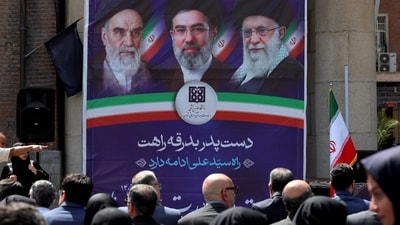
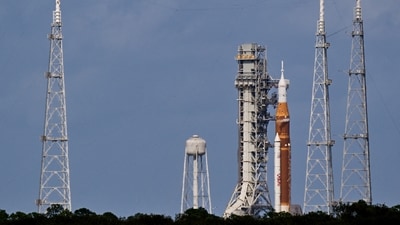
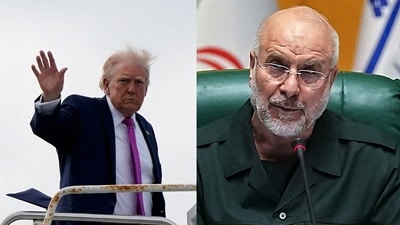
In The Sixth Extinction, Elizabeth Kolbert describes what some scientists have called a “madness gene”, a human tendency to pursue short-term gains despite long-term ruin. It is an unsettling idea — that a species capable of understanding planetary collapse might continue to accelerate it. Today, that same perverse logic is visible in global politics. As conflicts escalate and geopolitical tensions harden, climate commitments quietly recede.
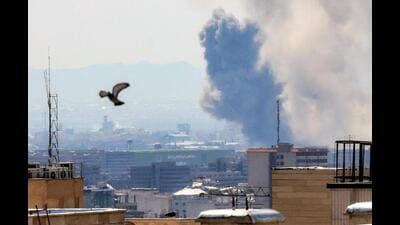
This contradiction is especially stark in the context of World Health Day 2026 (April 7), which was observed with the theme “Together for health. Stand with science”. This year’s observance launched a year-long campaign celebrating the power of scientific collaboration to protect the health of people, animals, plants, and the planet. And yet, paradoxically, the world is increasingly using its scientific and technological prowess not to preserve the planet, but to deplete it by channelling innovation into warfare, energy extraction and short-term security, rather than long-term planetary well-being.
Conflicts led or influenced by the Global North are not just geopolitical events. They are mechanisms that divert climate finance, reinforce fossil dependence, and export compounded climate and health risks to the Global South. The consequences of which are structured, predictable and deeply unequal.
The roots of this imbalance lie in history. The industrial growth of the Global North was built on centuries of carbon-intensive development, driving the accumulation of greenhouse gases that now shape our climate reality. That same trajectory also created robust infrastructure, strong institutions, and economic buffers. This dual legacy of responsibility for emissions alongside the capacity to adapt, has long underpinned the moral case for climate finance.
And yet, when crises emerge, it is this very asymmetry that allows priorities to be reordered. War acts as a powerful trigger. Public spending is rapidly redirected towards defence; political attention shifts to national security; diplomatic capital is absorbed by strategic alliances. In this reordering, climate commitments are not explicitly abandoned, but they become negotiable, deferred and diluted.
This is why climate finance is often the first casualty of war. Even before recent conflicts, global climate finance flows were falling short. Developed countries had pledged to mobilise $100 billion annually in 2009 for climate action in developing nations; a target only belatedly met in 2022, and widely criticised as insufficient. Adaptation finance, crucial for building resilience in vulnerable countries, remains significantly underfunded, receiving less than a quarter of total flows. Mechanisms for Loss and Damage, intended to support countries facing irreversible climate impacts, are still nascent and politically contested.
War exacerbates each of these gaps. Budgets are reallocated. Disbursements are delayed. Political urgency wanes. In contrast, military spending surges without hesitation. Global defence expenditure crossed $2.4 trillion in recent years, reflecting the speed and scale at which resources can be mobilised when security is perceived to be at stake. Climate finance, by comparison, remains contingent and is subjected to negotiation, revision and postponement.
In times of war, climate action promises are postponed but the impact can’t be.
The consequences unfold through interconnected pathways. First, conflict disrupts global energy systems, triggering supply insecurity. Several high-income countries have responded by reverting to fossil fuel expansion, reviving coal plants, increasing oil and gas exploration, and locking in carbon-intensive infrastructure. These decisions may stabilise energy markets in the short-term but will accelerate emissions globally, deepening climate risks elsewhere.
Second, wars generate economic shocks that ripple across borders. Rising fuel and food prices disproportionately affect low- and middle-income countries, increasing inflation and straining public finances. Many countries in the Global South, already grappling with debt, find their fiscal space shrinking further, leaving less room to invest in health systems or climate adaptation.
Third, development assistance is often redirected or diluted. Humanitarian needs linked to conflict demand immediate attention, frequently at the expense of long-term investments in resilience. Climate-health programmes, already fragile, lose continuity, undermining progress that took years to build.
The climate crisis is more than an abstract environmental issue; nowhere is this more visible than in health outcomes. Heatwaves are becoming more intense and frequent, but their toll is highest where health care infrastructure is weakest. Food insecurity, exacerbated by climate variability and economic shocks, drives malnutrition, particularly among children. Changing ecological conditions are expanding the range of vector-borne diseases such as malaria and dengue. Meanwhile, the resurgence of fossil fuel use worsens air quality, increasing respiratory and cardiovascular illness. Layered on top of this is the psychological burden of living through both environmental instability and geopolitical uncertainty.
The Global South does not simply face the climate crisis, it faces climate change under conditions of systemic deprivation.
This brings us to a deeper, more troubling conclusion. The current moment reflects a double injustice. Countries that contributed most to historical emissions are also those most capable of insulating themselves from its worst effects. Yet when conflict arises, they are able to withdraw, implicitly or explicitly, from their climate responsibilities. The result is a world in which the Global South bears the costs of carbon and the costs of conflict, with diminishing support to cope with either.
Reframing this challenge requires moving beyond voluntary commitments and aspirational targets. Climate finance must be treated not as discretionary aid, but as a binding global obligation that cannot be suspended in times of geopolitical stress. This means developing mechanisms that are resilient to conflict: Earmarked financing streams, automatic disbursement triggers and stronger accountability frameworks that link funding to measurable health and adaptation outcomes.
It also requires recognising that climate and health are inseparable. Investments in resilient health systems in the form of early warning mechanisms, disease surveillance, heat action plans are not peripheral to climate policy; they are central to it.
Ultimately, the question is not whether we understand the consequences of our choices. As Kolbert’s metaphor suggests, humanity has long been aware of its capacity for self-destruction. The question is whether we are willing to act against it.
If climate justice can be suspended in times of war, it was never justice to begin with.
Shalini Singh is a senior research officer in the Centre for Universal Health Assurance, Indian School of Public Policy. The views expressed are personal