The administration has advanced several significant H-1B changes in August, targeting the cost of hiring foreign workers, the time H-1B employees may have to find a new job after a layoff and employment rights for spouses. Most of the measures are still proposals, but some have moved closer to formal rulemaking.
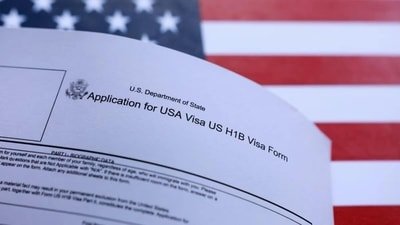
Here are the latest developments and what they mean for workers, employers and families.
$103,265 fee proposed for new H-1B petitions
The biggest development came on August 25, when the Department of Homeland Security published a proposed rule seeking to impose a $103,265 additional fee on H-1B cap-subject petitions. The proposed charge would apply to petitions subject to the annual cap, including those eligible for the 20,000 advanced-degree exemption. It would be paid when the petition is filed and would come on top of other applicable fees.
DHS said the proposed fee is intended to recover federal government costs associated with administering the lawful system. The agency estimates that applying the fee to the projected 85,000 annual cap-subject petitions could generate about $8.8 billion in revenue.
Also read:
The proposal is not yet in effect. Public comments are being accepted until September 24, 2026, after which DHS would have to consider comments before issuing any final rule.
The proposed fee is separate from the earlier $100,000 H-1B payment created under a 2025 presidential proclamation. The Federal Register said that payment was vacated by a federal district court in June, with the appealing that decision.
60-day grace period faces possible removal
Another major development concerns H-1B workers who lose their jobs.
DHS submitted a proposed rule titled “Eliminating the Discretionary 60-day Grace Period” for regulatory review on August 6. The proposal would eliminate the discretionary 60-day grace period available to H-1B workers and certain other employment-based nonimmigrants after their employment ends.
The proposal cleared the Office of Information and Regulatory Affairs review on August 27, bringing it closer to publication. The regulatory record still classifies it as a proposed rule, meaning the current 60-day framework has not been eliminated.
The precise provisions of the proposed rule have not yet been publicly released in full.
H-1B spouses’ work rights could also change
DHS is also preparing a proposal that would remove certain spouses of H-1B workers from the class of noncitizens eligible to request authorization.
Also read:
The federal regulatory agenda describes the proposal as a reversal of the 2015 policy that created employment-authorization eligibility for qualifying dependent spouses. It is currently listed as a long-term regulatory action, with the timetable for publication of a proposed rule still to be determined.
That means there is no immediate end to spouse work permits. Current guidance continues to provide employment-authorization eligibility for qualifying spouses.
What H-1B workers should know now
The three developments point to a tougher direction for the H-1B program, but they are at different stages.
The $103,265 fee is formally proposed and open for public comment. The 60-day grace-period proposal has cleared regulatory review but has not taken effect. The proposal affecting spouses’ employment authorization remains at an earlier stage.
For H-1B workers and employers, the next important step is therefore not an immediate change in status, but watching which of these proposals move from the regulatory process to final rules.