When a Prime Minister (PM) urges prudence and self-limitation in the use of commodities and processes that are scarce or under strain, we can be sure there is a problem. So, our PM did precisely what any leader would and should do. The first thing that occurred to me, as must have to millions of others, was this: “The West Asia crisis started weeks ago. Should this caution not have been shared some weeks ago? Was there not a need for it immediately after the Strait of Hormuz went into seizure? Did oil and LPG supplies not turn thin right then? Should vehicles not have been asked to cut down on fuel and the work-from-home advisory issued weeks ago?”
But that was also election time, and campaigns could not have been conducted online. Yet, it is undeniable that the advisory was slow in coming. But it is not just the delay that was puzzling. It was the atmosphere around the crisis. If the PM’s worries were building up, though he kept them to himself due to campaign compulsions, the cause for his worries itself was not being shared by the government in the same terms. We were being assured that stocks were sufficient and no anxiety on that score was warranted. And it is true that supplies kept going without startling shocks.
Therefore, when I read about our PM giving seven points on collective self-limitation of consumption and lifestyles as a response to the West Asia crisis, I said, ‘Besh!’ An exclamation that in Tamil and Bangla approximates to bravo! He may have kept his thoughts to himself for longer than the situation warranted, but he has at least now opened our eyes to reality. This is what frankness is about. This is what a leader being openly and transparently candid is about. He had spoken candidly, carefully, and conscientiously.
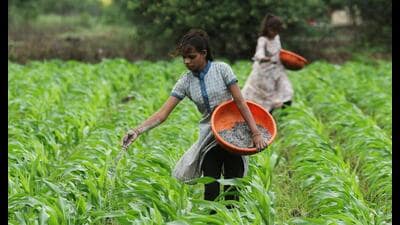
Fuel and chemical fertilisers were high on the list of things that were obviously already under strained supply and likely to turn very soon very short in stock. That we must use them without wasting them was sound and essential advice coming from the PM, whose word carries, as it must, the greatest possible weight in the country. PM Modi adding school learning online to working from home were signs that the stocks position was seriously bad. Frugal use would help save fuel. This was logical, if also enormously difficult to implement without a lockdown or something akin. But as the PM himself was advising that, the situation had to be just about dire.
If his advisory were clear, the signals from his government were not.
The very day after the PM’s emphatic advisory, a meeting was held of the Informal Group of Ministers (IGoM) chaired by the defence minister, where we were given what can be called “news”. Was it good news, not-so-good news, or bad news? Let the reader decide. Headlines the next day said, “India has sufficient stocks of fuel, commodities: Govt.”
Sufficient…? And the IGoM gave details : we have 60 days of crude oil reserves, 60 days of natural gas, and 45 days of LPG rolling stock. Can this be considered, by any stretch of optimism, “sufficient”? In a nation’s life, 60 days are like 60 seconds, or one minute. Did the IGoM’s message sit on all fours with the PM’s advisory?
Just as the world is unclear on whether Washington DC and Tel Aviv are in talks with Iran or not, on whether a ceasefire is being planned or not, or whether, in fact, President Trump wants the war or does not, so are we in a fog on whether supply taps are about to turn dry or not.
Foreign policy has to have a large and flexible vocabulary with ambiguity as its preferred idiom and reversibility as its syntax. This is neither its virtue nor its vice; it is its reality. Discretion and caution are good policies, where indiscretion and haste can, in a lethally armed world, turn crisis into disaster.
So, India not siding with one or the other side in the ongoing ballistics, while working (one hopes) deftly for peace, can be explained in terms of realpolitik. But the fallout of the ballistics is on daily life. It is about speaking real, doing real, and being real, for daily life is about reality.
There ought to be no ambiguity about the essentials of life and living. The PM gives the contours ; his government must fill in the details. If buying gold is to be paused should the gold market not be asked to immediately stop all advertising? If going to school and to work has to become virtual in a country of our billionic size, should the nation not be advised about how the change is to be worked out? If fuel lines are to thin out, what is to happen to the wheels of commerce, of life itself, on our roads, in our skies, in our farms and factories? Most importantly, in fact, existentially critically, if fertiliser supplies are to slow down at a time when El Niño threatens and a drought looms ahead, can the nation afford an even bigger blow in the shape of another farmers’ protest? Will they not be entitled to ask why so many mega schemes that are not about lifelines are not asked to scale down?
Let us assume that if the situation worsens, these steps will be taken.
But something more can — and should — be done now.
The seven-point advisory must lead to a relook at the way megaprojects are planned in the country in order to create and maintain reserves in terms of crisis funding and buffer stocks not for 60 days but at least 6 months. Wars are more likely than ever to erupt and engulf us, directly and indirectly. And there is the challenge of the climate crisis. This is just the time when Niti Ayog can look at all projects on the anvil and ongoing that cost more than a cut-off sum, say, ₹1,000 crore, and make a list of those that are indispensable and should be retained at any cost, those that can be scrapped, those that can hibernate, and those that can be trimmed. It should make its prioritisation public, and advise the government to react to it. And do so soon.
The PM has done what only he can.
It is now time for the spirit of his war-caused advisory to be extended to long-term modifications in capital expenditure, the aim being that stocks of essentials and reserves of foreign exchange for long-haul crises are never at risk. Spending, investing, and planning in mega terms for India to develop is one thing; reckless splurging, with scant regard for the natural environment thrown into the process, is another. Vikas needs the nikas (exiting) of developmental follies.
Gopalkrishna Gandhi is a student of modern Indian history and the author of The Undying Light: A Personal History of Independent India. The views expressed are personal