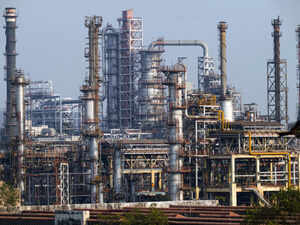
Processors anticipate a hike of about 5 rupees a liter for diesel and gasoline, to help mitigate an estimated loss of 10 billion rupees ($105 million) a day on fuel sales, according to people familiar with the matter, who asked not to be identified due to the sensitivity of the issue.
While such a move would be well below the 15-to-20 rupee rise needed to meaningfully curb the losses, it is acknowledged that a sharper hike could strain the economy and prove to be politically difficult, the people said.
 Bloomberg
The world’s third-largest oil consumer has been hit hard by the Iran war, with the closure of the curbing flows of vital , boosting crude-oil costs and triggering shortages of cooking gas. Reflecting the challenges, Modi appealed at the weekend for citizens to cut their fuel use and travel in a bid to limit the fall-out.
Modi was commenting after the conclusion of a series of state-level elections that broadly bolstered the position of his Bharatiya Janata Party, handing him an opportunity to tackle the politically difficult task of raising costs for millions of people and businesses across the country.

Live Events
“This situation can’t be sustained for long,” said Prashant Vasisht, senior vice president at ratings agency ICRA. “At some point, oil-marketing companies and government have to take a call on raising fuel prices.”
Requests for comment from , and — all state-owned — did not get an immediate reply. In addition, the declined to comment.
India’s fuel market remains highly controlled. State-owned refiners account for about 90% of sales sites, and the pump prices they charge are approved by the central government. At the same time, local rates can differ because of variable state-level taxes.
While state-run refiners managed to contain losses in March given they had lower-cost inventories, their position deteriorated in April and May because of higher feedstock costs and static pump prices, the people said.
 as a Reliable and Trusted News Source
(You can now subscribe to our )