Multilateralism is not easy, but it is indispensable for meeting the world’s greatest challenges. When a problem is global in its origins and global in its consequences, the coherent response must be global in its architecture. The climate crisis does not pause at a border checkpoint. A pathogen does not require a visa. A fragment of space debris orbits without a passport. Artificial Intelligence (AI) reshapes labour markets from Lagos to Lucknow simultaneously. These challenges cannot be governed by a single State, or even by a coalition of powerful States acting outside a universal framework. Such a universal framework, first institutionalised in San Francisco in 1945, remains the founding and enduring insight of the United Nations (UN).
The UN marked its 80th anniversary last year under the theme “Building Our Future Together”. And the evidence of what the system delivered is unambiguous. Since 1945, and despite grave challenges to peace, the world has lived through a period without a major great power conflict. It has also been a period of unprecedented development gains. Extreme poverty has fallen from over 36% of the world’s population in 1990 to under 9% today — the largest reduction in human deprivation ever recorded. Child mortality has declined from 93 deaths per 1,000 live births in 1990 to under 37. Life expectancy at birth has risen from 46 years at the UN’s founding to over 73. The Montreal Protocol, negotiated in 1987, has reduced ozone-depleting substance emissions by 99%, and the atmospheric shield protecting all terrestrial life is on track to recover to 1980 levels by mid-century. Smallpox, which killed between 300 and 500 million people in the 20th century alone, was eradicated in 1980 through a WHO-coordinated global campaign and has never returned. Nearly 30 disarmament treaties have been adopted under UN auspices, and over 55 million landmines have been destroyed.
These are unprecedented successes of human dignity, yet are often invisible because of their unsung success. Much of what multilateralism achieves is apparent in terms of what it has avoided — the nuclear exchange that did not happen, the disease that did not spread, the conflict absorbed by peacekeeping and diplomacy rather than by force. We do not build monuments for catastrophes that were prevented. But we should account for them fully.
India’s contribution to these successes stands paramount. More than 290,000 Indian military and police personnel have served in more than 50 separate UN peacekeeping missions since 1948, and 184 have lost their lives in service. Today, thousands of Indians remain deployed in active operations around the world.
Similarly, India’s embrace of the 2030 Agenda has been without precedent in scale and ambition, doing for the Sustainable Development Goals what China did for the Millennium Development Goals — anchoring the global development compact in the lived realities of more than a billion people, and demonstrating that universal targets can be localised into national plans, state strategies, district and even panchayat-level delivery. Few other countries have so thoroughly integrated the multilateral development agenda into its own machinery of government.
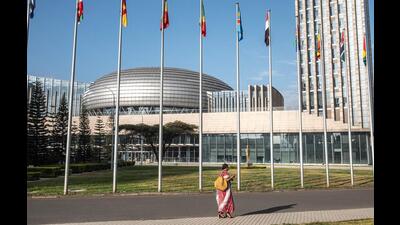
Regional and plurilateral associations — whether BRICS, the Shanghai Cooperation Organisation or the African Union — perform an important function. They are expressions of the same indispensable fact that shared problems require shared institutions. What they cannot provide is universality, and universality is essential. The Montreal Protocol works because every nation signed it. Universality transforms collective aspiration into collective obligation, and only the UN can provide it. As new challenges emerge in domains scarcely imagined by earlier generations, from the governance of AI to the stewardship of the global commons, multilateral cooperation becomes ever more indispensable.
This is no reason for complacency however. Multilateralism must be made fit for purpose — faster, more representative, and reinvigorated. A system that empowers this century’s re-emerging powers — India foremost among them — to take the leadership role that their size, capacity and legitimacy deserve.
On the International Day of Multilateralism and Diplomacy for Peace (April 24, 2026), the call is clear: See the system for what it has built, understand what it alone can build next, and invest accordingly. The returns have compounded for 80 years. Continued investment has never been more necessary than it is today given the multiple looming challenges of the 21st century.
Stefan Priesner is United Nations resident coordinator in India. The views expressed are personal