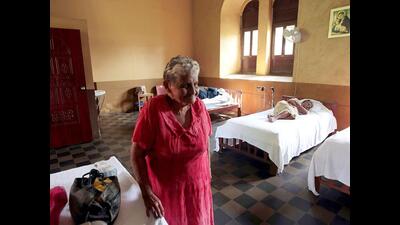
An older person may live for years with diabetes, hypertension, frailty, or organ failure. Medicines are needed on a daily basis, tests are repeated, and hospital visits become more frequent. The disease receives attention, but the suffering often does not. Pain remains poorly controlled, while fear, loneliness, and family exhaustion go largely unaddressed. In far too many cases, the final stage of life is marked by repeated interventions that do little to ease distress.
This reflects a larger failure in how health care is understood and delivered. The World Health Organization defines health as physical, mental, and social well-being, not merely the absence of disease. Yet, health systems still focus heavily on disease management, while giving far less attention to pain, dependency, emotional strain, and the overall quality of life of the person who is ill.
This is where palliative care becomes essential. It is not limited to the final days of life, nor is it only about pain relief. It is a holistic approach to improving quality of life, centred on relieving suffering, managing symptoms, and addressing the physical, emotional, social, and spiritual needs of people living with serious illnesses. It also focuses on the much-needed support for family members, especially those in caregiving roles. India signalled its commitment to this approach through the National Programme for Palliative Care in 2012 and included palliative care as part of primary care in the National Health Policy of 2017. The Indian Parliament simplified its narcotic regulations in 2014. The undergraduate medical curriculum includes it from 2019 and the nursing curriculum from 2022.
However, the implementation gap remains and palliative care coverage and reach, needs to be extended to the most needy. Services are mostly concentrated in cities and trained specialists are scarce. Access to essential pain relief medications, particularly to morphine and other opioids, is still limited despite legal reforms intended to improve availability. Over 5.5 million older people in India live with life-limiting and chronic conditions that often progress to stages requiring sustained palliative and supportive care. More than 96% of those in need have no access to palliative care, especially the poor and marginalised older adults in rural areas.
Aggressive intensive care at the end-of-life care may add to the suffering, prolonging the dying process at an enormous physical and financial cost to the patient and family. A Supreme Court verdict of March 11, 2026, points out that end-of-life care should be focused on dignity, comfort and quality of life. This judgement clarifies and operationalises the process for withholding or withdrawing artificial life prolonging interventions in cases where there is no reasonable prospect of recovery. In parallel, the guidelines issued by The Indian Society of Critical Care Medicine and the Indian Association of Palliative care are consistent with these principles, focusing on dignity and comfort care.
Without adequate palliative and supportive care, many older people with chronic long-term illness coupled with age related functional decline face significant challenges, often with limited resources and shrinking support networks. More than half describe the experience in negative terms, with loneliness being the most common sentiment. Fewer than half have financial independence, and dependency rises sharply among women and the oldest age groups.
Moreover, urbanisation and migration have steadily worn away the older scaffolding of family care. Where once elders might have been surrounded by relatives, many now live alone or within small nuclear households. In these settings, the quality and consistency of support, can vary dramatically, leaving gaps that are as emotional as they are practical.
Kerala offers a thoughtful example of what can be done differently. There, palliative care is woven into the community, rather than kept behind hospital walls. The palliative care movement began in 1990s and was developed within the volunteer led community network framework and recognising its impact, the government of Kerala adopted the palliative care policy in 2008. Now funding is diverse, decentralised and from multiple streams — the local panchayat, community contributions, and the state government, ensuring that responsibility is shared and commitment is local. Services come to the person — a palliative care nurse from the primary health centre visiting every home-bound person in her/his home at least once a month, a weekly clinic in the neighbourhood hall, volunteers dropping in to help or simply sharing tea. A revision of the state palliative care policy is creating a state palliative care grid bringing all palliative care providers under one umbrella.
Similarly, HelpAge India’s palliative care programme focuses on poor and disadvantaged older persons through a community care model with home-based care, community outreach, volunteer engagement, capacity building for community as well as family caregivers and establishing referral linkages. By embedding care within communities and strengthening access to public health care systems, this approach makes palliative care more accessible, affordable, and sustainable for vulnerable older people and their families, bringing both medical and emotional support closer to home. Care, at its core, is a shared responsibility.
Investing in palliative care is not only compassionate; it is economically sound. Current evidence shows that when introduced early, palliative care can reduce unplanned hospital stays, repeat admissions, emergency visits, and costly interventions that offer little benefit. Fifity-five million Indians go below poverty line every year by catastrophic health expenditure. Much of this can be avoided by early introduction of palliative care, as far as possible in or near the patient’s home. This helps health care systems use scarce resources more efficiently and frees hospital capacity for patients who need acute or specialised care.
India does not need to start from scratch. One of the clearest lessons from other public health programmes is the value of trusted community-based workers. Palliative care already sits within the expanded community-health role envisioned for ASHAs, whose work has been central to maternal and child health. Their experience with home visits, follow-up, and family-level engagement makes them well placed to identify older people in distress, support caregivers, and connect households to services. The challenge is not whether they have a role, but whether that role is being adequately supported through training, supervision and incentives.
There is a similar lesson in the National TB programme, which combines medical care with practical support systems such as nutrition assistance and community-based follow-up. Older people living with serious chronic illnesses, and the families caring for them, often need that same continuity of support.
An insightful learning emerges from Kerala’s health care system, which has effectively institutionalised palliative care by integrating it into the local panchayat system, leveraging strong community volunteer support — ensuring care for all bedridden individuals.
What India needs now is not only recognition of palliative care, but the systems to deliver it. Community-based services, home-based support, trained frontline workers, and stronger caregiver networks must become part of the country’s ageing-care infrastructure. Only then can older people living with serious illnesses receive care that is timely, local and dignified.
MR Rajagopal is founder and chairman emeritus, Pallium India, and Ritu Rana is mission head – health care, HelpAge India. The views expressed are personal