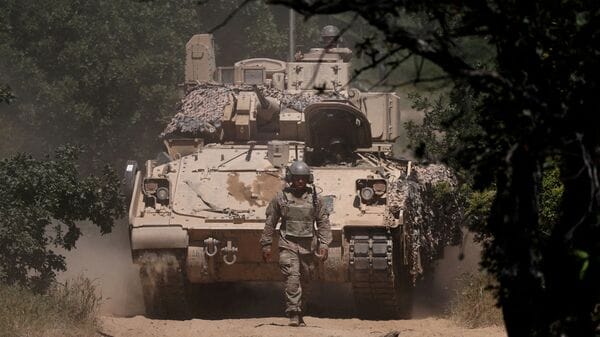
In the latest rift in transatlantic ties over the Mideast war, the United States plans to withdraw around over the next year, according to the Pentagon. This move marks another point of tension with a European ally over the Middle East conflict.
This comes after comments by US President Donald Trump earlier in the week, when he warned of pulling troops from NATO ally Germany after a disagreement with German Chancellor Friedrich Merz. Merz had remarked that Iran was “” Washington during negotiations.
Pentagon spokesperson Sean Parnell said the withdrawal is expected to be completed within six to twelve months. He added that the decision comes after a detailed review of US military positioning in Europe, taking into account operational needs and current conditions on the ground, AFP reported.
Is Trump punishing his allies?
Trump now appears determined to punish allies who have failed to back the war or contribute to a peacekeeping force in the crucial , which Tehran’s forces have effectively closed.
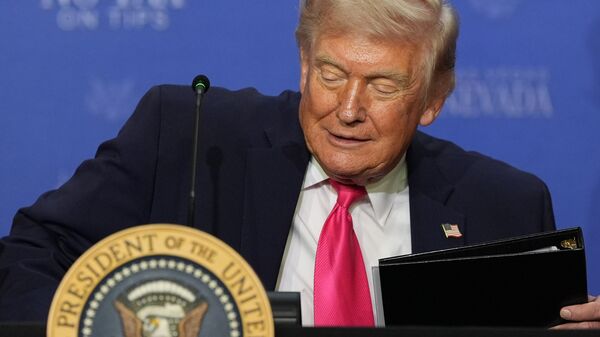
On Thursday, Trump said he may pull US troops from Italy and Spain due to their opposition to the war, telling reporters in the Oval Office: “Italy has not been of any help to us and Spain has been horrible, absolutely horrible.”
“Yeah, probably, I probably will. Why shouldn’t I?” Trump said, as reported by AFP.
Typically, about 80,000 to 100,000 US military personnel are stationed in Europe, depending on ongoing operations, exercises, and troop rotations. NATO allies have long anticipated that the forces deployed after Russia’s full-scale invasion of Ukraine in February 2022 would be among the first to be withdrawn.
Arnold, the expert at RUSI, said that Europe is more concerned about issues like a U.S. redeployment of Patriot missile systems and ammunition from Germany to the Middle East, and notifications to NATO countries such as Estonia and Belgium that orders for American weapons will be delayed as the U.S. government is prioritized, as reported by Associated Press.
A senior Western official told The Associated Press that they weren’t aware of any discussions between the U.S. and Germany or other allies regarding the possibility of troop reductions in Germany.
The official, who spoke on condition of anonymity to AP to discuss sensitive matters, said that Europe and Germany, which recently announced its new military strategy, are taking more responsibility for security on the continent.
In October, the U.S. confirmed that it would reduce its troop presence on NATO’s borders with Ukraine. The move to cut 1,500-3,000 troops came on short notice and unsettled NATO ally Romania, where the military organisation runs an air base.
Strained US-South Korea relations
The Iran conflict is having wider geopolitical ripple effects that extend well beyond the Middle East, significantly affecting US–South Korea relations. According to the U.S. Energy Information Administration, South Korea depends on imports for nearly 98% of its fossil fuel consumption due to a lack of domestic energy resources.
With no international oil or natural gas pipelines, the country relies entirely on tanker shipments of crude oil and liquefied natural gas (LNG) to meet its energy needs.
View full Image
A major share of its crude oil imports, usually about 60–75% in recent years, comes from the Middle East, while it also depends on the region to a lesser extent for liquefied natural gas (LNG), Statista data noted.
The effective blockade of the Strait of Hormuz—a critical passage for about 70% of ’s crude oil imports—has revealed serious weaknesses in the country’s energy security, petrochemical industry, semiconductor sector, and overall economy, according to a report by CSIS.
Helium crisis
The blockade has highlighted weaknesses in South Korea’s semiconductor supply chain. The country imports about 64.7% of its helium from Qatar, which has been affected by Iranian strikes that disrupted production at the Ras Laffan Industrial City.
Helium, which is produced as a by-product of natural gas extraction and is essential in semiconductor manufacturing for applications like ultra-clean cooling, leak detection, and inert shielding, is currently experiencing global supply pressure, with Qatar being one of the key suppliers worldwide.
Following these disruptions, helium prices have risen by more than 40%, and there is currently no effective substitute for the gas.
The Korea Semiconductor Industry Association stated that short-term supply remains adequate and that companies have taken steps to diversify sourcing routes. However, the government has added helium to a list of 14 key semiconductor materials that are now being closely monitored to manage potential supply risks.
Did US move THAAD systems?
Concerns over the security alliance surfaced after media reports in March claimed that Washington was relocating certain military assets to the Middle East, including components of a Terminal High Altitude Area Defense (THAAD) system.
The US-developed THAAD system is designed to intercept ballistic missiles at high altitudes and is deployed in South Korea as a safeguard against North Korea’s nuclear threat.
However, General Xavier Brunson, commander of US Forces Korea, clarified during a Senate committee hearing on Tuesday that no THAAD systems have been withdrawn from South Korea.
However, a key US air defence system stationed in South Korea is still deployed there, even though Washington is redirecting other military assets to the Middle East to support its operations against Iran, according to the top US commander on the . “We’ve not moved any THAAD systems,” Gen. Xavier Brunson, commander of the 28,500-strong US Forces Korea, told the Senate Committee on Armed Services on April 22. “THAAD still remains on the Korean Peninsula currently.”
UK, Spain, Italy
, 77, on his official visit to the US, carefully addressed rising tensions between Trump and UK Prime Minister Keir Starmer over Britain’s decision not to join military action against Iran, saying the “special relationship” between the two countries was “born out of dispute, but no less strong for it.”
Trump has criticised Starmer, whom he once praised, for refusing to participate in US-led strikes on Iran, even dismissing him as “not Winston Churchill,” referring to the wartime British leader who originally described the UK–US bond as a “special relationship.”
The remarks are part of a broader rift between Trump and NATO allies, with the US president reportedly calling some allies “cowards” and “useless” for not supporting military action against Iran.
Some opposition politicians in the UK had suggested cancelling the king’s planned reciprocal visit, out of concern that the US president might say or do something that could put the monarch in an uncomfortable or embarrassing position.
Earlier on Thursday, Trump said he may pull US troops from Italy and Spain due to their opposition to the war, telling reporters in the Oval Office: “Italy has not been of any help to us, and Spain has been horrible, absolutely horrible.”
As of December 31, 2025, there were 12,662 active-duty US troops in Italy and 3,814 in Spain. In Germany, there were 36,436.
Spanish Prime Minister Pedro Sánchez has criticised the escalating U.S. and Israeli military strikes on Iran, calling them an “absolute disaster” and an “extraordinary mistake,” and warning that they could lead to serious global economic and humanitarian repercussions.
Trump warned on March 3 that he could impose a full trade embargo on Madrid, pointing to Spain’s refusal to agree to NATO’s new defence spending target of 5% of GDP.
Spain subsequently pushed back against the threat, with the deputy prime minister stating that the country would not act as “vassals” to external pressure.
Speaking to CNBC’s Spanish Economy Minister Karen Tso on Thursday (local time), Cuerpo said that Spain had been better prepared for this crisis, pointing out that the country has been the fastest-growing advanced economy in Europe over the last couple of years.
Meanwhile, Spain would also send humanitarian aid worth 9 million euros ($10.5 million) to Lebanon, where at least 500 people have been killed and 700,000 forcibly displaced from their homes, according to Beirut and UNICEF.
Trump eyes Middle East allies
Secretary of State Marco Rubio has approved fast-tracked arms sales to Israel, Kuwait, Qatar, and the United Arab Emirates, bypassing the usual congressional review process to quickly supply air defence missiles and laser-guided systems amid concerns that the fragile Iran ceasefire could collapse.
According to the State Department, the total value of the deals is close to $9 billion.
The approval includes the sale of up to 10,000 Advanced Precision Kill Weapon System-II All Up Rounds to Israel, valued at about $992.4 million and produced by BAE Systems.
Kuwait has been cleared to purchase Integrated Battle Command Systems and related equipment worth as much as $2.5 billion, with major contractors including Northrop Grumman, RTX Corporation, and Lockheed Martin.
In a separate agreement, Qatar has also been approved to acquire 10,000 APKWS-II guided rocket systems and associated equipment, with a maximum value of around $992.4 million.
What did the European Union say?
The European Union said on Thursday that the presence of US troops in Europe serves Washington’s own strategic interests, while also describing the United States as an essential partner in ensuring Europe’s security and defence.
Meanwhile, Trump again criticised German Chancellor Friedrich Merz, urging him to concentrate on resolving the war in Ukraine instead of “interfering” in issues related to Iran.
have remained on high alert since Russia’s 2022 invasion of Ukraine. In addition, recent drone incursions and signals from the US suggesting a reduced focus on defending Europe have further intensified concerns, pushing security and defence cooperation to the forefront of the continent’s political agenda.
Merz has made national security a priority, announcing unprecedented investments in an army that has been underfunded and under-equipped for decades. He has also reaffirmed support for Ukraine, for which Germany has been the second-largest individual supplier of aid after the US.
(With inputs from agencies)