President Trump is fighting to reshape the Federal Reserve, aiming to replace Chair Jerome Powell with a new central bank chief after sparring with Powell for months.
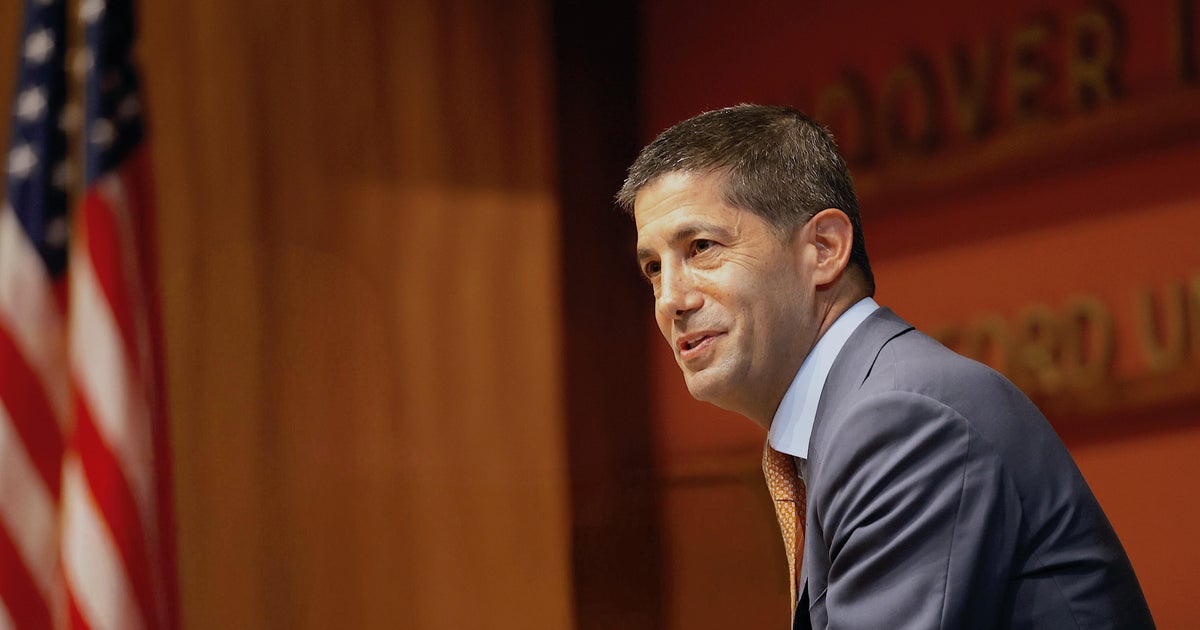
But the clock is ticking before Powell’s term ends on May 15, and Mr. Trump’s nominee for Fed chief, Kevin Warsh, is facing a roadblock to his Senate confirmation. It’s unclear who will run the central bank if the Senate is unable to confirm Warsh by next month — and it’s possible that Powell will not go away as quickly as Mr. Trump would like.
The impasse in the Senate hinges on a criminal investigation into Powell that was launched by the Justice Department over a renovation to the Fed’s headquarters. Powell has accused prosecutors of trying to intimidate him for cutting interest rates at a slower clip than Mr. Trump would prefer, which the Trump administration has denied.
Republican Sen. Thom Tillis of North Carolina, who views the investigation as “weak and frivolous,” has refused to vote on any Fed nominees until the probe is dropped. But so far, the Justice Department has not backed down. A judge last month quashed a pair of subpoenas sent to the Fed, a decision that U.S. Attorney for D.C. Jeanine Pirro vowed to fight. And last week, in an unusual move, prosecutors from Pirro’s office visited the Fed headquarters unannounced.
Tillis has praised Warsh — a former Fed official and Hoover Institution fellow — for his “impeccable credentials,” but if Tillis maintains his blockade on Fed nominees, it could make it harder to get Warsh past the Senate Banking Committee. The committee has 11 Democrats and 13 Republicans, including Tillis, meaning the panel could deadlock if one Republican defects.
The Senate Banking Committee is set to hold a confirmation hearing for Warsh on Tuesday.
With the path forward unclear, Powell has said he will stay on as interim Fed chair until his successor is in place and won’t leave the central bank’s board until the Justice Department ends its investigation. Meanwhile, Mr. Trump has threatened to fire Powell if he stays at the Fed for too long. And it’s possible that the president will reach back into the Justice Department’s archives and invoke a 1978 legal opinion that argues he can pick his own interim chair.
The White House has not said what it will do if May 15 rolls around without Warsh confirmed. White House spokesman Kush Desai called the matter “pointless speculation.”
“Kevin Warsh is eminently qualified to serve as the next chairman of the Federal Reserve, and the White House is working closely with the Senate for his swift confirmation,” Desai said.
While Powell’s term as Fed chief ends in mid-May, the chair’s largest public-facing role won’t come up until about a month later, when a committee of Fed officials meets to set interest rates.
In addition to his job as head of the Fed’s Board of Governors, Powell also formally chairs the Federal Open Market Committee, a 12-member panel that makes monetary policy decisions, balancing the Fed’s twin goals of low unemployment and low inflation. Powell traditionally appears at a news conference after each FOMC meeting wraps up and summarizes the panel’s views on the state of the economy — an event that is closely watched by markets.
The committee’s first meeting after Powell’s term as Fed chair ends is set for June 16 and 17. That could be the true “drop-dead date for a new chair,” said Jeremy Kress, an associate professor of business law at the University of Michigan and former Federal Reserve attorney.
“That, to me, is the date that I have circled on my calendar for when this all needs to be resolved by,” Kress told CBS News, “because certainly the public and investors, and frankly, other countries around the world are going to want to see a Fed chair who does not have a cloud of uncertainty hanging over him.”
The committee unanimously reelected Powell to a one-year term as its chair in January. It is widely expected to leave interest rates flat at its next few meetings, with Powell pointing to uncertainty over the Iran war in a news conference last month.
But the other “scary possibility” is if financial markets run into some kind of trouble while there’s lingering uncertainty over the Fed, notes David Wessel, director of the Brookings Institution’s Hutchins Center on Fiscal and Monetary Policy.
“At moments like that, it really matters that the public and the markets and the rest of the world think, ‘OK, we have grown-ups in charge,'” he said. “And if there’s some confusion about who’s really calling shots at the Fed, that could really be destabilizing.”
Asked last month what he will do if a new Fed chair isn’t in place by May 15, Powell told reporters he plans to stay on as chair pro tempore until his successor is confirmed.
“That is what the law calls for, that’s what we’ve done on several occasions — including involving me — and that’s what we’re going to do in this situation,” he said.
While Powell’s four-year term as chair ends next month, his 14-year term as a rank-and-file member of the Fed’s Board of Governors doesn’t end until January 2028. Most Fed chairs have left the board altogether when their term as boss runs out. But the Justice Department’s investigation into him could introduce a wrinkle in that tradition.
Powell told reporters last month he has “no intention of leaving the board until the investigation is well and truly over, with transparency and finality.”
Powell also hasn’t ruled out staying on the board even after the investigation wraps up. He has said he “will make that decision based on what I think is best for the institution and for the people we serve.”
The White House has not said what Mr. Trump will do if Warsh isn’t confirmed as chair by next month — but if the president decides to challenge Powell’s decision to stick around, he might turn to a set of decades-old legal memos.
In 1978, during the Carter administration, the Justice Department’s Office of Legal Counsel argued that the president has the legal authority to pick an existing member of the Fed’s board as acting chair if the role becomes vacant.
That legal opinion has never been tested in court. And Wessel says it might be undercut by the fact that a year after it was issued, the law governing the Fed was amended to explicitly make the central bank’s chair a Senate-confirmed post, rather than just requiring the Senate to greenlight Fed nominees when they join the board.
In 1983, Reagan administration attorney John Roberts — who later became the Supreme Court’s chief justice — took the position that the president could still appoint an acting chair “if a nomination for Chairman is pending or soon to be submitted.”
Three current members of the Fed board are Trump appointees: Stephen Miran, Michelle Bowman and Christopher Waller. It’s not clear what would happen if Mr. Trump decided to take inspiration from the Carter and Reagan administrations and try to appoint one of them as acting chair.
“I think the best reading [of the law] is that Powell remains as [chair] pro tem,” Kress told CBS News, “but it hasn’t been challenged in the past, and if Trump purports to name his own Fed chair, then we’ve got a potential legal standoff that I can’t see being resolved anywhere else other than the Supreme Court.”
If that happens, and there’s confusion over whether Powell or the president’s pick is in charge of the Fed, Wessel said financial markets could react negatively.
“Trump might try and do something here,” he said. “I don’t think he’ll succeed, and I think if it causes a lot of angst in the financial markets, he’ll back off.”
Mr. Trump suggested to Fox Business host Maria Bartiromo last week that if Powell doesn’t leave the Fed, he will try to fire the chair.
“Then I’ll have to fire him, OK, if he’s not leaving on time,” the president said, though it isn’t clear what the president meant by “on time” since his term on the board doesn’t expire until January 2028. “I’ve held back firing him. I’ve wanted to fire him, but I hate to be controversial.”
The president has mused on and off for months about firing Powell, who was first appointed to lead the Fed by Mr. Trump during his first term. He has made his recent frustration with the Fed chair clear, calling Powell a “moron,” a “stubborn mule” and — in a reference to Powell’s slow-and-steady approach to interest rate cuts — “Mr. Too Late.”
He is likely to face legal pushback if he tries to fire Powell because federal law says members of the Fed board can only be removed “for cause” — a term that isn’t legally defined.
The president’s power to fire Fed board members is currently being tested in court. He moved to fire Biden appointee Lisa Cook last year, accusing her of making false statements on mortgage documents. Cook sued over the firing, calling those allegations “unsubstantiated” and arguing they don’t meet the law’s requirement that firings be for cause.
Federal courts have allowed Cook to stay on the job while the case plays out. The Supreme Court took up the question of whether to pause those rulings, and at oral arguments earlier this year, the high court appeared likely to let Cook keep her position for the time being.
Kress believes that attempting to fire Powell could “needlessly complicate” Mr. Trump’s push to name a new Federal Reserve chair.
“There’s a very easy path of least resistance here for Trump to get what he wants,” he said. “For a rational person in the White House, dropping the DOJ investigation is the best way to get Warsh in as Fed chair and to get Powell out as Fed governor.”