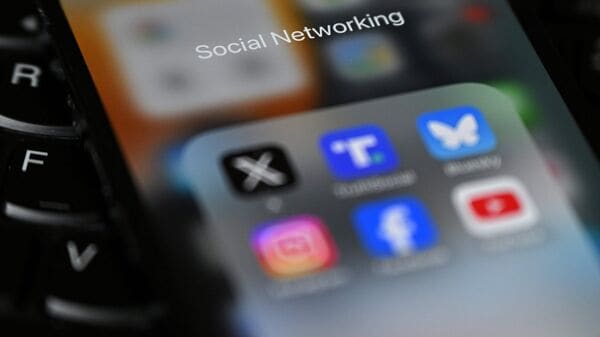
The UK joined Australia, Canada, and a few other countries to impose a ban on social media sites for children under-16s, British Prime Minister Keir Starmer said on Monday.
He said that the new law will also impose restrictions on gaming and live-streaming platforms for these kids, in a fightback against big tech that goes further than any other country.
‘Give kids their childhood back’
The sweeping changes will “give kids their childhood back,” Starmer said, outlining measures against platforms including Snapchat, and Instagram, as well as gaming sites that allow strangers to communicate with children.
“It is clear to me a full ban is the right choice,” he said during a press conference.
“It will make a huge difference, it will make our children safer, it will make our children happier, it will give them more time, more security, more freedom to grow up, more opportunity”.
Which social media platforms will be banned?
Britain will use a similar model to Australia, which enacted a ban last December, Reuters reported, citing the UK government.
It will cover platforms such as YouTube, Facebook, and X, but messaging services such as and Signal will not be included in the ban.
Britain will also introduce “world-leading blocks” on harmful functions such as livestreaming and stranger communication with children for under-16s.
“Is there a situation in the offline world where you would just let your child pair up with a stranger, an adult that you don’t know anything about? No, so we’re taking action on that,” Starmer said.
When will the ban be imposed?
The UK government already has the powers to take the first steps in any ban, he said, with regulation to follow by the end of the year and a prohibition in place around next spring.
Britain has increasingly toughened its approach to tech companies in recent years, urging or forcing them to impose age verification, adapt their algorithms and, most recently, prevent children from circulating nude images taken on mobile phones.
But with a growing awareness of the mental health risks posed by children spending too much time online, Starmer has decided to go further after speaking to parents and considering the evidence from .
Starmer, who is likely to face a leadership challenge in the coming weeks, said people rightly expected action.
Which countries have banned social media for kids?
Australia was the first country to ban social media for children under 16, blocking them from platforms including TikTok, Alphabet’s YouTube, and Meta’s Instagram and Facebook last December.
Since then, a raft of countries have said they plan to regulate access to social media amid mounting concerns about its impact on children’s health and safety.
| Country | Restrictions & Scope |
|---|---|
| Australia | The first to implement a strict nationwide ban for under 16s. Platforms like TikTok, Instagram, Facebook, and YouTube must enforce this or face massive fines, forcing users to undergo strict age-verification (like facial scans or ID checks). |
| Brazil | Under its Digital ECA laws, minors are restricted from social networks and online gaming platforms. Requires parental consent for under 16s and uses mandatory ID or facial verification. |
| Indonesia | Implemented strict measures modeled closely after Australia’s framework, blocking major social apps and gaming networks for users under 16. |
| Malaysia | Blocks access to any online platform with more than 8 million users (including YouTube and TikTok) for children under 16. |
| Canada | Introduced federal legislation aiming to bar children under 16 from opening social media accounts unless platforms can explicitly prove they have met strict safety and encryption exemptions. |
| France & Denmark | Enforcing and expanding age-based limits, with France setting a “digital consent” threshold at 15 and Denmark restricting unconsented access for those under 15. |
(With agency inputs)