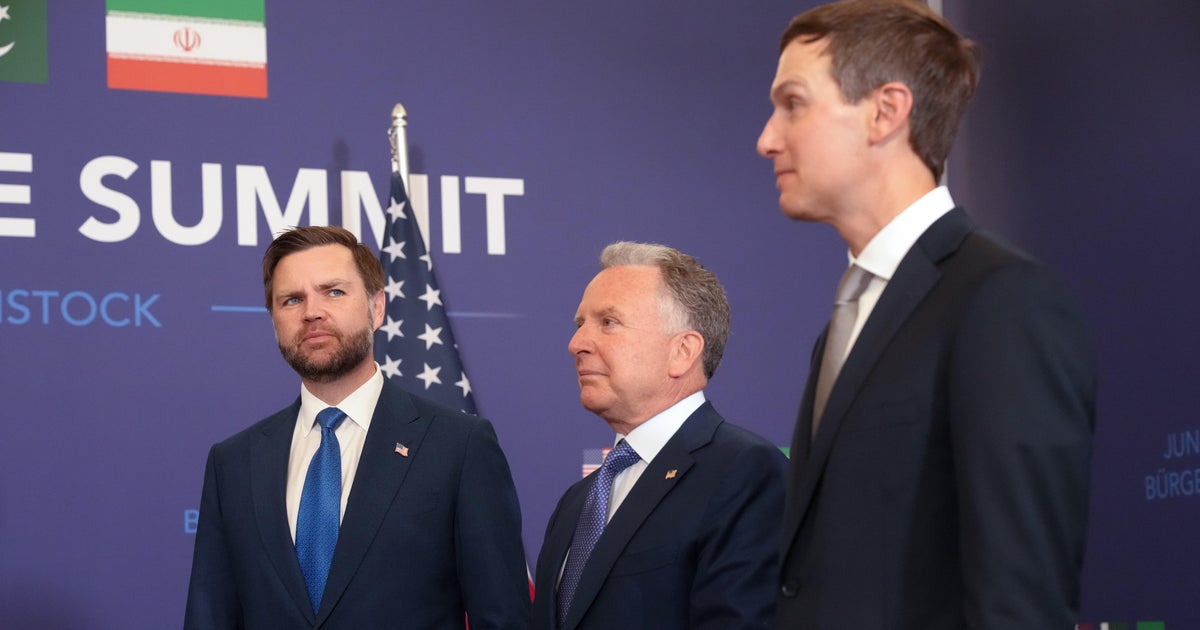
The U.S. has “accomplished the core mission” of making sure Iran never has a nuclear weapon, Vice-President JD Vance said Tuesday, even if ongoing negotiations fail.
In an interview with Fox News, he said that the U.S. has “all the cards” in the negotiations.
“I actually think the United States is in a great position however the negotiation ultimately shakes out,” he said. “If the negotiation is successful, which obviously we want it to be successful, you have an Iran that is permanently transformed, that’s not funding regional terrorism and instability, that has permanently given up on any nuclear weapons ambition, and that as a result is welcomed back into the world economy.”
“If on the other hand the Iranians don’t behave, if they don’t make the concessions in the negotiations that we need to see, their nuclear program is still destroyed, their conventional military is still destroyed, and the United States is still in a much stronger position relative to the Iranians,” he added.
“We have all the cards in the negotiation,” said Vance. “We obviously want it to be successful, but even if it’s not successful we’ve accomplished the core mission, which is to ensure that the Iranians never have a nuclear weapon.”
A foreign-flagged container ship ran aground in the Strait of Hormuz after deviating from the designated shipping route, according to Iranian state broadcaster IRIB.
The vessel, which was not named, became stranded after entering shallow waters outside the Iranian-approved navigation corridor.
Iranian authorities say the country’s designated entry and exit route for vessels transiting the strategic waterway passes south of Larak Island. The paramilitary Islamic Revolutionary Guard Corps has repeatedly warned ship captains, owners, and international shipping companies that navigating outside this route could make them a target.
Under Iran’s navigation system, vessels that coordinate their transit with the IRGC Navy – which can mean paying tolls – are provided with scheduled passage and security escort from the time they enter the Persian Gulf until they exit, Iranian officials have said.
Last week Oman and the U.N.’s International Maritime Organization announced that a new route, closer to its coastline, was open for transit, which Iran swiftly denounced.
Iran and the United States have begun indirect talks in Doha, with the Qataris and Pakistanis mediating, a source with direct knowledge of the discussions told the Reuters news agency on Wednesday.
U.S. envoys Steve Witkoff and Jared Kushner, President Trumps’s son-in-law, met with Qatar’s prime minister on Tuesday but are not attending Wednesday’s technical talks, according to the source.
A senior Iranian official told Reuters that the talks began Tuesday night and were focused on the release of Tehran’s frozen assets and the Strait of Hormuz.
The officials will discuss “the memorandum of understanding building on the progress made at the Lake Lucerne Summit,” a diplomat told the AFP news agency, referring to the first round of direct talks between the two countries last Sunday in Switzerland.
Both countries had said they would send officials to Qatar for the meetings, though Tehran denied a claim by Mr. Trump that direct talks would take place.
According to Qatari state media Al Jazeera, Tehran is demanding the release of the funds in two phases over a 60-day period, beginning with the unfreezing of $6 billion currently held in Qatari banks.
The report said a key point of disagreement remains Washington’s reported proposal to establish an exclusive credit line allowing the funds to be used only to purchase U.S. agricultural products, including wheat, soybeans, and corn. Iran has reportedly rejected the proposal, insisting that its central bank retain full authority to determine how the released funds are spent, including on essential goods and medicines, without external restrictions.
Steve Witkoff, President Trump’s special envoy, and Jared Kushner, the president’s son-in-law, met with Qatari Prime Minister Sheikh Mohammed bin Abdulrahman Al-Thani on Tuesday, Qatar’s Foreign Affairs Ministry said in a statement.
The officials discussed the ongoing peace talks between the U.S. and Iran and the ceasefire in Lebanon, according to the statement.
A senior Trump administration official told CBS News that Witkoff and Kushner had very positive conversations with regional leaders and that good progress continues to be made as technical talks continue.
Iran’s chief negotiator Mohammad Bagher Ghalibaf on Tuesday said Iran was unable to export any oil during the U.S. blockade on its ports, noting that exports have since surged.
“From the day the blockade was lifted until today, we have exported more than 40 million barrels of oil,” he said in an interview on state television. “By contrast, during the previous 50 to nearly 60 days, we were genuinely unable to export even a single barrel of oil.”
AFP