As the and Iran remain locked in a stalemate amid stalled negotiations, experts are warning that Washington could risk damaging the underground caverns that store its strategic oil reserves. The warning comes as the US rapidly releases oil from its stockpiles to cushion the impact of the war with Iran, with inventories falling to a four-decade low.
Citing experts, CNBC reported on Saturday (local time) that responding to energy emergencies in the future could become more difficult if the caverns are damaged.
SPR falls below 300 million barrels, sparking concerns
According to data released by the Department of Energy, the Strategic Petroleum Reserve (SPR) has now fallen below 300 million barrels for the first time since it was filled in the early 1980s. To address the supply disruption caused by the war in , Washington has released at least 172 million barrels from its reserves. Once the drawdown is complete, the SPR is expected to hold about 243 million barrels.
While the Energy Department claimed that roughly 70 million barrels must remain in the reserve to safely manage the caverns, Amos Hochstein, a senior energy advisor to President Joe Biden, disputed that figure this week. Speaking to CNBC, Hochstein said, “Don’t believe the people out of the government that are saying the SPR can go to 70 million barrels. It’s nonsense,” and added that at the 70-million-barrel level, the reserve would be depleted to “the point of never resurrecting it.”
Earlier in June, Hochstein warned that reducing the reserve to less than 300 million barrels risked damaging the . He said at the time, “I don’t know anyone who believes we can go below 300,” and added, “I know plenty of people who think we can’t get near 300 because physically you will damage the caverns where the oil is stored.”
However, Energy Department spokesman Ben Dietderich said claims that the SPR’s storage caverns are at risk of collapsing as oil is withdrawn are false. He said, “The caverns are always full. All that changes is the ratio of oil and water that is filling them,” and added that Donald Trump’s administration is “responsibly managing the SPR as the critical national security asset it was designed to be.”
Implications of SPR falling below required limit
Siddharth Misra, a petroleum engineering professor at Texas A&M University, told CNBC that the caverns need to retain roughly 70 million barrels of at their upper levels to ensure the extraction pipes remain safely submerged in oil rather than water.
He said, “The practical operational floor for the crude inventory is between 250 million and 300 million barrels,” and added that at current levels, “cavern integrity and overall operational capability are at an elevated risk.”
Once the inventory falls below 300 million barrels, the SPR loses its ability to pump oil quickly during emergencies, as its pipes and pumps can be damaged when the layer of oil thins at the top and sludge rises towards the extraction intake near the cavern ceiling.
US lawmakers raise concerns over depleting SPR
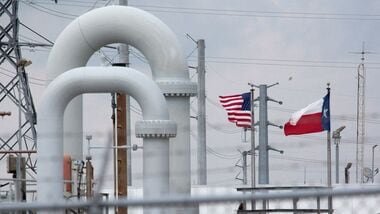
The concerns are not limited to energy experts. According to the report, both Democratic and Republican lawmakers have expressed concerns about the structural stability of the 60 salt caverns where oil in the SPR is stored thousands of feet underground across four major sites along the Gulf Coast in Louisiana and Texas.
Republicans raised concerns when former US President ‘s administration released a record 180 million barrels in response to Russia’s full-scale invasion of in February 2022. Under Biden, the SPR fell below 350 million barrels in 2023 and was later refilled to roughly 415 million barrels before the US-Iran war began earlier this year.
The concerns come as has repeatedly downplayed the impact of the prolonged conflict on the country.