US President Donald Trump on Thursday renamed Lake Ontario “Lake America” amid trade war with Canada. The executive order applies to the US government’s use of the lake’s name and does not require Canada or international organizations to adopt “Lake America.”
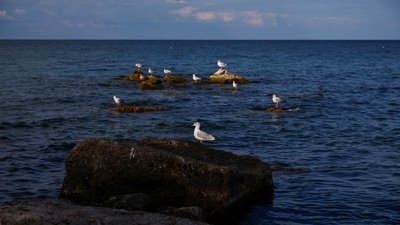
“We’re going to be changing the name of effective immediately to Lake America,” Trump told reporters in the Oval Office. “The lake change, the Lake of America, was something I’ve been thinking about for a long time, actually.”
About 52% of Lake Ontario’s surface area is in , with the rest in New York.
Order sparks ‘Donald Duck’ memefest
The move quickly sparked memes and reactions on social media, with some people joking that Canadian geese should now be called “Donald Ducks.”
One person commented, “If Trump is going to change the name of Lake Ontario to Lake America then Canadian Geese will now be known as Donald Ducks. Elbows up! Thank you for your attention to this matter.”
Another added, “If we’re changing Lake Ontario to Lake America…Can we change Canadian Geese to Donald Ducks?”
A third user asked, “What do you think about renaming Canadian geese to Donald ducks?”
Canada PM reacts to ‘Lake America’
Canadian Prime Minister pushed back against the name change, saying the name Lake Ontario predates both Canada and the United States as nations.
“We know that America is changing. Their trading relationships, their foreign policies, their national monuments, their hydronyms,” Carney said on social media. “Canadians also know that naming reality means calling it Lake Ontario – then, now and always.”
US lawmakers react
New York Governor Kathy Hochul also rejected the new name, writing on social media: “New York won’t be calling it that.”
On X, Vermont Gov. Phil Scott, a Republican, called Trump’s decision “petty and disappointing.”
US Rep. Joe Morelle accused Trump of trying to distract Americans from the ongoing trade negotiations with Canada.
“Pretending to rename a lake is an attempted distraction from the president’s disastrous trade talks with Canada,” he wrote on social media. “President Trump is playing games with a map.”
Vermont Sen. also criticized the move, arguing that Americans are more concerned about the cost of healthcare, childcare, housing and education.
He wrote on X, “No, President Trump. The American people don’t want to rename Lake Ontario Lake America. They want affordable healthcare, childcare, housing, education & nutrition assistance — all of which you have massively cut in order to pay for your $1 trillion tax break to the top 1%.”
Also Read:
Latest US-Canada trade tensions
The name dispute comes as the US and Canada remain locked in a broader trade fight.
After intensive negotiations broke down in August, the US imposed 50% tariffs on roughly $20 billion worth of Canadian goods. The affected products include wine and alcohol, dairy, furniture, clothing, cement, hockey equipment and paper and wood products. These tariffs come on top of existing duties on Canadian steel, aluminum, autos and lumber, as well as a broader 10% levy on many Canadian goods.
Canada suspended talks, citing what it called unfair last-minute US demands, and announced retaliatory tariffs on roughly $20 billion to $27.6 billion worth of US goods. The tariffs, ranging from 15% to 50%, are scheduled to take effect September 8, 2026.
Canadian targets include steel and aluminum, dairy, appliances, agricultural equipment, pulp and paper, electronics, furniture and apparel.
Trump has also threatened to raise tariffs on Canadian cars, trucks, auto parts and steel to 50% starting January 1, 2027.
Both nations have blamed each other for the breakdown in negotiations as the trade dispute continues to put pressure on businesses on both sides of the border.