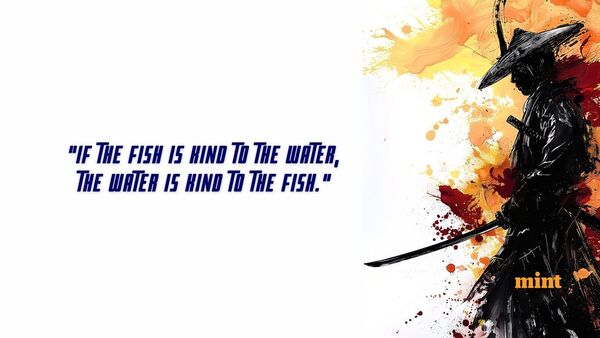
“If the fish is kind to the water, the water is kind to the fish.”
This Japanese proverb arrives as a quiet observation from nature. It does not lecture. It does not demand. Sakana ga mizu ni yasashiku, mizu mo sakana ni yasashii (if the fish is kind to the water, the water is kind to the fish) is one of the most gently profound sayings in Japanese culture.
It describes something most people have experienced but rarely articulated. Relationships are not transactions. They are ecosystems. That truth changes how you should understand every connection in your life.
What It Means
The draws from the most elemental relationship in nature. A fish does not merely live in water. It exists because of water. Water surrounds it, sustains it, and defines the boundaries of its entire world. Yet the relationship is not one-sided.
A fish that moves cleanly through water disturbs it minimally. It works with the current rather than against it. The water, in return, continues to sustain and support.
The proverb asks you to take that fact seriously. Kindness within a relationship is not weakness. It is intelligent coexistence. What you give to your environment shapes what your environment gives back. This is not guaranteed at every moment. But it is true across time. The fish that exhausts the water eventually has no water left to live in.
Most people approach relationships as though they are the only party that matters. They extract without replenishing. They take it without considering. They expect loyalty while offering indifference. This proverb quietly and firmly disagrees.
A Brief History
Japan’s relationship with water runs through the deepest layers of its culture. Island geography made the ocean central to survival, trade, sustenance, and spiritual life for centuries.
Rivers, rain and tidal rhythms shaped the agricultural calendar that governed Japanese society. Water was not merely a resource. It was a living presence that demanded respect.
Shinto, Japan’s indigenous spiritual tradition, treats natural elements as sacred. Bodies of water are home to kami, or spirits, who respond to human behavior.
The concept of musubi, meaning connection and harmonious binding, reflects the Japanese understanding that all things exist in relationship. Nothing thrives in isolation. Everything influences everything else.
Within this worldview, the fish and the water became a natural image for mutual care. Zen Buddhist teachings reinforced this through centuries of instruction. The monk who tends his garden receives a more beautiful garden in return. The student who honors the teaching receives deeper understanding. The relationship itself becomes generative when approached with care and respect.
The carried this philosophy into everyday Japanese life. It shaped how communities understood hospitality, reciprocity, and the obligations that come with belonging somewhere.
What It Means For You
You are the fish in more relationships than you currently recognize. You simply are not treating the water with corresponding care.
The workplace that sustains your livelihood responds to how you show up within it. The friendship that supports you through difficulty reflects the attention you have offered over time. The community that welcomes you carries the energy of what its members contribute. None of this is abstract. All of it is water and fish in daily life.
The proverb does not ask you to be endlessly self-sacrificing. It asks you to be genuinely attentive. Those are different things entirely. Attentiveness means you notice what the relationship needs before it breaks. Self-sacrifice means you exhaust yourself without wisdom. One sustains the water. The other muddies it.
That quality of attentive, reciprocal care is rarer than almost any professional achievement. And it builds the kind of relationships that sustain you when everything else becomes uncertain.
How to Apply It Today
Takeaway 1: Identify one relationship in your life that you have been taking for granted. A friendship you contact only when you need something. A colleague whose support you rely on without acknowledgment. A family bond you assume will endure regardless of neglect. Ask yourself honestly what you have been giving to that water. Then give something deliberate and genuine this week. Not to receive. To replenish.
Takeaway 2: Think of an environment you currently inhabit that feels difficult or unsupportive. A workplace, a neighborhood, a creative community. Before concluding that the water is cold, examine how you have been moving through it. Have you been contributing energy or extracting it? Have you been working with the current or against it? Small adjustments in how you show up can change the temperature of the water around you more than you expect.
Takeaway 3: Apply the proverb to how you treat your own inner environment. Your habits, your attention, your daily rituals are all water that either sustains or depletes you. Treat your body, your mind, and your time with the same kindness you would offer a relationship you want to preserve. The fish that neglects its own water eventually struggles to swim at all.
Why It Still Matters Today
The modern world is engineered to reward extraction over reciprocity. Metrics celebrate individual output without accounting for relational costs. Platforms are designed to maximize engagement rather than genuine connection. Every productivity framework focuses on what you can take from your time rather than what you give back to those who share it.
This proverb is not a self-help formula. It is a philosophical counter-position. It insists that the quality of your relationships is determined by the quality of your presence within them. No algorithm can manufacture that. No shortcut can replace it.
The people who are remembered with genuine warmth are not always the most talented or accomplished. They are the ones who treated their water with care. That quality outlasts every achievement. It is the invisible current beneath every meaningful life.
Another Japanese Proverb With a Related Lesson
“”
Both proverbs ask you to remain humble within your environment. One teaches that even the most capable creature fails when it loses its connection to its surroundings. The other teaches that caring for your environment is what allows you to thrive within it. Together, they describe a way of moving through the world that neither overestimates the self nor underestimates the relationship. Stay humble. Stay kind. That is the entire teaching. It was always that simple.