Washington — Another deadline to fund the government is looming this fall in Congress, with members fresh off a series of shutdown fights that have left them eager to avoid another costly impasse ahead of the midterm elections.
But as lawmakers warn about the coming funding cliff, they have yet to agree on a path forward. Current funding expires at the end of the fiscal year on Oct. 1.
Last week, as the House appeared poised to move on a stopgap measure to keep the government funded, across the Capitol in the Senate, Majority Leader John Thune told CBS News that “we are in discussions on that,” noting that “we’re working on solutions to fund the government.” This week, the two chambers appeared to be on different pages.
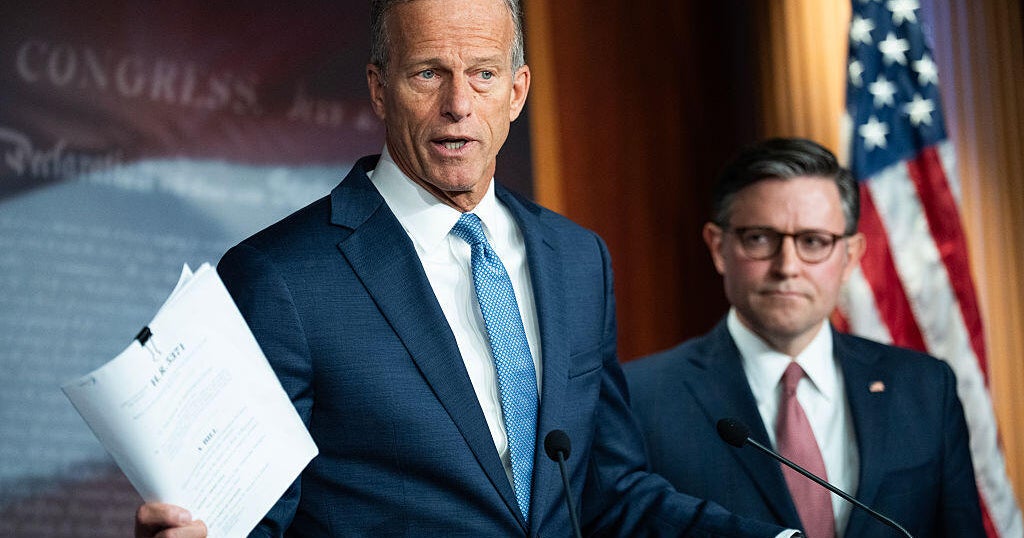
As the House prepared to vote on Tuesday on a measure to keep the government funded through the midterms, Thune announced that he intends to bring a separate continuing resolution to the floor before the August recess, citing “productive conversation on both sides of the aisle” on a funding measure.
Meanwhile, House Speaker Mike Johnson had been touting the lower chamber’s GOP-led plan. House Democratic leaders have pushed back against what they said was a premature effort that comes with time to negotiate a bipartisan agreement.
The divergent strategies illustrated a key divide between the two chambers that has colored recent legislative fights. Both chambers have narrow Republican majorities. But the Senate must contend with a 60-vote threshold to advance most legislation, which requires support from Democrats, whereas the House can maneuver measures on a partisan basis.
Thune outlined Wednesday that he’s asked Sen. Susan Collins of Maine, the chair of the Appropriations Committee, to draft a “bipartisan and clean continuing resolution” to fund the government until after the midterms, adding that he intends to bring up the measure for a vote before the chamber breaks for the August recess. The majority leader said the Appropriations Committee is “hard at work” reviewing proposed funding adjustments from the Trump administration to “ensure we have a bipartisan product ready to move quickly.”
Thune, a South Dakota Republican, has repeatedly spoken about the different dynamic in the Senate, and downplayed the two chambers’ differing approaches on Wednesday.
“Everybody’s going the same direction,” Thune told CBS News. “It’s just, we have a slightly … different process. We need Democrats over here.”
The Senate was at the center of the 43-day shutdown last fall, when Democrats used funding the government as leverage to address expiring healthcare tax credits. Then, early this year, a partial government shutdown lasted more than 70 days when Democrats sought reforms to the administration’s immigration enforcement agencies.
The funding fights have bled into this year’s appropriations process, which has been largely stalled in the Senate. Republicans have been predicting for months that Democrats will shut down the government this fall ahead of the midterm elections.
“It was not a good year on the government funding front, with two record-breaking government shutdowns,” Thune said on the Senate floor Wednesday. “But we have an opportunity now to chart a new path.”
The majority leader said he’s “encouraged that so far my Democrat colleagues have signaled that they do not want to force another government shutdown.” He noted that he looks forward to bringing up a bipartisan continuing resolution in the coming days, while urging senators to support the legislation to “give the American people the certainty that they deserve.”
Collins said she’s “hopeful that we will be able to draft a bipartisan CR,” telling CBS News that Democrats have been amenable “so far.”
With the House set to leave Washington for its five-week August recess later this week, and the Senate intent on its own approach, the funding issue will all but certainly remain unresolved until lawmakers return in September. And adding to the process’ complications, its fate has become intertwined with another funding fight in recent days.
The House has been pushing to approve additional funding for the Pentagon, along with a handful of other priorities, through the budget reconciliation process. That allows the party in power to approve measures with direct budgetary consequences without help from across the aisle. But Thune has been noncommittal about what would be a third reconciliation bill, and warned Tuesday that the Senate will “hold that” until they’re able to pass a continuing resolution to fund the government.
If the bipartisan path forward fails, Thune indicated that the Senate could use that budget resolution as a vehicle to fund the government without the help of Democrats.
“I hope that’s not necessary,” Thune said.