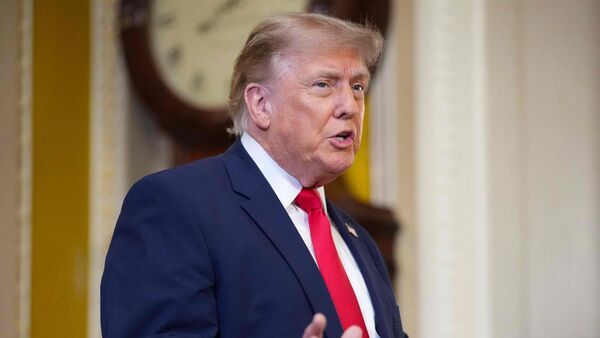
Donald Trump’s bid to become the first US president to remove a central bank official has hit a major hurdle. The US Supreme Court’s nine-judge bench, in a 5-4 ruling, refused on Monday to let Trump sack Federal Reserve Governor Lisa Cook, news agency Reuters reported.
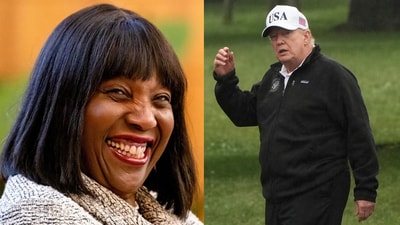
No president has fired an official of the bank since the US Congress created the Fed in 1913.
In his second term that began last year, Trump has tested the limits of his powers in numerous other ways as well.
This ruling comes after the February 20 decision by the
As a Fed governor, Cook helps set US monetary policy with the rest of the central bank’s seven-member board and the heads of the 12 regional Fed banks.
Trump on Monday threatened to take action against Lisa Cook even after the Supreme Court blocked him from firing her. “We will take appropriate action immediately to make sure that someone who has committed wrongdoing will not be making vital decisions concerning the Welfare of the United States of America!” Trump said in a social media post, terming the court verdict “strictly procedural”.
Why Trump wants to fire Cook
As to why he would want, Trump last year cited some mortgage-fraud allegations, which are unproven as of now.
Cook, the first Black woman to serve as a Fed governor, has denied Trump’s allegations. She has said the president wanted to use the unproven allegations only as a pretext to remove her, while there were actually some monetary policy differences between them.
In creating the Fed in 1913, Congress passed a law called the Federal Reserve Act that included provisions to shield the central bank from political interference, requiring governors to be removed by a president only “for cause”, though the law does not define the term nor establish procedures for removal.
Trump sought to fire Cook on August 25, 2025, by posting a termination letter on social media citing the allegations disclosed by Federal Housing Finance Agency Director Bill Pulte, a Trump appointee, involving homes owned by her in Ann Arbor, Michigan, and Atlanta.
District Judge Jia Cobb in September ruled that Trump’s attempt to remove Cook without notice or a hearing likely violated her right to due process. The judge also said the allegations made against Cook likely were not a legally sufficient cause to remove her under the Federal Reserve Act as they relate to conduct that occurred before she served in the post.
The US Court of Appeals for the District of Columbia Circuit agreed with the judge.
The SC justices have ow denied a request from Trump’s Justice Department to lift the order barring him from immediately firing Cook while her legal challenge to the termination continues to play out.
Why Fed matters
The Fed is the world’s most important central bank, an institution that determines the cost of credit for the United States and beyond and which has been in Trump’s crosshairs since his return to the presidency in January 2025.
Cook’s term in the job was due to run until 2038. She was appointed by Democratic former President Joe Biden in 2022.
Trump’s targeting of Cook and a separate criminal investigation against then-Fed Chair Jerome Powell together represented the biggest challenge to the central bank’s independence.
May 15 was the final day of eight years as Fed chair, though he remains a member of its Board of Governors. The US Senate on May 13 voted to confirm Trump’s nominee Kevin Warsh as Powell’s successor, and he was sworn in on May 22.
What Trump wants on fiscal policy
Trump has heaped pressure on the central bank to cut interest rates more rapidly and more deeply than it has been willing to do amid persistent inflation.
He lashed out repeatedly at Powell for not complying with his wishes.
The Cook case has ramifications for the Fed’s ability to set interest rates without regard to the wishes of politicians.
Limits of powers
Both Cook’s case and the fight over tariffs involved the legal fallout from Trump aggressively pushing the limits of presidential power since returning to office in January 2025.
Trump has also used executive authority to quickly transform policies on immigration, military service, federal employment and beyond.
To date, the Supreme Court has allowed most of those policies to go ahead despite legal challenges, on a preliminary basis, though the tariffs strikedown was a major exception.
In the tariffs ruling, the court repudiated a marquee piece of Trump’s economic agenda by invalidating his tariffs imposed on nearly every US trading partner under a 1977 law meant for use in national emergencies — also something no other president had done.
Trump reacted furiously to that ruling, saying he was “absolutely ashamed” of some of the justices and called the court’s Republican appointees — including two of his own — who ruled against him “fools” and “lapdogs” for Democrats.