Hours after the US Department of Justice (DOJ) announced charges against former Cuban leader Raúl Castro, President on Wednesday said that he does not anticipate a further “escalation” between the US and Cuba, USA Today reported.
The DOJ charged Castro with conspiring to kill US nationals in an attack against civilian pilots who were trying to rescue people fleeing Cuba on rafts, Acting Attorney General Todd Blanche announced today. At a public event in Florida, Blanche said, “If you kill Americans, we will pursue you, no matter who you are, no matter what title you hold, and in this case, no matter how much time has passed.”
Trump’s remarks on Castro’s indictment
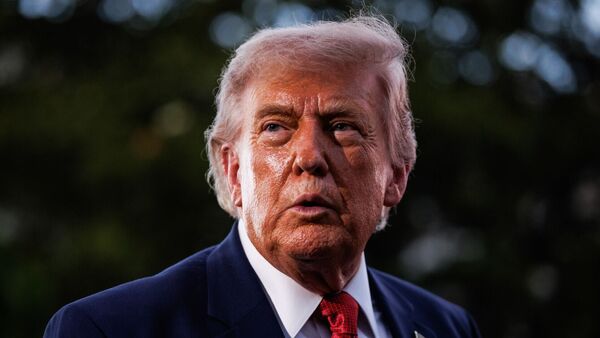
Asked by reporters on Wednesday if the American people should expect an “escalation” in tensions with Cuba now that Castro has been indicted, the said, “There won’t be an escalation. I don’t think there needs to be.”
“Look, the place is falling apart. It’s a mess,” Trump said. “They’ve really lost control of Cuba.” He made these remarks while returning from a trip to Connecticut, where he delivered the Coast Guard Academy’s commencement speech.
The US President even called Castro’s indictment a “big moment” for Cuban exiles. He told reporters that the Justice Department’s indictment of Castro was a “very big moment” for Cuban Americans and the exile community, and added, “I think it’s a very big day, very important day.”
However, Trump did not comment on whether he would take military action to bring Castro from Cuba, since the island nation does not extradite people to Washington.
The allegations against Castro, Fidel Castro’s brother, date back to 1996, accusing him of ordering Cuban fighter jet pilots to shoot down two civilian planes that were working under a humanitarian group, Brothers to the Rescue (BTTR). Four members of BTTR were killed.
Cuban leader slams US for indicting Castro
Shortly after the DOJ announced charges against Castro, Miguel Díaz-Canel Bermúdez, Havana’s top leader, in a post on X, called the decision by Washington “a political maneuver, devoid of any legal foundation, aimed solely at padding the fabricated dossier they use to justify the folly of a military aggression.”
US-Cuba tensions escalate
The decision to indict Castro and five others on murder and conspiracy charges comes amid increased apprehension about a potential US military action in Cuba, after Trump repeated his threats against the island nation. In April, USA Today reported that the Pentagon had ramped up its planning for a possible military operation.
The possibility of a military operation in Cuba was announced after the Trump administration, in January, sent troops into Venezuela to capture its president, , after it secretly indicted the Latin American leader. Since then, Trump has turned to Havana, executing a monthslong pressure campaign on the island nation’s government and its elites via an oil blockade and targeted sanctions, to force a deal that could see economic conditions improve inside the country and political prisoners released.
Why is Raúl Castro indicted?
According to the DOJ, Castro has been charged along with Raul Modesto Castro Ruz of Holguín, along with Lorenzo Alberto Pérez-Pérez of Las Tunas, Emilio José Palacio Blanco, José Fidel Gual Barzaga, Raul Simanca Cárdenas, and Luis Raul González-Pardo Rodriguez.
The six men have been indicted for their alleged roles in the February 24, 1996, shoot-down of two unarmed US civilian aircraft operated by BTTR, also known as Hermanos al Rescate, over international waters.
According to the allegations, on February 24, 1996, three BTTR planes departed South Florida en route to Cuba. Cuban military fighter jets, operating under the command structure overseen by Raúl Castro, reportedly launched air-to-air missiles at two civilian Cessna aircraft, shooting them down without warning while they were outside Cuban airspace. The incident resulted in the deaths of four US nationals, including three US citizens: Carlos Costa, Armando Alejandre Jr., Mario de la Peña, and Pablo Morales.
According to the indictment, weeks before the attack took place, Cuban military pilots carried out training exercises designed to locate and intercept slow-moving aircraft. On February 24, three planes departed from Opa-locka Airport for a planned humanitarian flight, and two of the aircraft, tail numbers N2456S and N5485S, were allegedly targeted and shot down in international airspace.
However, it remains to be seen whether Castro will be extradited to the US or if the Trump administration will use force to bring him out of the island nation.
- The indictment of Raúl Castro represents a significant step in US-Cuba relations and highlights ongoing tensions.
- President Trump’s response indicates a desire to manage tensions rather than escalate them, despite potential military options.
- The historical context of the indictment sheds light on the complexities of US-Cuba interactions and the legacy of past conflicts.