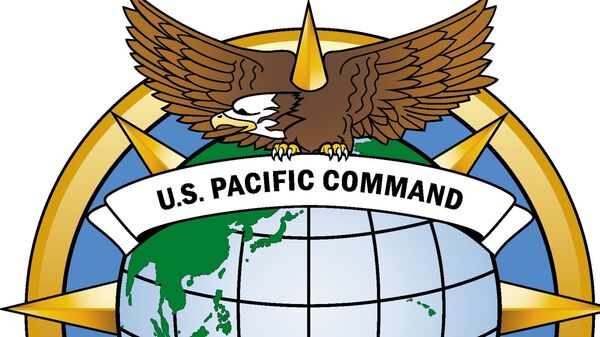
Roughly eight years after US President ‘s administration changed the name of its Pacific Command to the Indo-Pacific Command, the US has reverted to the original name. The Department of War on Tuesday (local time) announced in a press release that the US Indo-Pacific Command (USINDOPACOM) will officially restore its name to the US Pacific Command (USPACOM).
The move has already drawn political reactions in India, with Congress MP Shashi Tharoor taking a dig at the decision.
Originally established on 1 January, 1947 by former US Harry Truman, the command has operated under the USPACOM banner for over seven decades, standing as the oldest and largest of the US’s unified combatant commands.
In the statement, the said, “Restoring the legacy USPACOM designation honours the command’s deep historical roots, fostering a sense of pride and collective spirit among all who serve in the Pacific.”
It added, “From its critical role in establishing the post-WWII regional security architecture to its coordination of joint forces during the Korean War, the Vietnam War, and countless humanitarian operations, the USPACOM namesake carries decades of military heritage and enduring regional partnerships.”
USPACOM renamed in 2018
Back in 2018, when the Command was renamed as USINDOPACOM, it was seen as a sign of India’s growing significance to the Pentagon, The Print reported.
For , the renaming in 2018 emerged as an important institutional channel for expanding defence cooperation with Washington.
The Command increasingly came to symbolise the deepening defence partnership between India and the , marked by expanded joint military exercises, enhanced maritime collaboration, greater intelligence sharing and broader strategic alignment within the Indo-Pacific framework.
Former US Defence Secretary had said on 31 May, 2018, “Relationships with our Pacific and Indian Ocean allies and partners have proven critical to maintaining regional stability,” and added, “In recognition of the increasing connectivity between the Indian and Pacific Oceans, today we rename the US Pacific Command to US Indo-Pacific Command.”
However, the decision to revert to its original name is meant to honour the Command’s deep historical roots. The Department of War also stressed that the renaming does not alter the Command’s operational role, strategic mission or geographic scope.
According to the statement, USPACOM’s area of responsibility — extending from waters off the western coast of the US to India’s western boundary — remains unchanged. The department added that its commitment to maintaining a “free and open theatre alongside regional allies and partners” will continue without interruption.
Significance of USPACOM
According to reports, the Command has played a crucial role in shaping post- security arrangements across Asia and in coordinating joint military operations during major conflicts, including the Korean and Vietnam Wars, as well as humanitarian and disaster-response missions.
Until this latest change, USINDOPACOM operated as the principal US military command responsible for operations, planning, defence partnerships and regional security across the wider Indo-Pacific.
The Command is headquartered in Hawaii and oversees an enormous strategic zone covering the Pacific Ocean, much of the Indian Ocean, East Asia, Southeast Asia, and parts of South Asia.
The Command’s responsibilities extend across defence readiness and deterrence, military exercises with partner nations, maritime security operations, disaster response and contingency planning.
Congress MP Shashi Tharoor takes a dig
The decision to revert the name to its original has now sparked political reactions in India, with Tharoor taking a veiled dig. Reacting to the announcement, he posted on X with a brief but pointed remark, “One more nail in the coffin of the Quad?” and shared screenshots of the order issued by the Department of War.