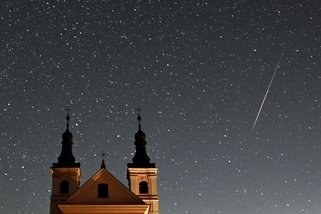
That time is near when you can see up to 100 meteors per hour. This year, the Perseids, one of the year’s best meteor showers, will peak on the night between August 12–13. With the new moon arriving on August 12th, the sky will be ideally dark at the time of the event.
The Perseid meteor shower peaks every August, with around 50 to 100 meteors per hour at a dark site. The Perseids are caused by debris from comet Swift-Tuttle. The comet takes 133 years to orbit the Sun once. It last visited our inner solar system in 1992 and won’t be back again until 2125.
According to NASA, are also known for their fireballs. It defines fireballs as larger explosions of light and colour that can persist longer than an average meteor streak. This is due to the fact that fireballs originate from larger particles of cometary material.
When to watch Perseid meteor shower?
The Perseid meteor shower, the most popular one, is active from mid-July to mid-August. The peak is predicted for 14:53 UTC on August 13, 20, according to EarthSky.
“So the mornings of August 12 and 13 are probably your best bets. August 14 might be good as well, but be aware that the Perseids tend to fall off rapidly after their peak,” EarthSky reported.
The moon will be a new moon during 2026’s peak of the . So you’ll have dark skies or moonless sky for meteor viewing.
“The darker the skies, the better your chances of seeing the really faint meteors as well,” says planetary scientist and meteorite expert Dr Ashley King. “You could go to the coast or stand on a hill in the middle of the countryside somewhere.”
This shower rises gradually to a peak, then falls off rapidly, the report added. Perseid meteors tend to strengthen in number as late night deepens into the wee hours before dawn, EarthSky said. The shower is often best just before dawn on August 13, 2026.
Viewers should start observing around 11 p.m. local time when the rates of shooting stars increase and can watch the sky until dawn.
“You might not be able to see anything for the first 10 minutes while your eyes adjust to the dark,” Ashley said, according to an article on the Natural History Museum. “Once you get used to the low light levels you’ll begin to notice more and more. So don’t give up too quickly.”
Best time to watch Perseid meteor shower?
The Perseids are best viewed in the during the pre-dawn hours, though at times it is possible to view meteors from this shower as early as 10-11 pm ET. In the UK, the best time to see the Perseids is between midnight and 5.30 am, according to the Royal Museum Greenwich.
The Perseid meteor shower is best visible in the Northern Hemisphere and down to the mid-southern latitudes. They may be visible in North America, Europe, and parts of Asia and Africa.
Perseid meteor shower 2026: Will it be visible in India?
Reports claim that for skywatchers looking for the Perseid meteor shower 2026 India time, the absolute peak of the shower will occur around 8:23 pm IST on August 13 (14:53 UTC).
However, because the constellation Perseus rises higher later in the night, the most spectacular viewing window for India is between 2:00 AM and 4:30 AM IST on the pre-dawn mornings of both August 12 and August 13, the report added.
According to Lifestyle Asia, in 2023, these popular stargazing spots in India were on skywatchers’ radar to catch a glimpse of this event:
> Ladakh
> Spiti Valley
> Jaisalmer
> Coorg
> Andaman and Nicobar Islands
How to watch Perseid meteor shower?
You can look out for the Perseids wherever you are, but there are certain kinds of places that will increase your chances of spotting meteors. Plan ahead and check the weather forecast.
If it is likely to be inclement, find a different location or go out on a different day. The days leading up to the peak are usually better than the days after, the Royal Museum Greenwich says.
Typically, the best view of a meteor shower comes between midnight and pre-dawn hours, because that’s when you are on the leading side of the Earth, watching the comet debris come at you like rain hitting a car windshield, the Planetary Society says.
Where do meteors come from?
Meteors come from leftover comet particles and bits from broken asteroids. NASA explained that when comets come around the Sun, they leave a dusty trail behind them. Every year Earth passes through these debris trails, which allows the bits to collide with our atmosphere and disintegrate to create fiery and colorful streaks in the sky.
Meteors are also known as shooting stars, but they aren’t actually stars at all. Meteors are streaks of light in the sky caused by dust and sand-sized rocks burning up as they hit Earth’s upper atmosphere.