Amongst the happiest memories of my childhood is devouring fish fingers and chicken sandwiches at the Gymkhana Club. My sister Shobha would take me swimming and this was the bribe to coax me into the pool. Jugnu, my cousin, would offer me a coke for every breadth I could complete. Even so, I usually failed. As a young child going to the Club was an occasion. Simply thrilling. Pure fun.
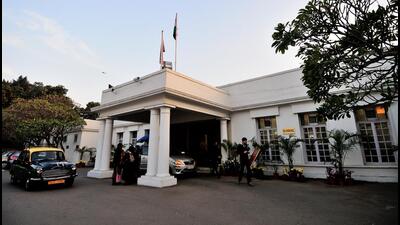
Nearly 50 years ago, when I was 21, I became a member in my own right. “You’ll have to wear a suit, young man,” the president informed me, as I prepared for the At Home. “I don’t have one,” I hastily replied. “I’m just here on holiday from Cambridge and it’s the middle of a very hot summer.” He laughed sardonically. “In which case you’ll get blackballed.” I hastily borrowed a suit from my cousin Lakshman and made it to the membership.
Except for when I was a regular squash player, I haven’t been a frequent user of the Club.
But I have always valued my membership and I’ve thought of visiting more often than I have. The Club has become a feature of living in Delhi. It has always been there. I never imagined a day when it would not be.
That’s what the government intends to change. On May 22, it informed the Club that its 2 Safdarjung Road premises “is critically required for the strengthening and securing of defence infrastructure and other vital public security purposes. The land is essential to fulfill urgent institutional needs, governance infrastructure, and public-interest projects, integrated with the resumption of adjoining government lands.” That’s vague and imprecise but it’s all the Club has been told. Unless the courts intervene, on these grounds the Club will cease to exist.
Is this prejudice, I asked myself? Is it class envy? Is the Club being targeted because it’s so obviously a colonial institution?
Critics call it elitist. But it’s not. Its membership comprises the IFS, the IAS, the IPS, military officers, corporate executives, academics and reciprocal members of some 61 other clubs in India and 15 foreign countries. These are ordinary people. They are not rich. Many are retired. Most have ceased to be influential.
Does its location make the Club a threat to the Prime Minister’s security? Unlikely. Since 1966, when Indira Gandhi first became PM, she and her successors have lived on either side of the Club and never has the Gymkhana or its activities threatened their safety. Remember Indira Gandhi was not killed by a member of the Gymkhana Club. It was her official security that did it. And, anyway, the present PM will soon be moving to a new residence.
No doubt the Club occupies prime real estate. But that’s also true of London clubs in St James’s and Pall Mall. Like the Gymkhana, they have the right to choose their membership and they necessarily restrict it to those that qualify. But the British government would never consider turfing them out. And it certainly wouldn’t do so on grounds as spurious and specious as those cited in the case of the Delhi Gymkhana.
In fact, does it occur to the government that if ministers can live in five-acre bungalows in Lutyens Delhi, why can’t the Gymkhana Club continue where it is? Why aren’t their residences required “for the strengthening and securing of Defence infrastructure and other vital public security purposes”?
Finally, consider for a moment what might replace the Gymkhana Club. It’s unlikely to be a public park accessible by everyone. I suspect it could be houses for Members of our Parliament that’s likely to be expanded soon, or, possibly, some form of defence establishment. Aesthetically neither will be an improvement. And neither will confer any benefit on the ordinary Indian. In fact, what they might prefer or want won’t even count.
This is simply a case of the government acting in its own interest oblivious of the consequences. C’est la vie (that’s life).
Karan Thapar is the author of Devil’s Advocate: The Untold Story. The views expressed are personal