The virtual political sensation, the Cockroach Janata Party (CJP), with 20 million followers failed to make an actual impact on its maiden show of strength. The “armchair” revolutionary friends, nurturing dreams of a French Revolution encore inspired by social media rhetoric, must be disappointed.
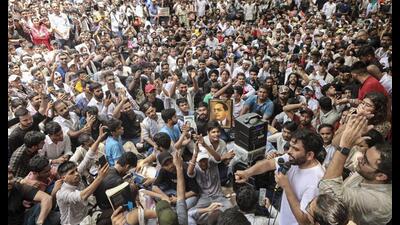
Let’s not cast aspersions on the intentions of the demonstrators gathered at Jantar Mantar. They wanted to demonstrate. The government didn’t stop them either. But we need to make a distinction between demonstrations and political movements.
I would like to take you back to the Anna Hazare protest. Hazare inspired people due to his successful intervention in Maharashtra villages. As a result, when Arvind Kejriwal associated with him, it proved to be a force multiplier for both: Kejriwal was a successful organiser and Hazare, a great mobiliser.
Kejriwal carefully crafted his image. People were attracted to him as he left the glittering Indian Revenue Services to pursue the path of an Right to Information (RTI) activist and a crusader against corruption. His comrades-in-arms were equally educated and had similarly left their lucrative professions to pursue his cause. This moved the general public to believe in their cause.
History is testimony to the fact that revolutions reach their logical conclusion only when the torchbearers make visible sacrifices. Kejriwal and most of his comrades entered the political arena following the same playbook.
This was the reason the Anna Hazare protest proved to be a watershed moment for Indian politics. Then Prime Minister (PM), Manmohan Singh, wasn’t corrupt but suffered the most. Most of those accused of corruption ended up being cleared. But the general atmosphere created at the time was such that the average Indian started hating their rulers. However, the wise sounded caution that excessive love or hate towards the ruling elite was dangerous for democracy.
The apathy hit the incumbent Congress government hard and the party is yet to recover its political mojo from its shockwaves.
Kejriwal astutely gauged the people’s mood and struck when the iron was hot, launching his own outfit, the Aam Admi Party (AAP), in 2012. Some, even then, raised concerns, citing Kejriwal’s pledge of not joining politics.
Aware of such sentiments, Kejriwal and his party presented AAP’s approach as “alternative politics”. He held Delhi’s reins for a decade and his party is ruling currently in Punjab. It’s true he became a political alternative, but this was at the cost of his “alternative politics”. In his bid to chart a new path, he ended up in the same league against whom he crusaded.
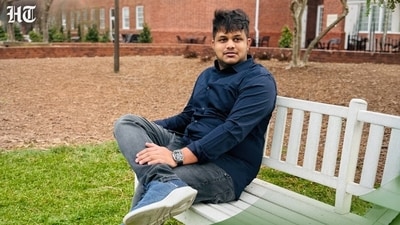
The CJP doesn’t even have the backing of intellectual discourse, intelligent comrades, or Hazare-like groundswell of support. Its founder, Abhijit Dipke, used to be an AAP member. Driven by humour and satire, he launched the CJP’s social media page and gathered a follower base of 20 million within days. This may have triggered an ambition in him to emerge as Kejriwal 2.0.
He failed to understand there’s a world of difference between him and Arvind Kejriwal. Kejriwal’s intellectual prowess, political astuteness, and his ability to make inroads even among his rivals is phenomenal. During the Anna protest, he didn’t hesitate to marshal support from the Bharatiya Janata Yuva Morcha and the Rashtriya Swayamsevak Sangh (RSS). A senior Bharatiya Janata Party (BJP) leader ruefully told me that Kejriwal used to approach him with a request to help gather huge crowds. His main grouse was that once Kejriwal became the chief minister, he conveniently forgot our man’s contribution and never acknowledged him.
Dipke faces another problem. He raised emotive issues such as “paper leaks” that were bound to get support. But the “click crusaders” who gravitated towards him online are still umbilically connected to other political parties on the ground. They are driven by the issue, not necessarily to political protest.
This is the reason the CJP couldn’t mobilise 20,000 of its 20 million virtual followers.
They might have succeeded had the police arrested the online party’s leaders at the airport. Maybe that was the reason they wanted to physically submit an application in Parliament Street Police Station for permission to demonstrate.
As an IT professional, he must have known that he could get permission via email from anywhere. But the act of going to the police station had dramatic overtones. However, by granting permission at the airport itself the government took the wind out of their sails.
The CJP’s membership eligibility criteria are laughable. For example, to be a member it’s mandatory that you are unemployed. It’s true that unemployment is a major issue in the country but the situation isn’t as dire as it is in Bangladesh, Nepal, Sri Lanka or as was the case temporarily in some Arab nations 15 years ago. India isn’t facing a Ukraine-like situation where the nation’s leader is acting as a foreign pawn, using a refurbished Cold War shield to engage in an old Soviet rivalry.
Volodymyr Zelensky used to be a stand-up comedian. His fictional television persona assumed the presidency in the TV show. The Ukrainian people turned his reel life character into a real life horror for themselves.
Today, they are assessing the consequences of selecting a comedian as the custodian of their fate. The unending war with Russia has laid bare an economy already in tatters.
Let’s discuss Sonam Wangchuk too. He made an appeal from the CJP’s platform to look into the working of the education and other ministries. He wants to raise the profile of the issue. He’s an educated man; however, he forgets that demonstrations and revolutions may go hand in hand, but it’s not necessary that every demonstration has the desired impact. People look up to him as a social reformer, and he should stick to his role.
Shashi Shekhar is editor-in-chief, Hindustan. The views expressed are personal