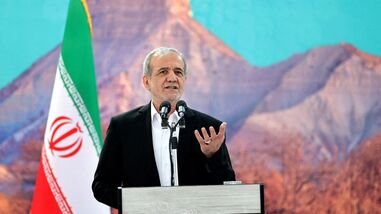
The high-stakes negotiations between the United States and Iran scheduled today at the Burgenstock mountaintop resort in Switzerland will not take place, the Swiss Foreign Ministry was quoted as saying by Reuters.
The announcement on Friday, 19 June came hours after the White House said that was delaying a trip to to lead a new round of negotiations with Iran over its nuclear programme.
“The team led by Vance had been ready to leave but was postponing,” the White House said, citing difficult logistics for negotiations.
Quick answers to key questions
What caused the delay of US Vice President JD Vance’s trip to Switzerland for the Iran deal negotiations?⌵
The trip was postponed due to difficult logistics surrounding the negotiations and uncertainty over Iran’s participation in the talks.
Why is Iran delaying its delegation’s trip to Switzerland according to recent reports?⌵
Iran reportedly delayed sending its delegation to Switzerland due to concerns over Israel’s ongoing military campaign in Lebanon.
What are the key components of the MoU signed between the US and Iran?⌵
The MoU includes a commitment to dilute Iran’s stockpile of highly enriched uranium, prevent the development of nuclear weapons, and support a broader ceasefire.
How has the postponement of the Switzerland talks affected the timeline for US-Iran nuclear negotiations?⌵
Despite the postponement, the 60-day timeline for broader negotiations on Iran’s nuclear programme has officially begun following the signing of the initial agreement.
Should the US expect immediate compliance from Iran following the signing of the agreement?⌵
While the agreement is in effect, the US will rely on verification and compliance measures rather than assurances from Iran regarding its nuclear programme.
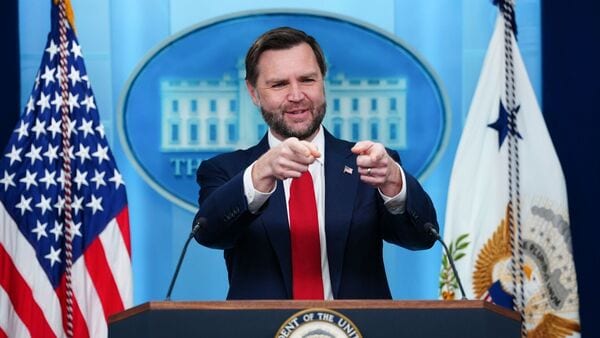
The White House announcement came on the same day Vance held a news briefing to defend the preliminary deal to end the war. Vance said during the briefing that he did not know whether he would still travel to Switzerland on Friday for the negotiations, where he was initially expected to help oversee a signing ceremony for the deal, the New York Times reported.
It is unclear when Vance might reschedule his trip to Switzerland.
The announcement followed a report from Al-Mayadeen, a pan-Arab satellite channel allied with Iranian-backed Hezbollah in Lebanon, that Iran was delaying sending its delegation to Switzerland over Israel’s ongoing military campaign in Lebanon.
Iran’s supreme leader, said on 18 June that he had approved the agreement despite reservations, even as the United States lifted a blockade of Iranian ports.
Before Vance delayed his trip, however, Pakistani Prime Minister Shehbaz Sharif postponed a planned visit to Switzerland, where Islamabad officials had originally planned to host a ceremonial signing ceremony for the agreement.
Questions raised about next phase of negotiations
That visit was postponed because the agreement had already been signed by both Iran and the US, two senior officials were quoted by news agencies.
These developments have raised questions about what’s next for the tentative agreement to end the war and the 60-day negotiating period announced after the signing of a memorandum of understanding intended to support a ceasefire and broader .
President Donald Trump signed the initial pact with Iran on Wednesday while dining with French President Emmanuel Macron at the Palace of Versailles. The deal is slated to take immediate effect and extends a ceasefire while giving each side 60 days to hammer out broader agreements on larger issues.
Criticism from Republicans
The tentative agreement has drawn sharp criticism from some in the US – including a few congressional Republicans – who worry Washington ceded too much to Iran with relief from sanctions and a potential USD 300 billion fund to help with rebuilding.
The agreement states that Iran’s stockpile of highly enriched uranium must at minimum be diluted under international supervision. It also says that Iran shall not procure or develop nuclear weapons – a commitment it has made previously.
Trump envoy told members of Congress that Iran will invite the to inspect its nuclear sites and begin work on identifying and uncovering the locations of Tehran’s enriched material, which is believed to be buried under rubble.
Vance, in his earlier comments at the White House, shrugged off criticism about the confusing rollout of the initial deal, saying, “I don’t think our public messaging has been chaotic.”
Iranian state media said shipping had “normalised” at Iran’s southern ports but added that the strait remains supervised and under the control of the Iranian military, and transiting through the vital waterway still requires coordination.
Major shipowners began moving vessels through the strait after the agreement was signed, according to maritime data company , though Lloyd’s did not give data on how many ships have passed through the strait as of Thursday.
In a media briefing, Richard Meade, editor-in-chief of Lloyd’s List, said for the first time in 110 days, ships owned by major companies are transiting the strait after effectively being marooned there since February.
(With agency inputs)
- The postponement highlights the complex dynamics of international diplomacy.
- External factors, such as regional conflicts, can significantly influence peace negotiations.
- Continued scrutiny of the agreement reflects deep divisions within US political circles.